
A plant tagged “Christmas cactus” at the garden center may already be covered in buds—or it may be a Thanksgiving cactus sold under the Christmas name. Either way, the flowers you want are already forming. The job for the next few weeks is not to force a bloom overnight. It is to keep the plant steady so those buds open instead of dropping.
This guide focuses on holiday-season care for Schlumbergera plants sold as Christmas or Thanksgiving cactus: how to tell them apart from Easter cactus, how to protect buds, how to water and place the plant, and what Extension sources say about rebloom later. Pet notes follow the ASPCA listing for Christmas cactus. No cultivar or species name in this article is claimed from a photo alone.
A quick framework for the next few weeks
If buds are already forming: Keep light, temperature, and watering as even as you can. Avoid relocating the pot every day, blasting it with heater air, or letting the mix swing from bone-dry to soggy.
If you just brought one home: Unwrap it carefully, check that the pot drains, give bright filtered daylight, and expect buds to need steady conditions—not a “bloom in three days” trick.
If you want flowers next year: After this season’s show, grow the plant as a houseplant first. Rebloom schedules belong to fall, and they differ for Thanksgiving/Christmas types versus Easter cactus.
Start by Checking Stem Edges—Not Just the Tag
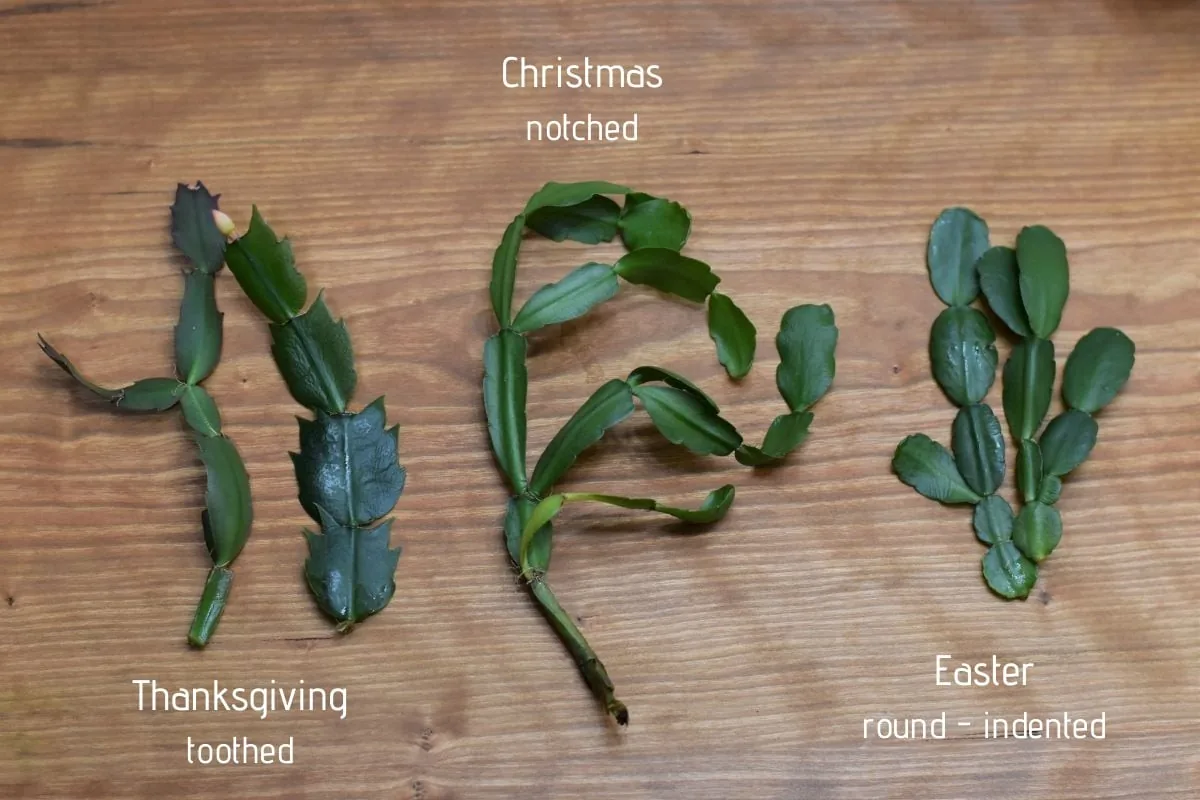
Most plants sold as Christmas cactus in big-box aisles are Thanksgiving cactus (Schlumbergera truncata) or hybrids. University of Illinois Extension and Iowa State University Extension both note that true Christmas cactus (S. × buckleyi / often listed as S. bridgesii) has smoother, scalloped stem margins, while Thanksgiving cactus has pointed “teeth.” Easter cactus looks different again: rounder segments and, when flowering, more star-shaped blooms. Taxonomy labels for Easter cactus also vary by source—Illinois still uses Rhipsalidopsis gaertneri, while Minnesota and Iowa State discuss it under Schlumbergera gaertneri—so treat stem edges and bloom timing as working clues, not a photo-based Latin ID.
ID note: A store tag that says “Christmas cactus” is a retail label, not botanical confirmation. Use the segment edges when you can see them clearly; if you cannot, call it a holiday cactus and care for it as one.
Growing note: Bloom timing is only a rough hint. Thanksgiving types often flower from late November into December; Christmas types later into winter; Easter/spring types closer to March–May. Plants can also be forced outside those windows.
If Buds Are Already On the Plant, Keep Everything Steady
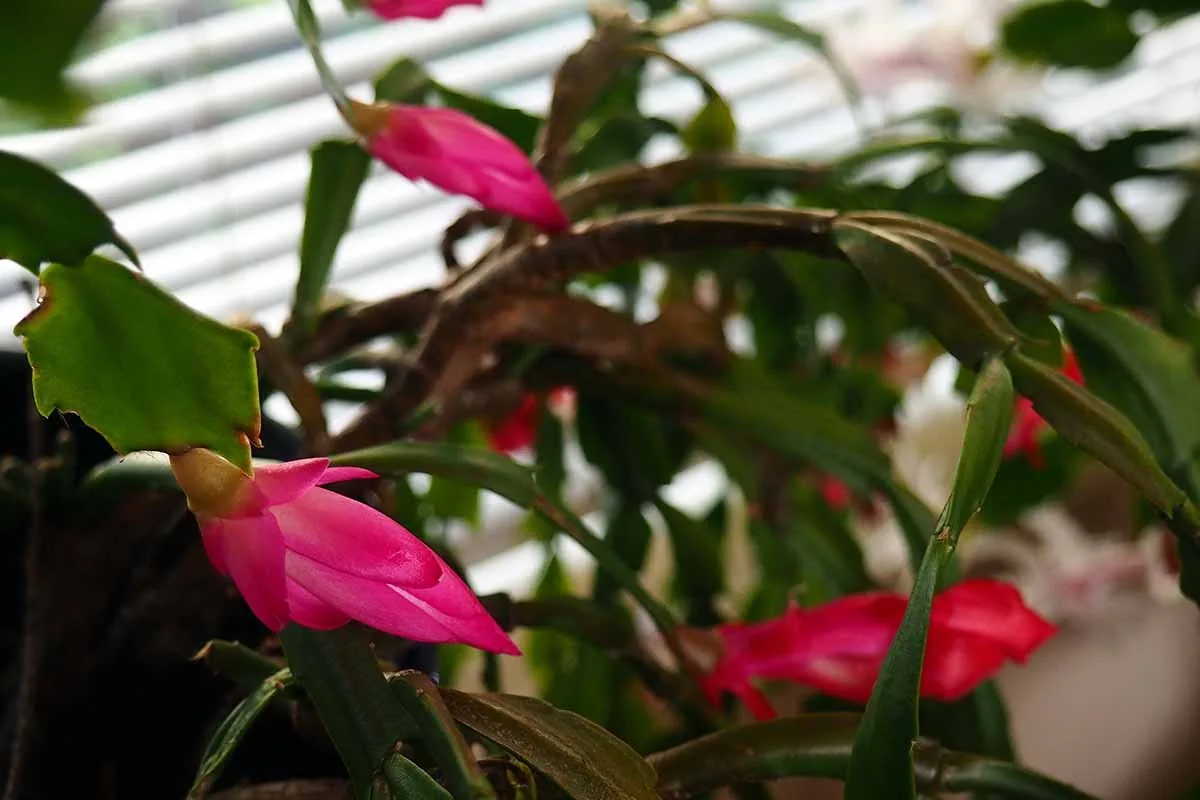
Right now—late fall into the holidays—many plants arrive with buds already set. That is good news. It also means the most helpful care is boring on purpose. University of Minnesota Extension explains that once buds form, holiday cacti dislike being disturbed: drafts, sudden temperature or humidity swings, and sharp changes in light can all lead to bud drop. Iowa State Extension adds that waiting to move a plant for display until the first flowers begin to open helps prevent premature drop.
Care tip: Pick one bright, draft-free spot and leave the pot there while buds swell. Water when the mix starts to dry, then empty the saucer. Do not chase a “force it to open this weekend” schedule—buds open on their own timeline.
Trip-home tip: Protect the plant from cold outdoor air between the store and the house. Winter exposure can damage tissue and knock buds loose before you even settle the plant.
Give Bright, Filtered Light and Cooler Nights Without Drafts
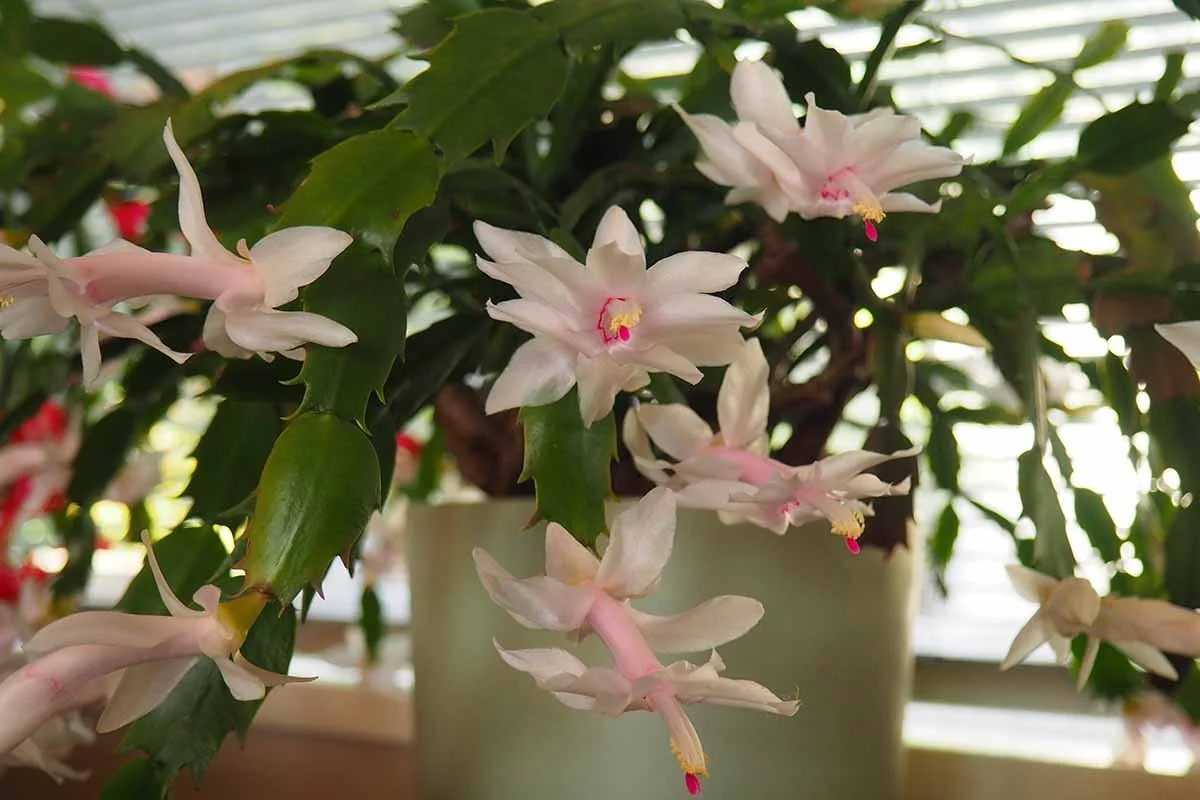
Holiday cacti are rainforest epiphytes, not desert cactus. They want bright but filtered light—think an east window, a sheer-curtained south or west window, or a spot with strong daylight that never turns into hot midday sun on the stems. Illinois Extension suggests about 70°F days and 55–65°F nights while plants are blooming. Minnesota Extension recommends daytime temperatures around 65–70°F with evening temperatures of 55–65°F.
Growing note: Keep the plant away from heating vents, fireplaces, exterior doors that slam cold air, and icy window glass. Warm, dry blasts and cold drafts are classic bud-drop triggers.
Small-space tip: If your brightest window is busy, a nearby table with the same daylight and more stable air is often better than the sill itself during freezing nights.
Water Evenly—and Raise Humidity Without Soggy Roots
Unlike desert cactus, holiday cactus should not live bone-dry for weeks. While buds and flowers are present, Illinois Extension recommends keeping the soil moist but never letting the pot sit in water; dryness during bloom can drop flowers. Minnesota Extension advises allowing the mix to dry between waterings, then watering thoroughly and dumping leftover water from saucers and cachepots. Root rot from heavy, wet media is one of the most common ways these plants fail.
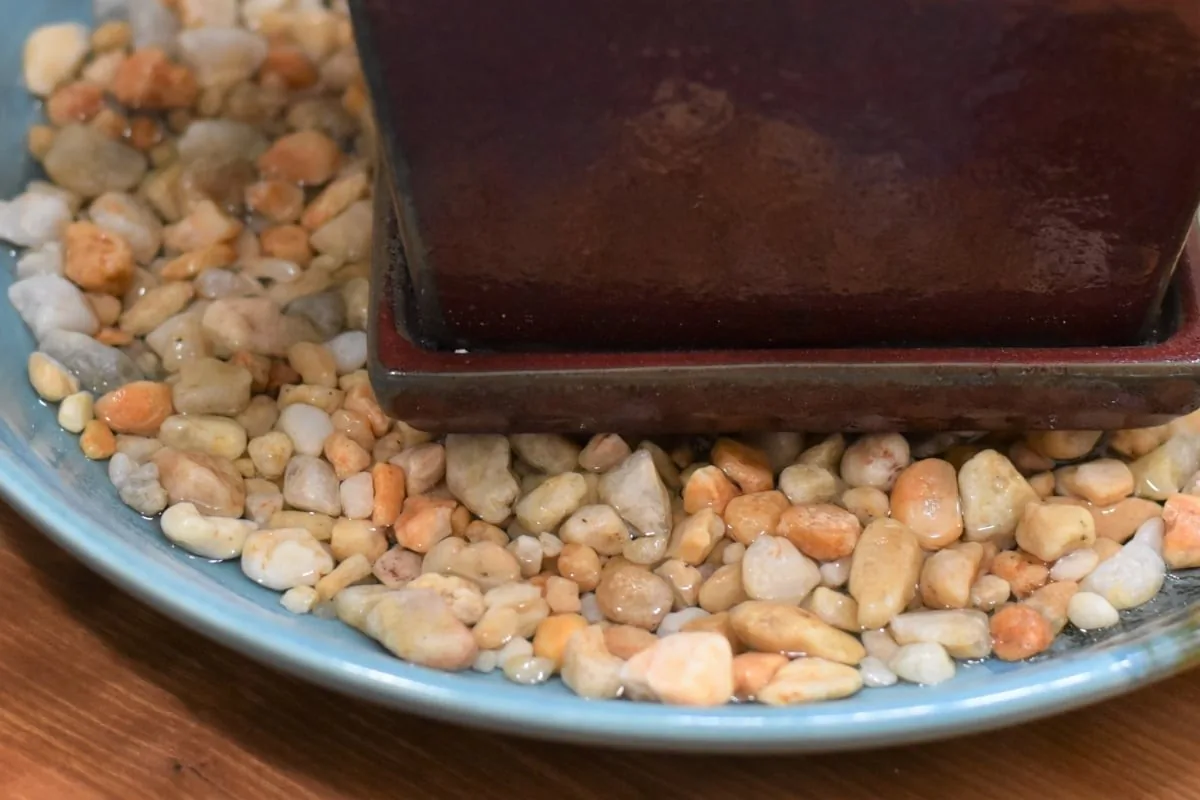
Care tip: A pebble tray with water below the pebble tops can raise local humidity without bathing the roots. Keep the pot sitting on the stones, not in the water reservoir.
Budget note: You do not need specialty “cactus only” mix if the pot drains well. Minnesota Extension’s guidance emphasizes drainage and aeration; Iowa State notes an all-purpose mix is fine when it drains freely, and plants often bloom best when slightly pot-bound.
When Flowers Open, Enjoy the Display—Then Ease Off
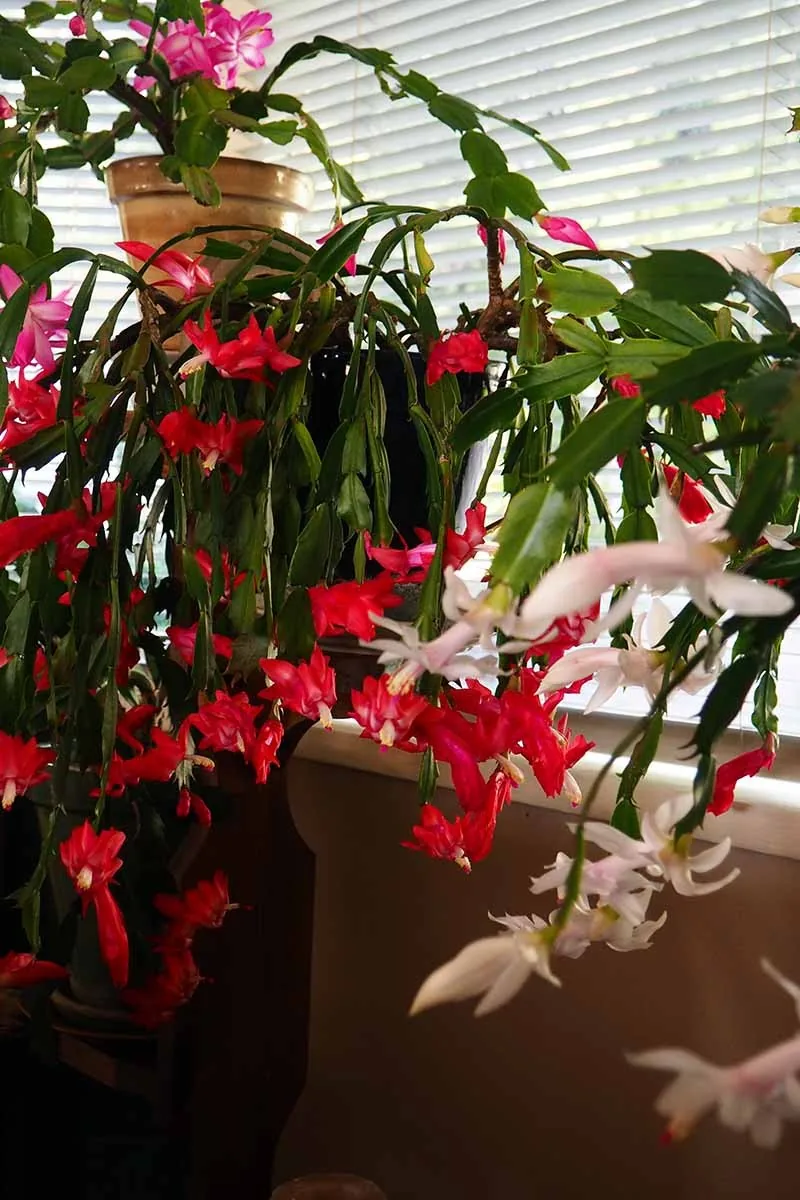
Once the first blooms unfurl, you can move the plant to a more visible spot if you kept it quieter during budding. The tubular flowers last longest in bright filtered light with the same steady watering habit. After flowering finishes, both Illinois and Minnesota Extension recommend watering less often for a rest, then returning to a normal houseplant rhythm when new growth resumes in spring.
Growing note: Fertilizing is for active growth, not for the middle of a holiday bloom show. Minnesota Extension suggests a half-strength balanced houseplant fertilizer monthly from June through August, with a lower-nitrogen, higher phosphorus/potassium feed when buds are forming in fall—not a mid-bloom boost.
Style swap: A simple pot on a tray still looks festive. Skip glitter coatings and painted stems; they make it harder to watch for wilt, pests, or soft rot.
After the Holidays: Grow It On, Then Plan Rebloom Carefully
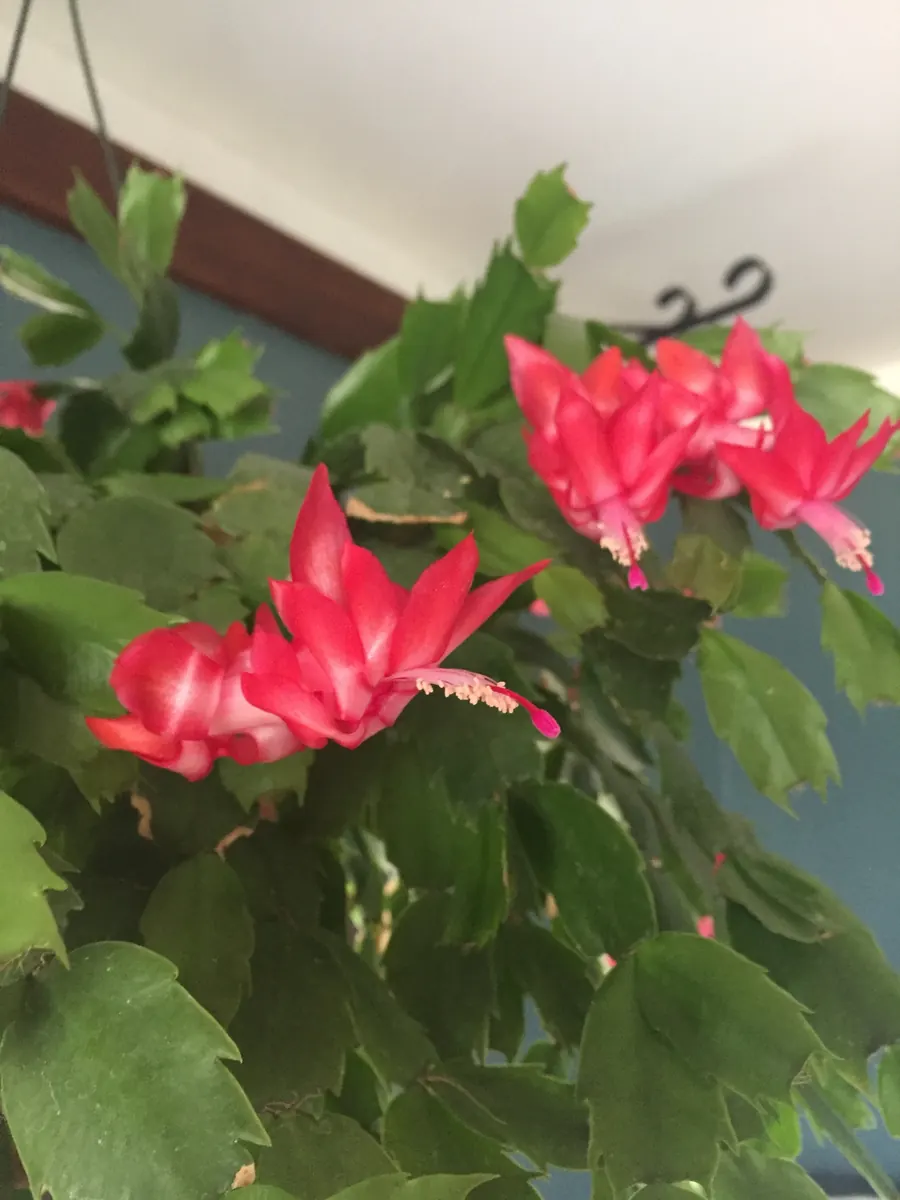
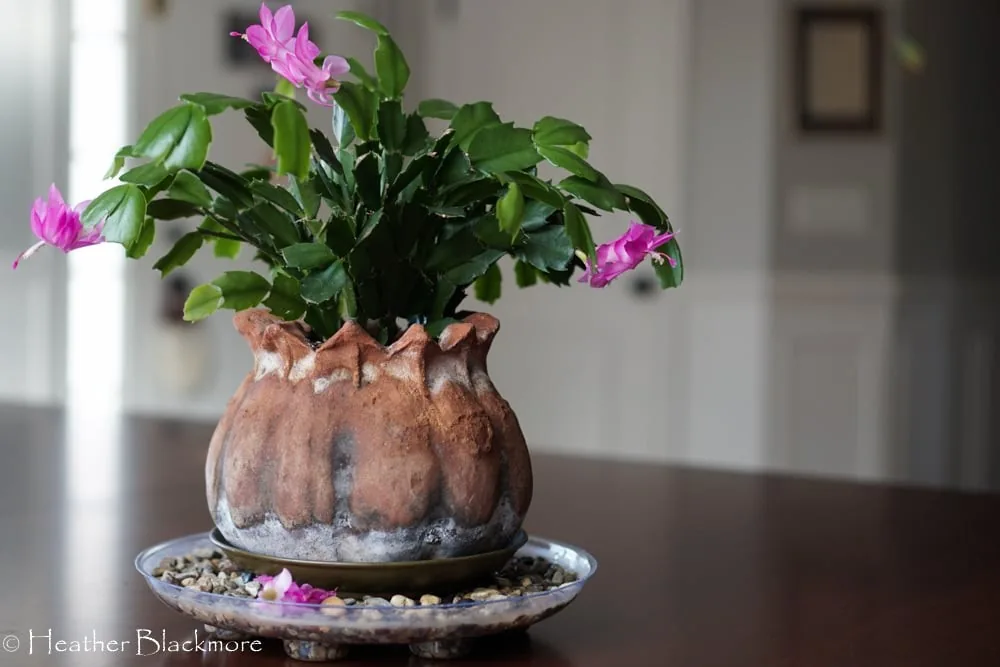
A holiday cactus can live for decades as a regular houseplant. Summer outdoors in light shade suits many plants; Illinois Extension warns that too much sun can bleach or burn the stems. If you want flowers again next season, treat rebloom as a fall project—not a December emergency. The magenta blooms shown here are from Iowa State Extension’s holiday-cactus guide, where the plant is labeled Thanksgiving cactus (Schlumbergera truncata)—a reminder that many “Christmas” plants in stores are this toothed-edge type.
Growing note: Extension sources agree that Thanksgiving and Christmas types respond to long nights and/or cool nights, but they do not all publish one identical formula. Minnesota Extension says nights around 55°F can bring bloom in about five to six weeks, sometimes regardless of day length; at 60–65°F nights, plants need about 12 hours of complete darkness nightly for roughly six weeks; nights above about 65°F make bloom unlikely. Illinois Extension describes at least 12 hours of continuous darkness for five to six weeks, or trying nights near 55°F if darkness is hard to manage, while warning that temperatures below 50°F can drop buds. Iowa State Extension describes many cultivars needing 14–16 hours of uninterrupted darkness (some as little as 12), notes temperatures above 70°F can block flowering, and says some plants bloom with cool 55°F conditions regardless of day length. Easter cactus has a more exacting cool-and-dark sequence in Iowa State’s guidance and a longer bud-setting window in Minnesota’s. Use the source that matches the plant you have, and do not apply one rigid schedule to every labeled “Christmas cactus.”
Best for: Gardeners who already enjoy houseplant routines. If you mainly want easy holiday color, buying a fresh, well-budded plant next November is a practical choice.
Pets and What “Non-Toxic” Means Here
The ASPCA lists Christmas cactus (Schlumbergera bridgesii) as non-toxic to dogs, cats, and horses. That is useful reassurance compared with many holiday plants, and it is not the same as calling the plant edible or snack-safe. Keep pots where curious pets cannot chew stems or knock blooms into water bowls, and call a veterinarian if a pet eats a large amount or seems unwell.
Holiday Care Checklist
Placement: Bright filtered light; no heater blast, door draft, or freezing glass.
Water: Moist while budding/blooming, never sitting in a saucer of water; dry a little more after flowers finish.
Humidity: Pebble tray or nearby humidity helps in dry heated rooms; misting is optional and not a substitute for root-zone drainage.
Moves: Limit relocating until flowers start to open.
Next year: Optional cool nights and/or long dark nights in fall—follow Extension guidance for your plant type rather than one viral formula.
Common Holiday Problems
Buds dropping: Drafts, heat vents, cold trips home, soggy or bone-dry soil, or sudden moves are the usual suspects. Steady care beats emergency tricks.
Wilted stems in wet soil: Suspect overwatering and poor drainage. Empty standing water and let the mix dry; Illinois Extension notes overwatering can kill roots so the plant can no longer take up water.
No blooms on a green plant: Often warm nights, light leaks at night during bud initiation, or simply the wrong season for that plant (especially Easter types). Do not expect a leafy plant to flower in a few days because a holiday is approaching.
Choose a plant with firm green segments and visible buds when you can, give it bright steady conditions, and let the flowers open on their own schedule. That is enough for a beautiful holiday display—and far kinder to the plant than chasing a forced bloom overnight.