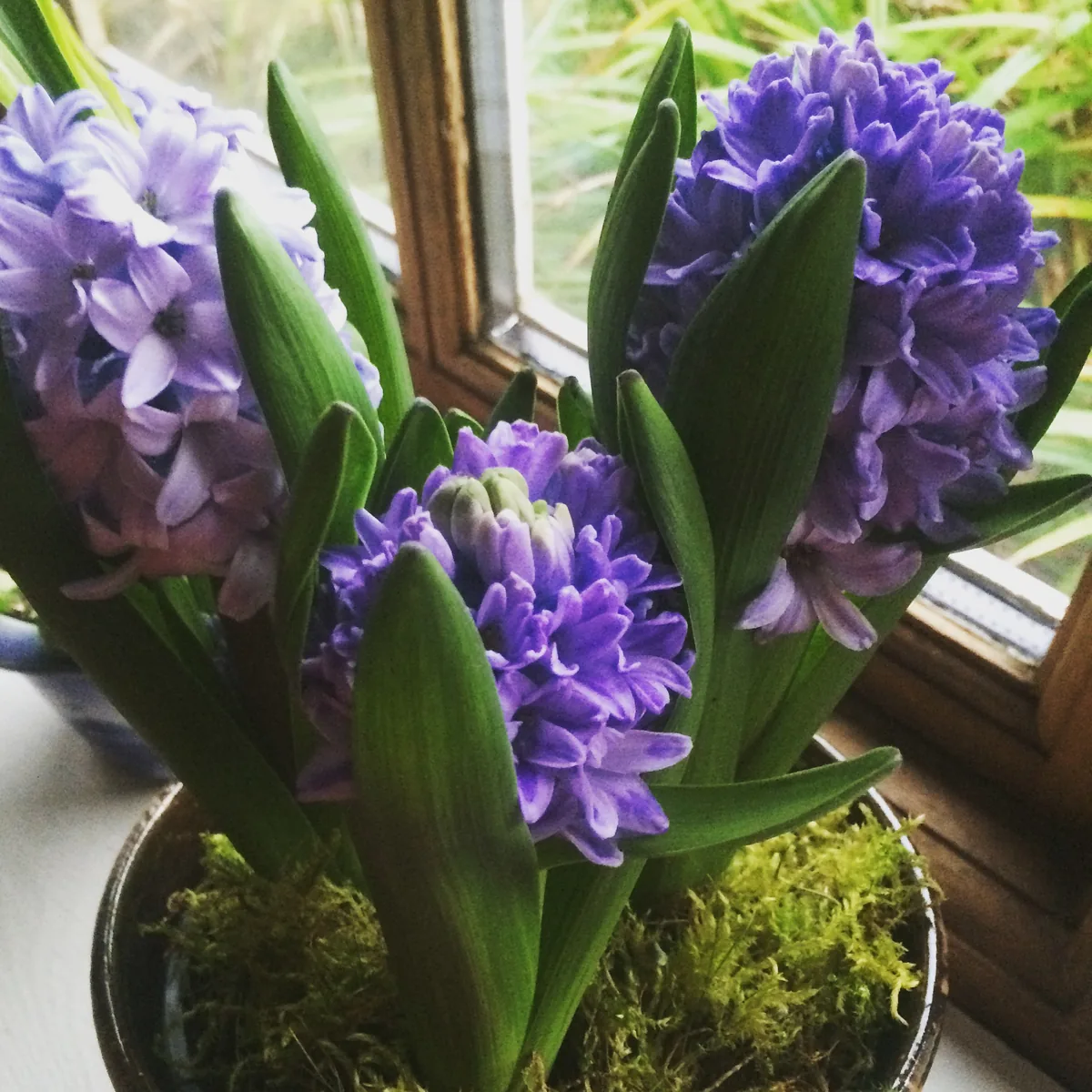
A hyacinth in bloom on a winter windowsill fills the whole room with scent. Forcing one, meaning getting it to flower indoors weeks or months before it would outdoors, is mostly about giving the bulb a convincing fake winter and then a bright, cool spot.
This guide walks through it step by step, in a pot of soil or in a classic hyacinth glass. Timing and temperatures follow Iowa State University Extension and University of Wisconsin–Madison Extension. Pet notes follow the ASPCA.
Christmas blooms take planning
The timing: Iowa State says hyacinths need 12 to 15 weeks of cold, followed by about 2 to 4 weeks of growth before they bloom. For blooms in mid-December, it advises potting by the beginning of September. If you are starting in November, buy pre-chilled bulbs and expect flowers in winter, often January or February.
Cold, dark, then bright and cool
The sequence: Chill the bulbs in the dark at roughly 35–45°F. Then give them a few days of low light to green up, and finish them in a bright, cool window. Wisconsin Extension notes that flowers last longer at cooler temperatures.
This post contains affiliate links. As an Amazon Associate I earn from qualifying purchases.
Choose Large, Firm Bulbs (or Pre-Chilled Ones)
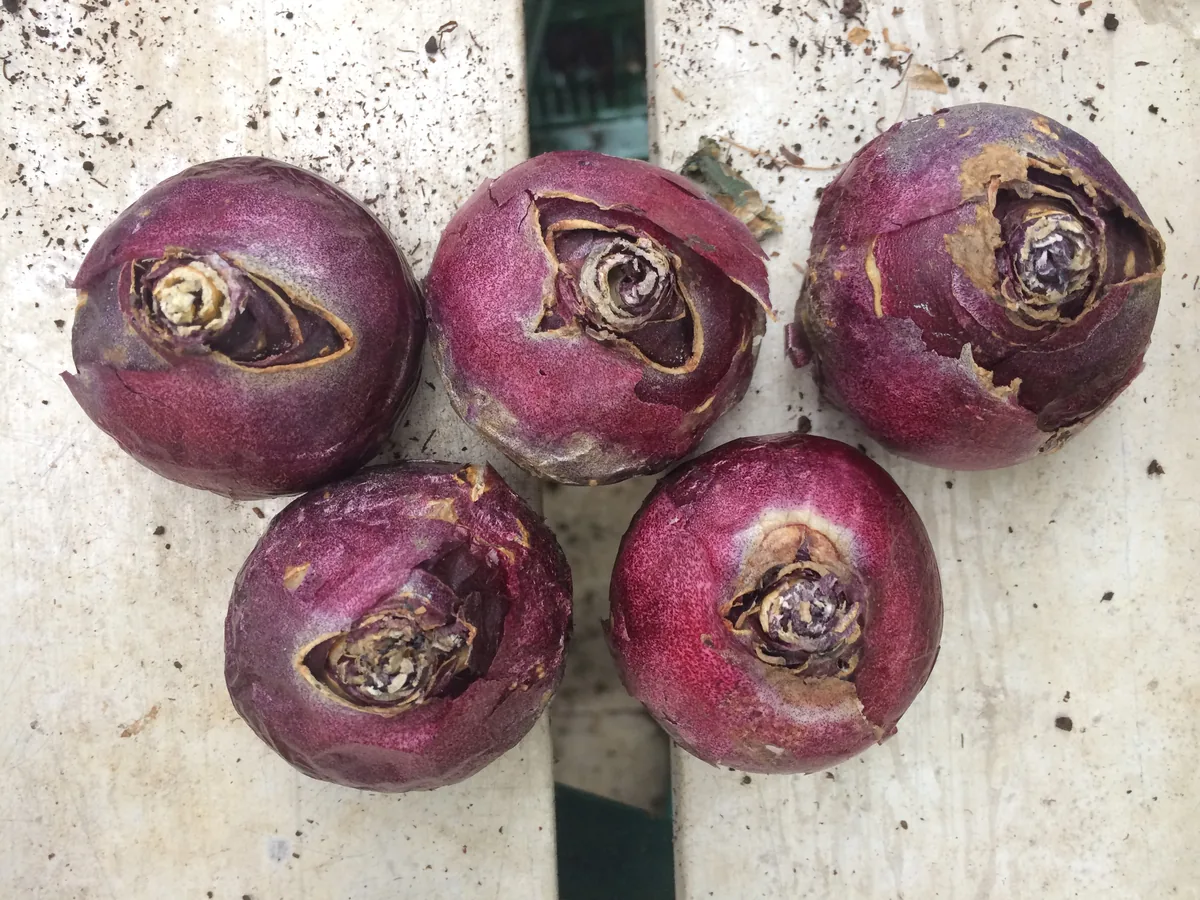
Big, heavy bulbs make the biggest flower spikes. Check each one for soft spots or mold before you buy, and skip any that feel light or squashy.
Buying note: Iowa State recommends large, firm, unblemished bulbs and warns that bargain or damaged bulbs may bloom poorly. Pre-chilled bulbs, sometimes sold as “prepared” hyacinths in the UK, have already had part of their cold treatment.
Gardener tip: The blogger here plants her bulbs in odd numbers. Three or five bulbs in a bowl look fuller than two or four.
Set the Bulb Just Above the Water in a Forcing Glass
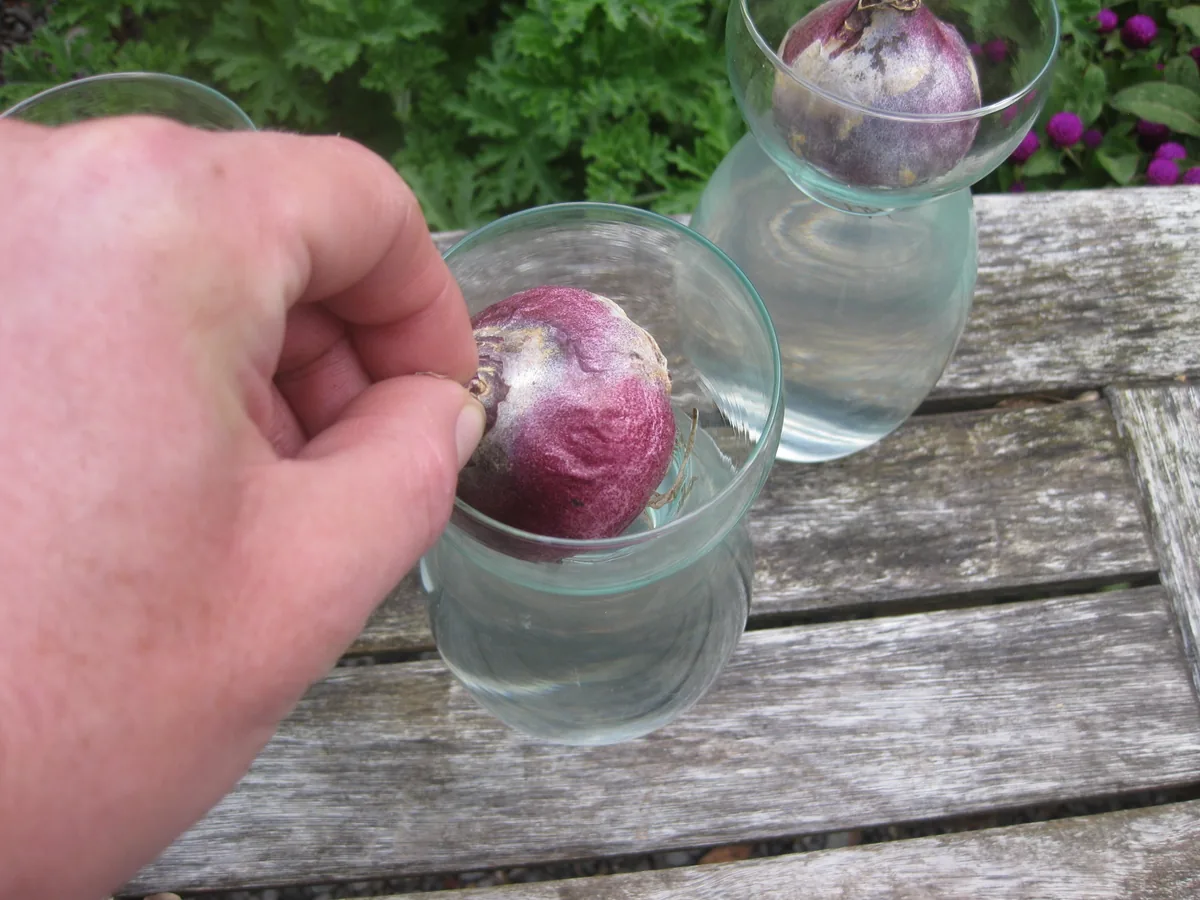
A hyacinth glass has an hourglass shape. Water goes in the bottom, and the bulb sits in the cup on top. As roots grow, they reach down into the water.
Water level: Iowa State and Wisconsin Extension both say the bulb itself should not sit in water, or it will rot. Fill the glass so the water is just below the base of the bulb. The roots will find it.
Supply idea: Classic glasses are easy to find. A set like the Glasseam hyacinth bulb forcing vases (set of 3) holds one bulb each.
Or Pot Bulbs in Soil With Their Tops Showing
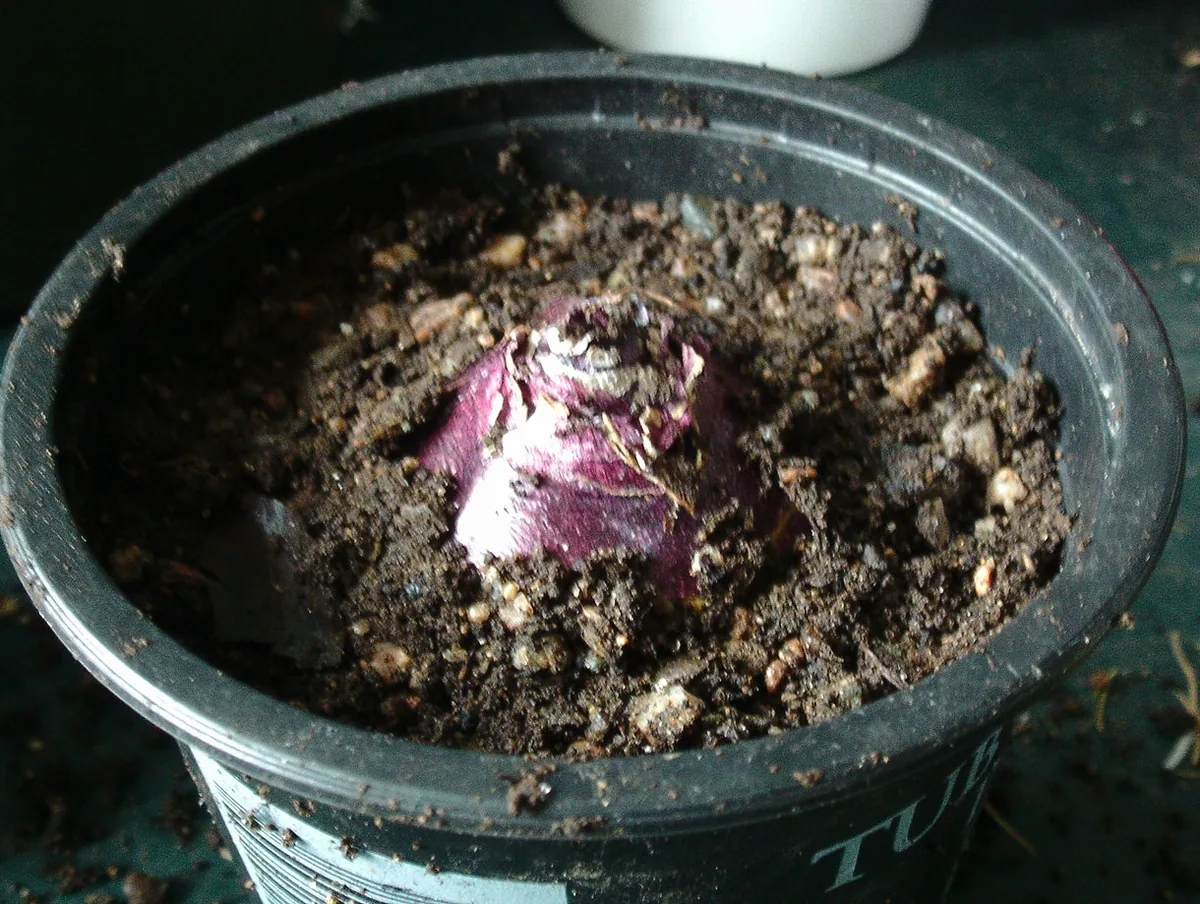
Forcing in soil is just as easy, and the bulbs have a better chance of flowering again in the garden later. Use a pot with drainage holes and a good potting mix.
Planting note: Wisconsin Extension says to set the bulb neck at or just below the surface of the mix. Iowa State fits about three hyacinths in a 6-inch pot and says forced bulbs look best planted close together.
Watering: Water well after planting, then keep the mix lightly moist, not wet, during chilling. Wisconsin Extension warns that too much moisture encourages rot.
Chill Them in the Refrigerator or a Cold Spot
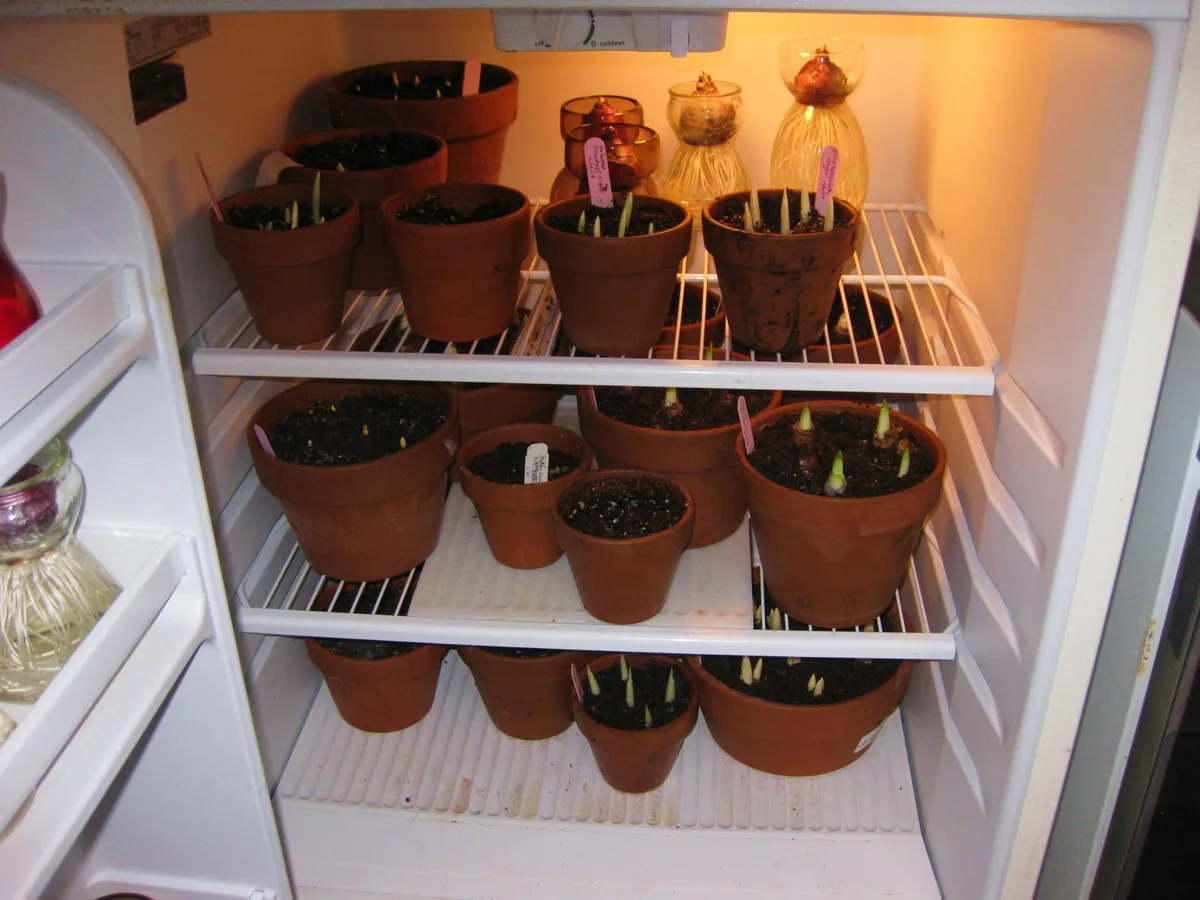
This is the “fake winter.” A spare refrigerator, a cold cellar, or an unheated garage that stays above freezing can all work.
Temperature note: Iowa State recommends 40–45°F for 12 to 15 weeks in complete darkness. Wisconsin Extension says a home refrigerator at 35–45°F works. Avoid freezing, since freezing and thawing can rot bulbs.
Fruit warning: Both Extensions say not to chill bulbs next to fruit. Ripening fruit, especially apples, gives off ethylene gas, which can interfere with flower development.
Keep Them in the Dark Until Shoots Appear
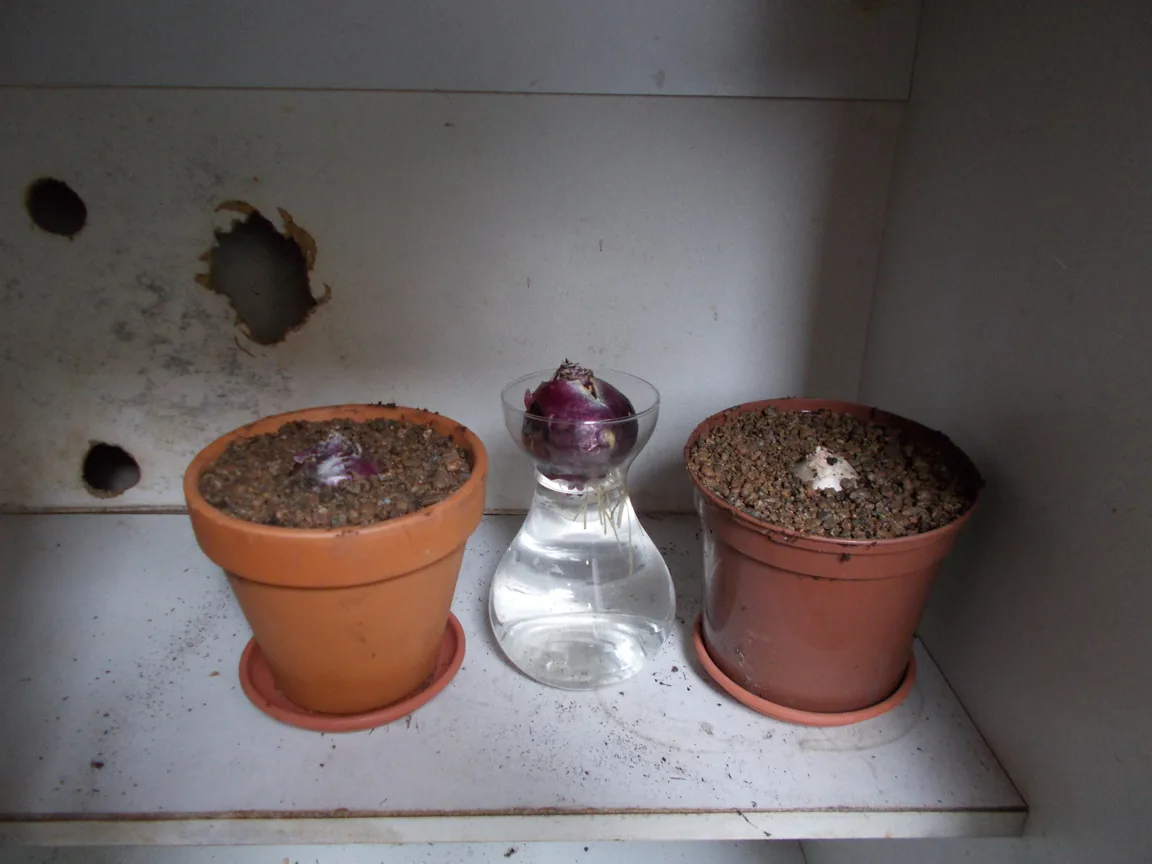
If you have prepared bulbs for Christmas, a cool, dark cupboard often stands in for the fridge for the last stretch. Check them weekly and add a little water if the mix is dry.
Readiness check: Iowa State says that after chilling you should see roots at the drainage holes and pale yellow shoots coming out of the bulbs. Wisconsin Extension expects shoots about one to two inches tall.
Glass tip: For bulbs in glasses, top up the water so it keeps touching the roots. Iowa State notes the level can drop quickly in the first week.
Watch the Roots Fill the Glass
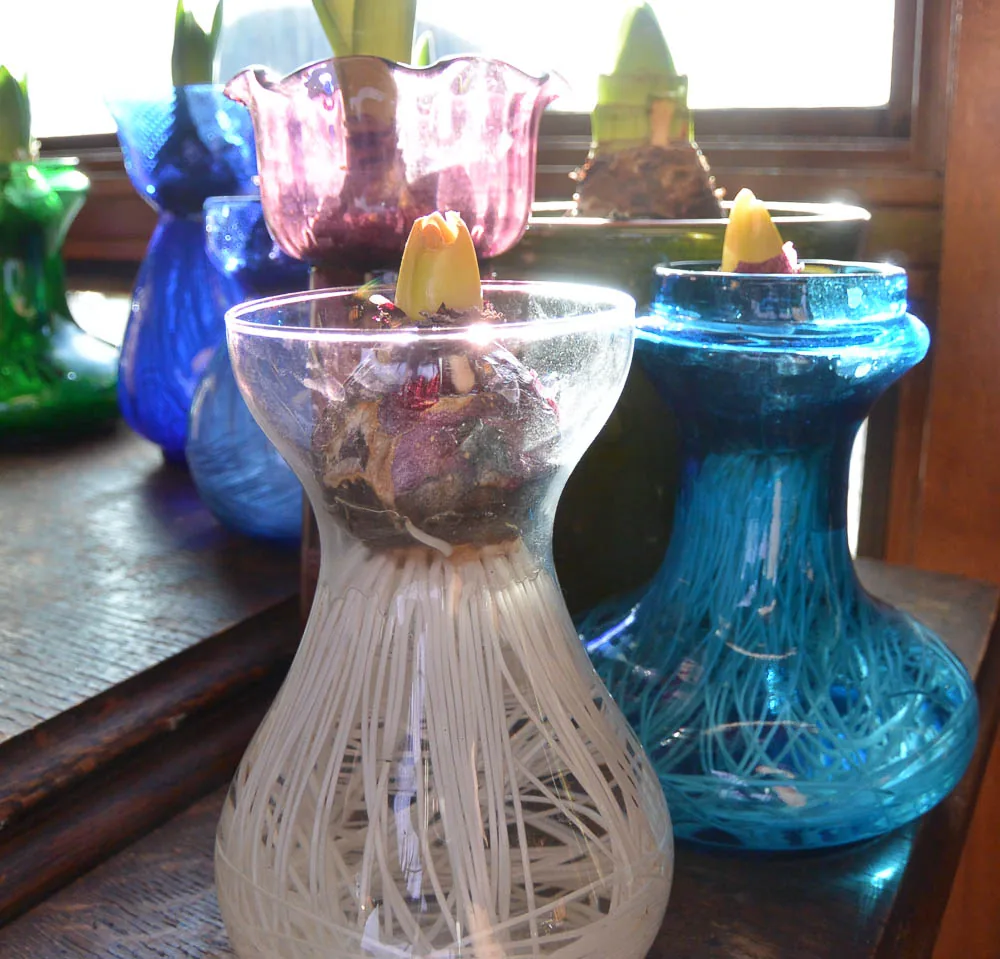
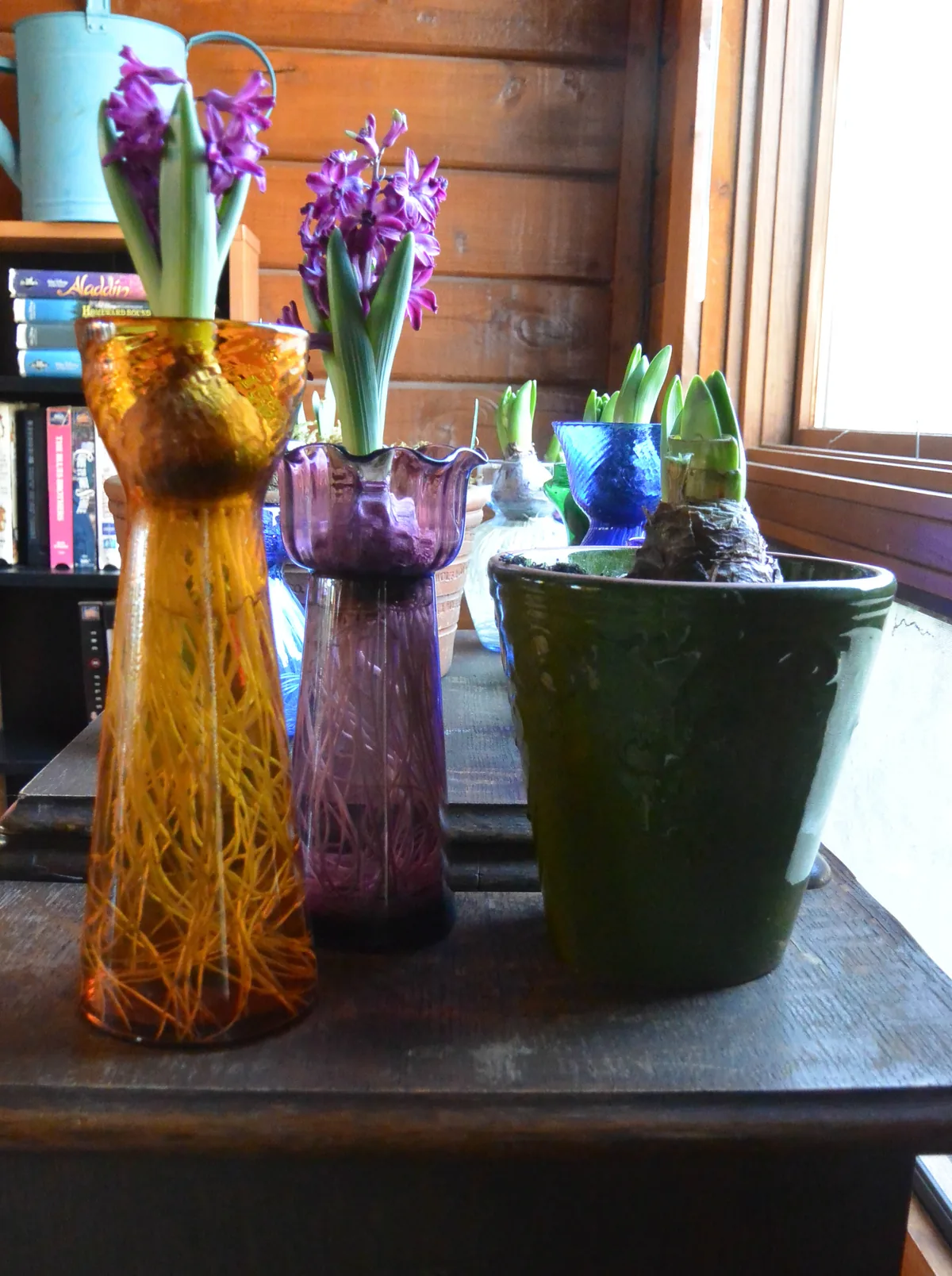
Clear glasses are fun because you can watch the roots grow. These bulbs had just come out of the closet, and their pale yellow shoot tips will green up in a few days of light.
Water note: Iowa State suggests changing the water once or twice a week, or whenever it turns cloudy.
Display idea: Line up mismatched colored glasses on a windowsill. Blue, amber, and plum glass look good even before the flowers open.
Bring Them Into Light Gradually
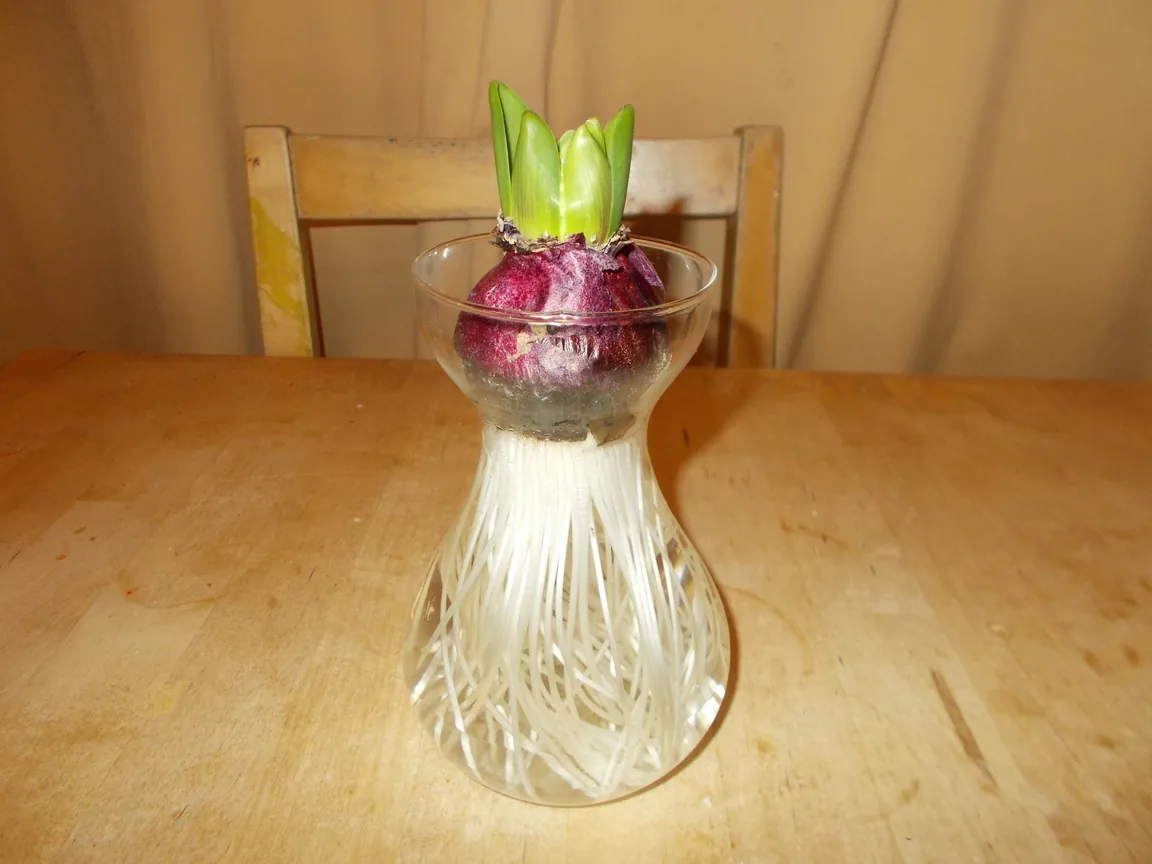
When the shoots are up, move the bulbs out of the cold in steps rather than straight into a warm, sunny room.
Light note: Iowa State suggests 50–60°F in low to medium light for about 4 to 5 days, until the shoots turn green. Then move them to a bright spot at about 60–65°F.
Turning tip: Turn pots and glasses every day or two so the stems grow straight instead of leaning toward the window.
Enjoy the Blooms in a Bright, Cool Window
Most bulbs bloom about two to four weeks after they come out of the cold. Hyacinths tend to open all at once, so stagger the batches if you want flowers for longer.
Succession tip: Iowa State suggests taking a few pots out of cold storage every one to two weeks so you have flowers through the winter.
Longevity note: Cooler rooms make flowers last longer. Wisconsin Extension notes that bulbs grow faster when warm, but the flowers do not last as long.
Support Top-Heavy Flowers in a Heavier Glass
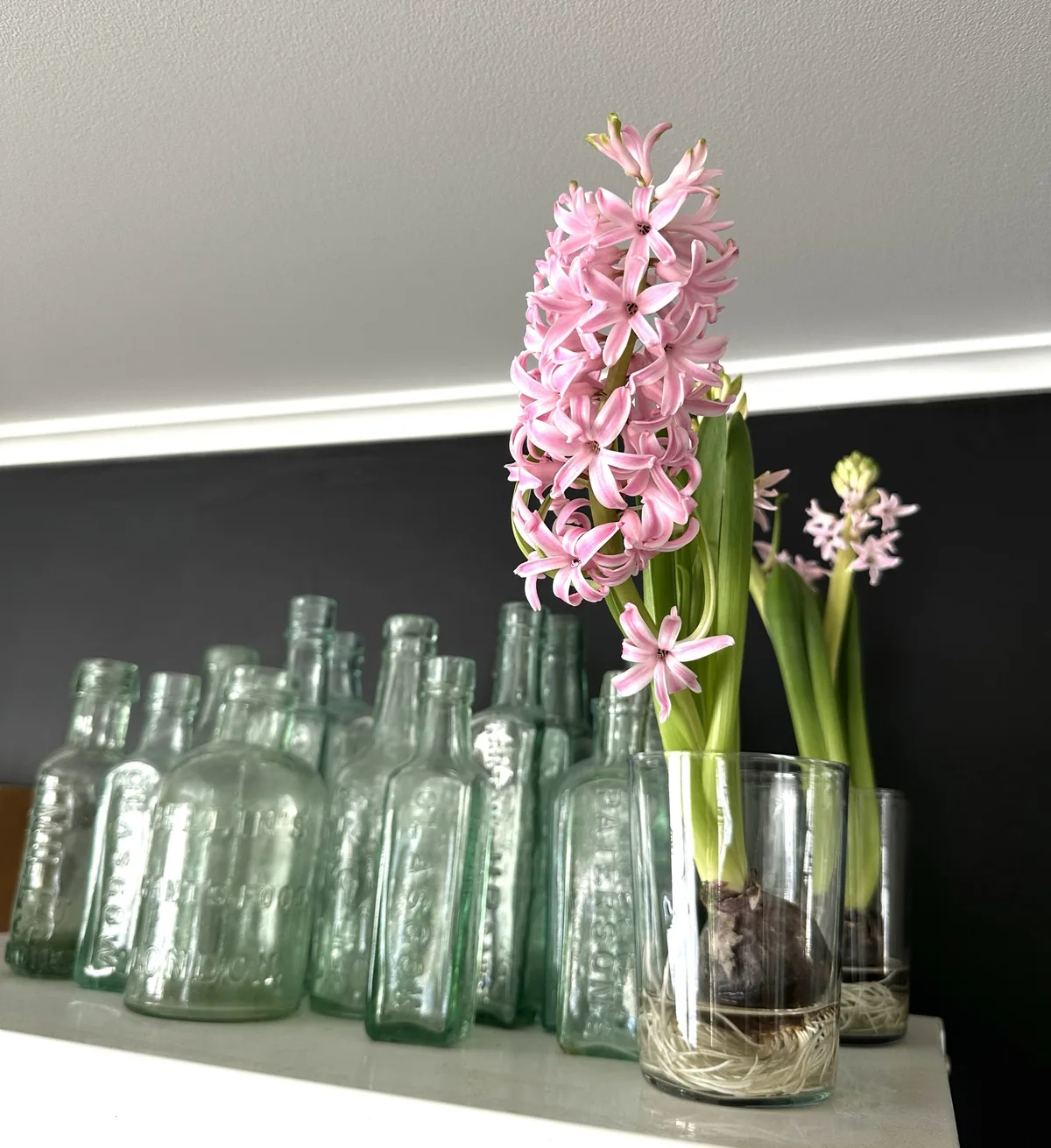
Full hyacinth spikes get top-heavy and can tip a light glass over. Ted Kennedy Watson moved his into heavy clear glasses, which let the stems lean on the sides and kept the roots on display.
Support note: Iowa State suggests a tall glass cylinder for support. Put gravel and water in the bottom quarter so the leaves and stems can lean against the glass, but keep the water below the bulb.
After bloom: Iowa State and Wisconsin Extension both say bulbs forced in water seldom rebloom and are usually discarded. Bulbs forced in soil can be grown on and planted outdoors, though they may need a year or two to flower again.
Are Hyacinths Safe Around Pets?
No. The ASPCA lists hyacinth (Hyacinthus orientalis) as toxic to dogs, cats, and horses. Signs include intense vomiting, diarrhea (sometimes with blood), depression, and tremors. Keep bulbs, glasses, and potted hyacinths where pets cannot dig, chew, or knock them over, and call your veterinarian or a pet poison hotline if a pet chews one.
Hyacinth bulbs can also irritate the skin of some people, so many gardeners wear gloves when handling them and wash their hands afterward. Store bulbs away from food in the refrigerator and label the bag clearly.
Hyacinth Forcing Timeline at a Glance
- Pot or set the bulbs in glasses, or buy pre-chilled bulbs
- Chill 12–15 weeks at about 35–45°F in the dark, away from fruit
- Wait for roots and 1–2 inch pale shoots
- 4–5 days in low light at 50–60°F
- Bright window at 60–65°F; bloom in about 2–4 weeks
Start one or two glasses this year and write down the dates. Next fall you will know exactly when to begin for blooms at Christmas.