
A living Christmas tree comes with its roots, so after the holidays it can go into the garden instead of out with the trash. Done well, it becomes a yearly reminder of one particular Christmas. Done carelessly, it dies by spring.
This guide walks through choosing a tree that can survive, caring for it indoors, easing it back outside, and planting it. The care advice comes from NC State Extension and the UC Master Gardeners of Contra Costa County. Safety notes follow the NFPA and the ASPCA.
Why living trees often fail
The main reasons: NC State says replanted Christmas trees often don’t survive. The usual causes are a species that doesn’t suit the local climate, a tree too large for its roots, letting the root ball dry out even once, and keeping the tree inside too long. Every step below targets one of these.
This post contains affiliate links. As an Amazon Associate I earn from qualifying purchases.
Choose a Small Tree With a Big Root Ball
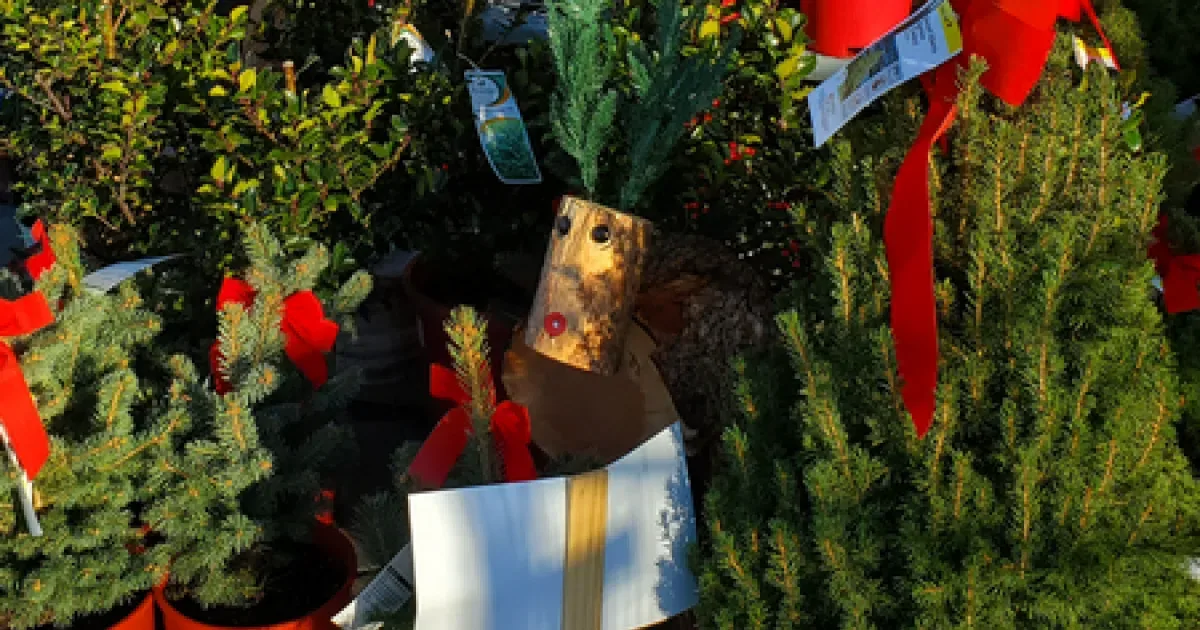
Living trees come either in containers or “balled and burlapped,” with a field-dug root ball wrapped in fabric. Small potted conifers like these are the easiest to carry, display, and plant.
Size note: NC State recommends trees no taller than five to six feet if you plan to plant them. Nursery standards call for a root ball about 22 inches across on a 5-foot conifer. A smaller root ball can’t take up enough water to support the top of the tree.
Tag check: Read the plant tag for the hardiness zone. NC State warns that greenhouse-grown tabletop trees may have no winter hardiness at all and must stay inside or in a protected spot until frost danger passes.
Pick a Species That Suits Your Climate
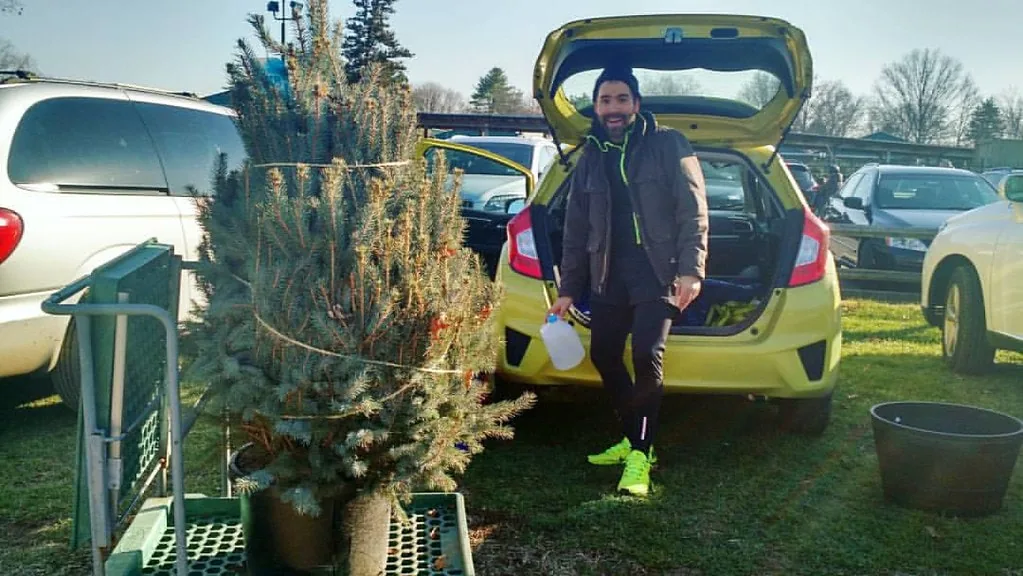
This couple bought a live Colorado blue spruce with its root ball still attached from a Long Island nursery, then planted it on their land upstate. A cold-hardy spruce was a sensible choice for a cold winter site.
Climate note: NC State points out that popular living trees such as Fraser fir, white pine and several spruces are native to mountains or northern regions. They struggle in hot, low-elevation gardens. In warmer areas it suggests eastern red cedar, Leyland cypress, Virginia pine or Arizona cypress.
Shopping tip: Ask the nursery which conifers grow well in your area before you choose by looks alone. A tree that suits your climate is far more likely to survive planting.
Consider Renting a Living Tree
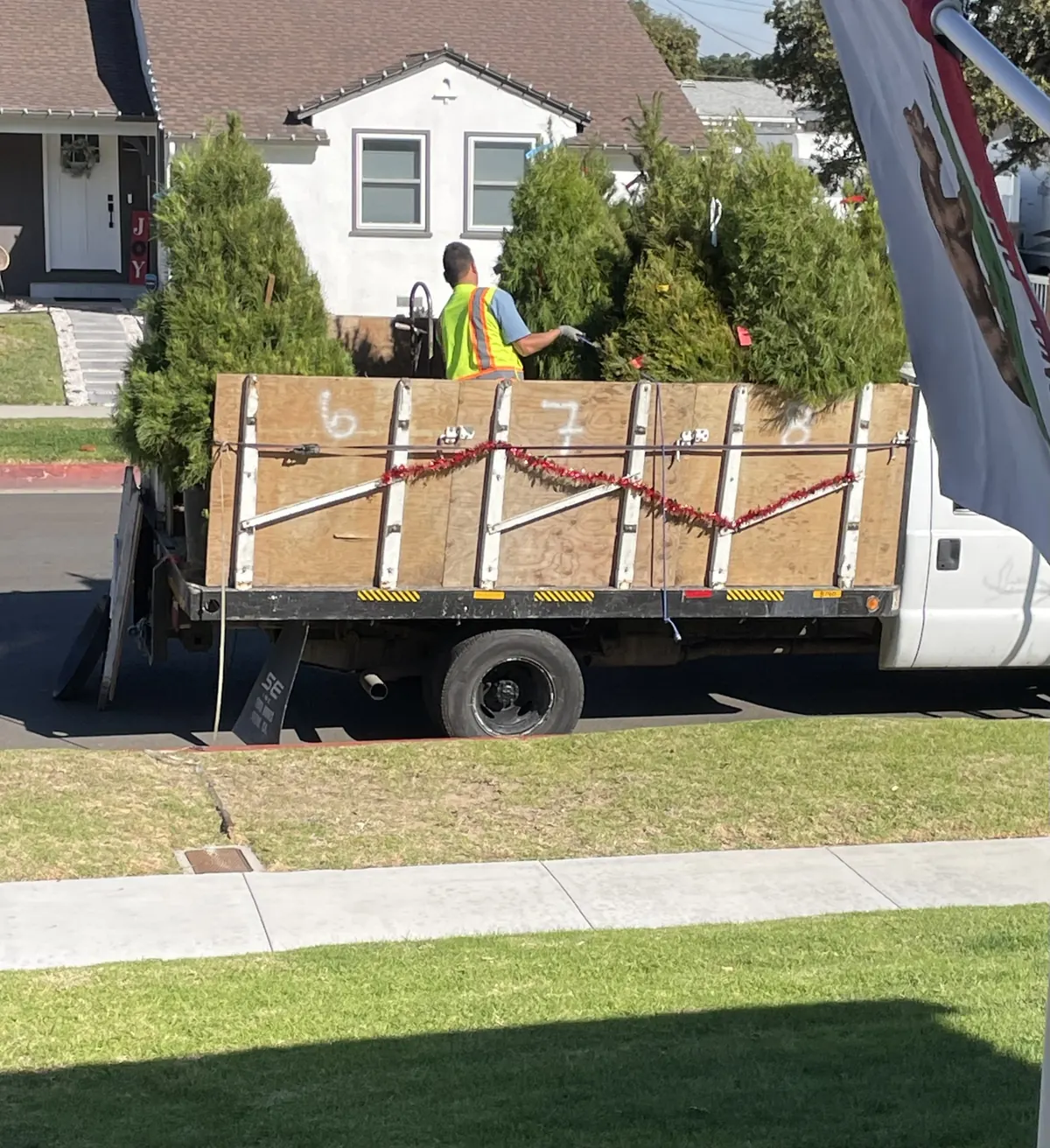
No room to plant? Some areas have companies that rent potted living trees, deliver them, and collect them after Christmas. This Southern California family rented a living Monterey pine and named it Milton.
How it works: The blogger explains that the company picks the tree up after the holidays. Trees that grow too big to rent are donated to communities or planted through a reforestation project. She notes that renting cost about $100 more than buying a cut noble fir.
Search tip: Look for “living Christmas tree rental” plus your city. Availability depends heavily on where you live.
Keep It Cool, Watered, and Inside Only 7 to 10 Days
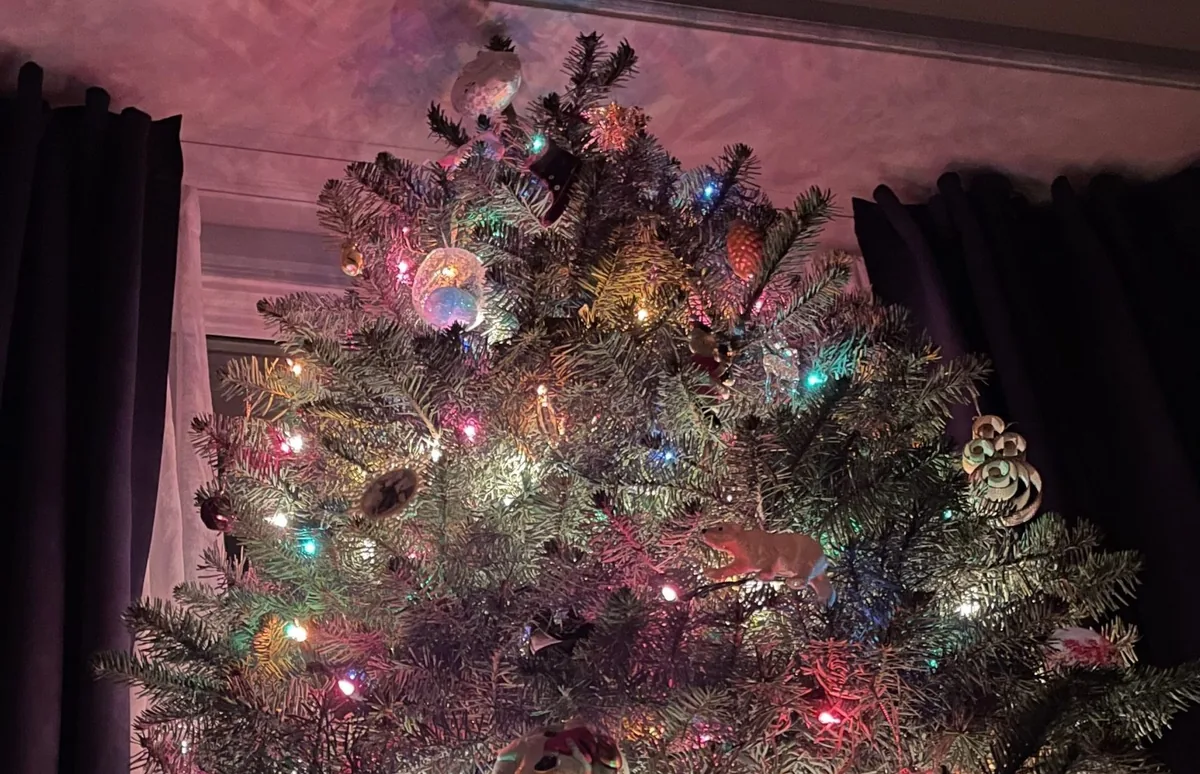
A living tree can be decorated like any other, but it needs a shorter visit and gentler treatment. Small lights that stay cool are the best choice.
Indoor limit: NC State says to display the tree for no more than a week to ten days. Longer in a warm house can break the tree’s winter dormancy, and then it suffers foliage burn and bud damage when moved into the cold. The UC Master Gardeners give the same limit of about 10 days.
Watering note: Place the tree in a cool spot away from heat and direct sun, and use LED or low-heat lights. Keep the root ball evenly moist but never flooded. With a tub, keep only an inch or two of water in the bottom. Scattering crushed ice over the root ball waters it slowly. A long-spout can such as the Fiskars 40 oz indoor watering can reaches under low branches. For a heavy container, a rolling stand like the CASIMR plant caddy with wheels makes moving it easier.
Ease the Tree Back Outside
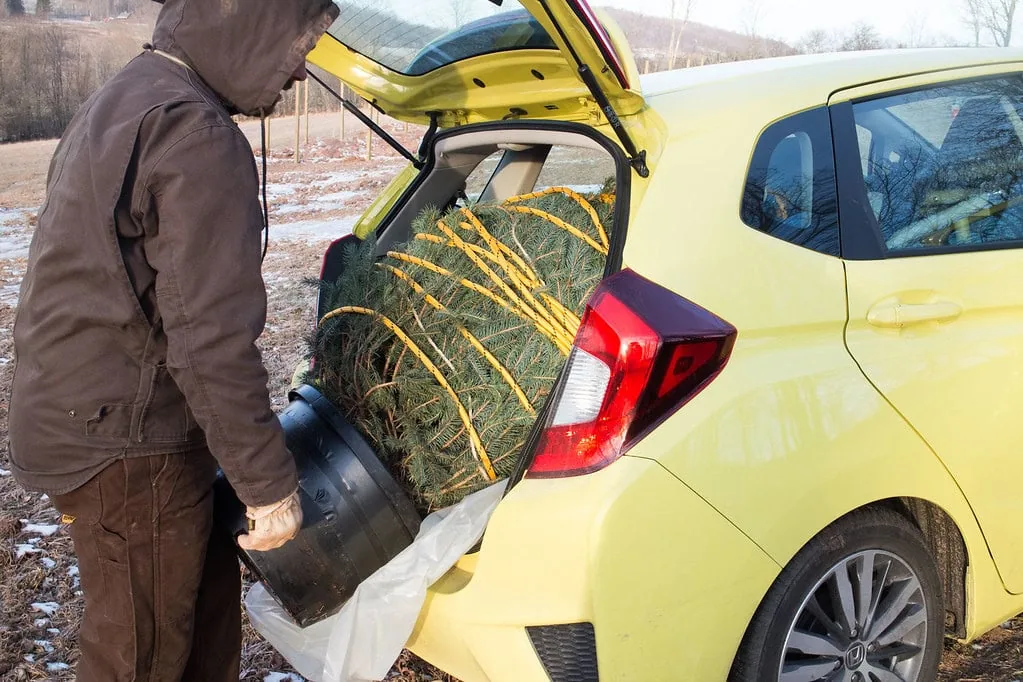
After Christmas, Brooklyn Farm Girl worried about the jump from a warm apartment to a cold upstate field. To harden it off, they wrapped it up and kept it in the chilly stairwell to the roof for five days before the drive.
Acclimating note: NC State says that if the ground is frozen when the tree must go outside, keep it in an unheated garage or outbuilding that is sheltered from wind until you can plant it, and keep watering it. The UC Master Gardeners suggest a protected spot with good light but not too much direct sun.
Timing note: In mild-winter areas, the UC Master Gardeners say a tree bound for the garden can stay in its pot until early spring. Just don’t let the roots dry out.
Dig the Planting Hole Before the Ground Freezes
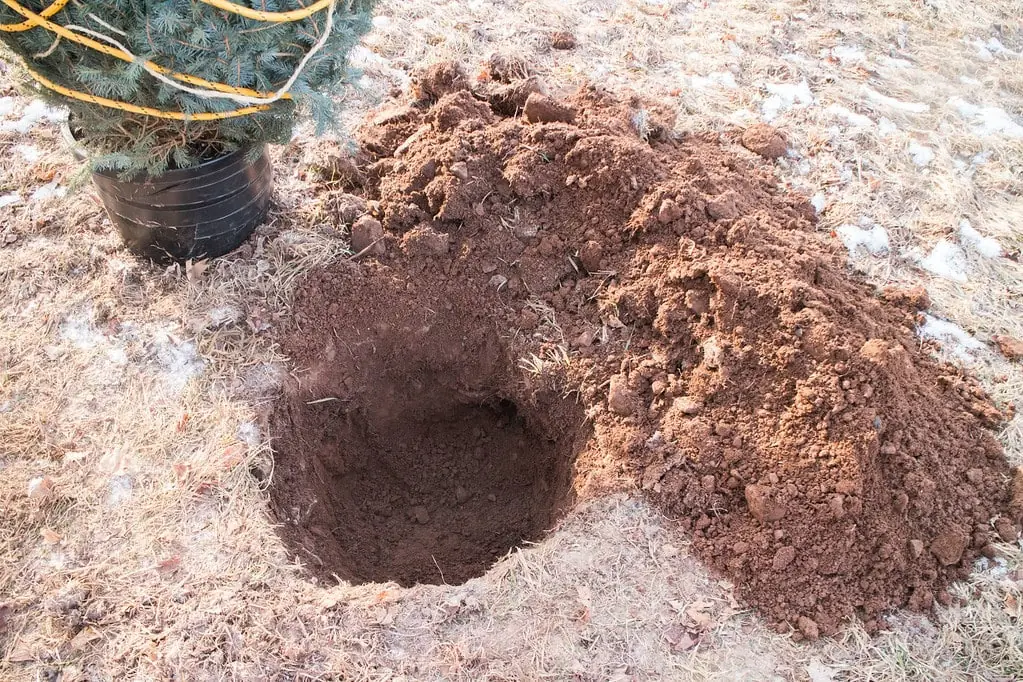
The top of the ground was a bit frozen on planting day, but the soil underneath could still be dug. The blogger’s advice: in a place where the ground freezes, dig the hole in advance.
Hole size: The UC Master Gardeners say to dig the hole wider but no deeper than the root ball, planting slightly high so the base of the trunk sits just above soil level. NC State suggests digging a hole slightly shallower than the root ball and loosening a wider area around it.
Soil tip: The UC Master Gardeners advise against amending the backfill, so roots are encouraged to grow out into the native soil.
Plant, Water In, and Mulch
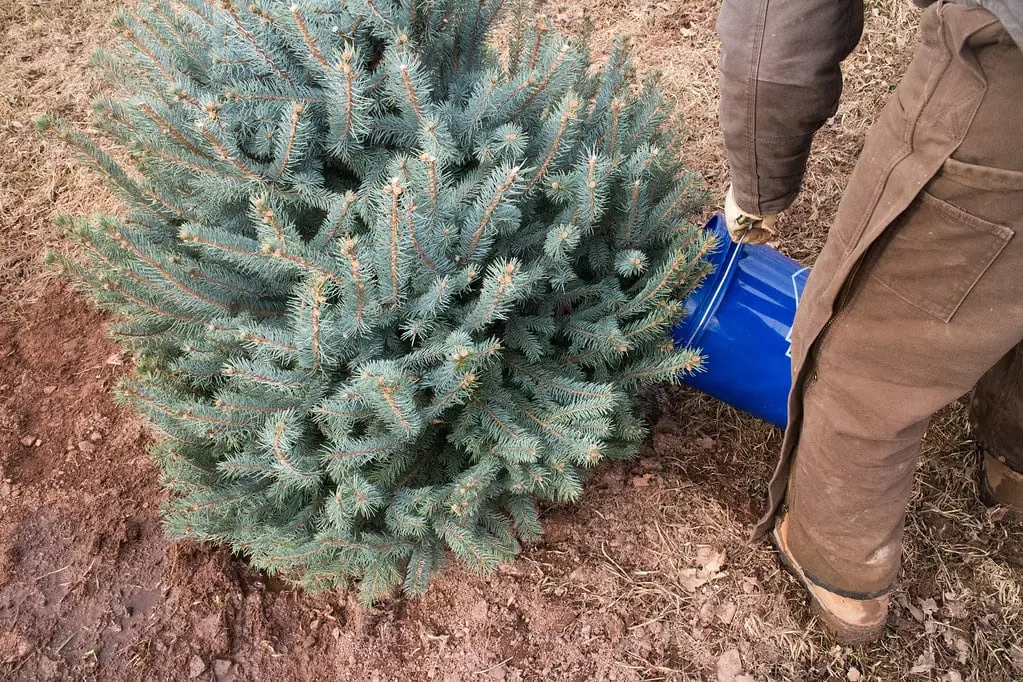
Once the tree is in the hole and the soil is spread around it, give it a deep drink. Here the gardener hauled buckets of water up from a stream to soak the new tree.
Planting note: NC State says natural burlap can stay on the root ball, but remove treated burlap, nylon, and of course the plastic pot. Break up circling roots on a root-bound container tree, water after planting, and spread two to three inches of mulch.
Feeding note: Wait to fertilize until spring, after the tree starts growing, and go easy on nitrogen the first year. The UC Master Gardeners add that a small conifer rarely needs staking. Keep mulch away from the trunk.
Expect a Quiet First Winter
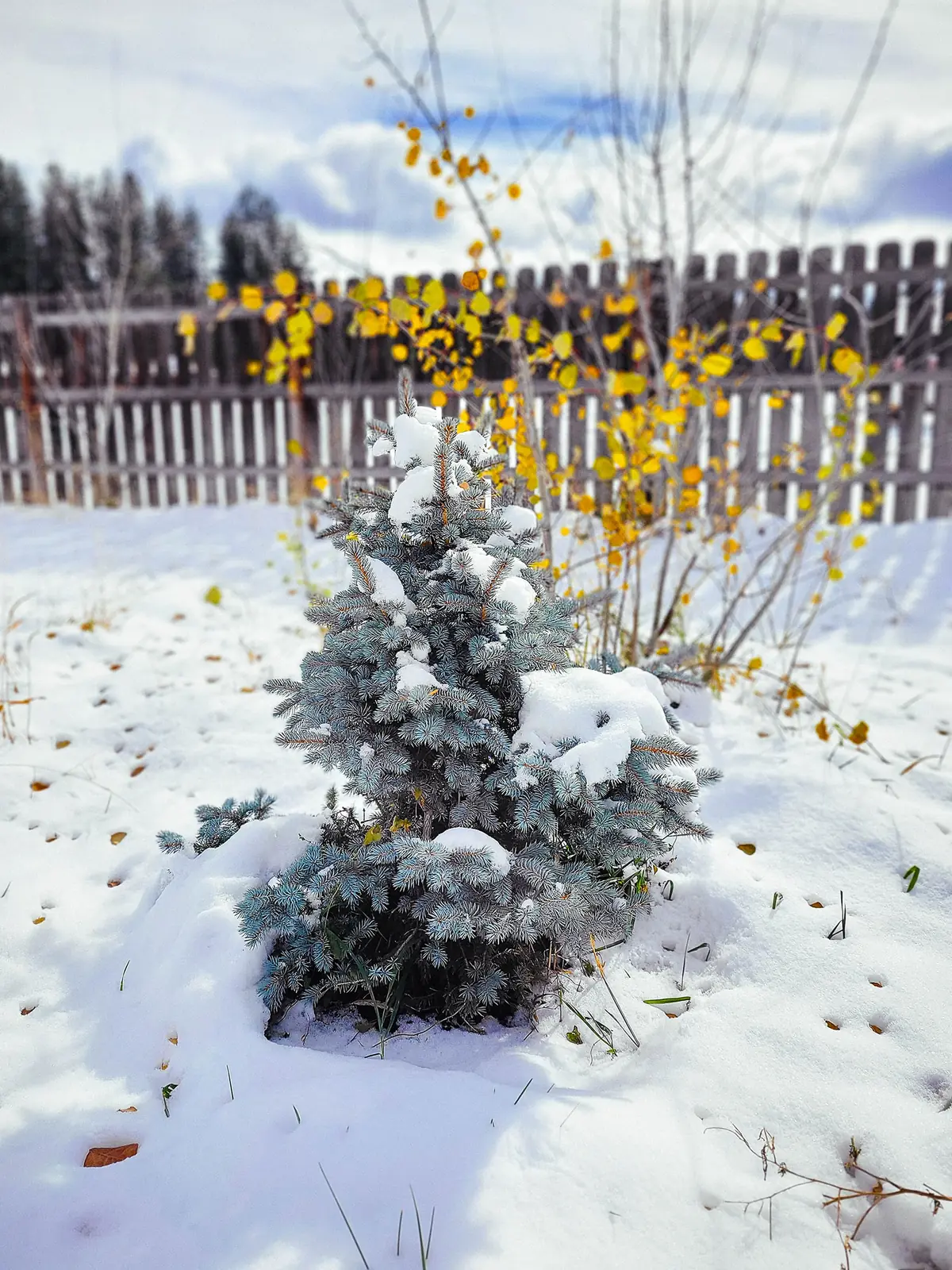
Garden Betty’s family planted this blue spruce in their yard after using it as a living Christmas tree. The first season outdoors is mostly about survival, not growth.
Watering note: The UC Master Gardeners say a newly planted tree needs regular watering for the first few years, even if it will be drought-tolerant once mature. Water when the ground isn’t frozen and the soil is dry.
Patience tip: Brooklyn Farm Girl admitted they weren’t sure their spruce would make it through the cold. Wait until spring, when new growth appears, before deciding how your tree fared.
Plan for the Tree’s Full-Grown Size
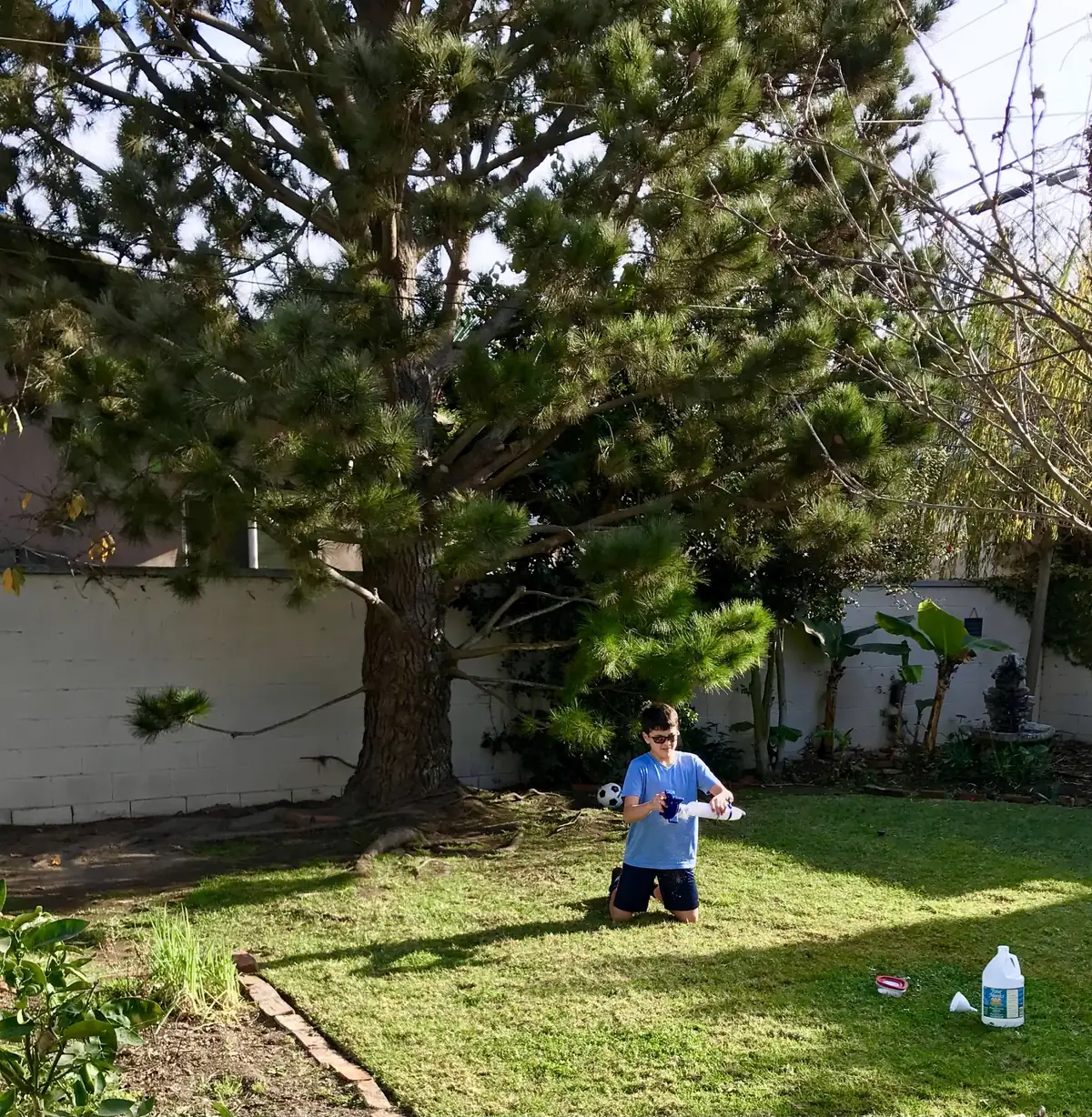
A living tree keeps growing. This Monterey pine grew into a full-size backyard tree that the family’s son climbed for years. Eventually the vegetable gardener in the family complained that it was stealing all the sunlight.
Size note: The UC Master Gardeners say to check the mature size before planting because some conifers grow very large. They also recommend a spot with good drainage and at least six hours of sun. If your yard has no room, consider giving the tree to a friend or a nonprofit with more space.
Small-space option: Slow-growing trees such as dwarf Alberta spruce can live outdoors in a container for years, according to the UC Master Gardeners. You can bring it back inside for a short visit each Christmas.
Fire and Pet Safety Around a Living Tree
The NFPA Christmas tree safety tip sheet says to keep any tree at least three feet from heat sources such as fireplaces, radiators, candles, heat vents, and lights. Make sure it doesn’t block an exit, use lights listed by a qualified testing laboratory, never decorate with lit candles, and turn tree lights off before leaving home or going to bed.
The ASPCA recommends securing the tree so it can’t tip onto pets and keeping tree water covered or out of reach, since standing water can grow bacteria that upset a pet’s stomach. It also advises skipping tinsel, which can block a pet’s digestive tract if swallowed.
Quick Living Tree Checklist
- Size: no taller than 5–6 feet if you plan to plant it
- Species: choose one suited to your climate and check the tag for the hardiness zone
- Indoors: 7–10 days maximum, in a cool spot with LED or low-heat lights
- Water: keep the root ball evenly moist, never flooded
- Outside: acclimate in an unheated, sheltered space if the ground is frozen
- Planting: wide hole no deeper than the root ball; remove plastic and synthetic wrap; water and mulch
- Long term: plan for the mature size and water regularly for the first few years
Choose a small, climate-suited tree this year, keep its stay indoors short, and plant it promptly. With luck, it will still be growing in your yard many Christmases from now.