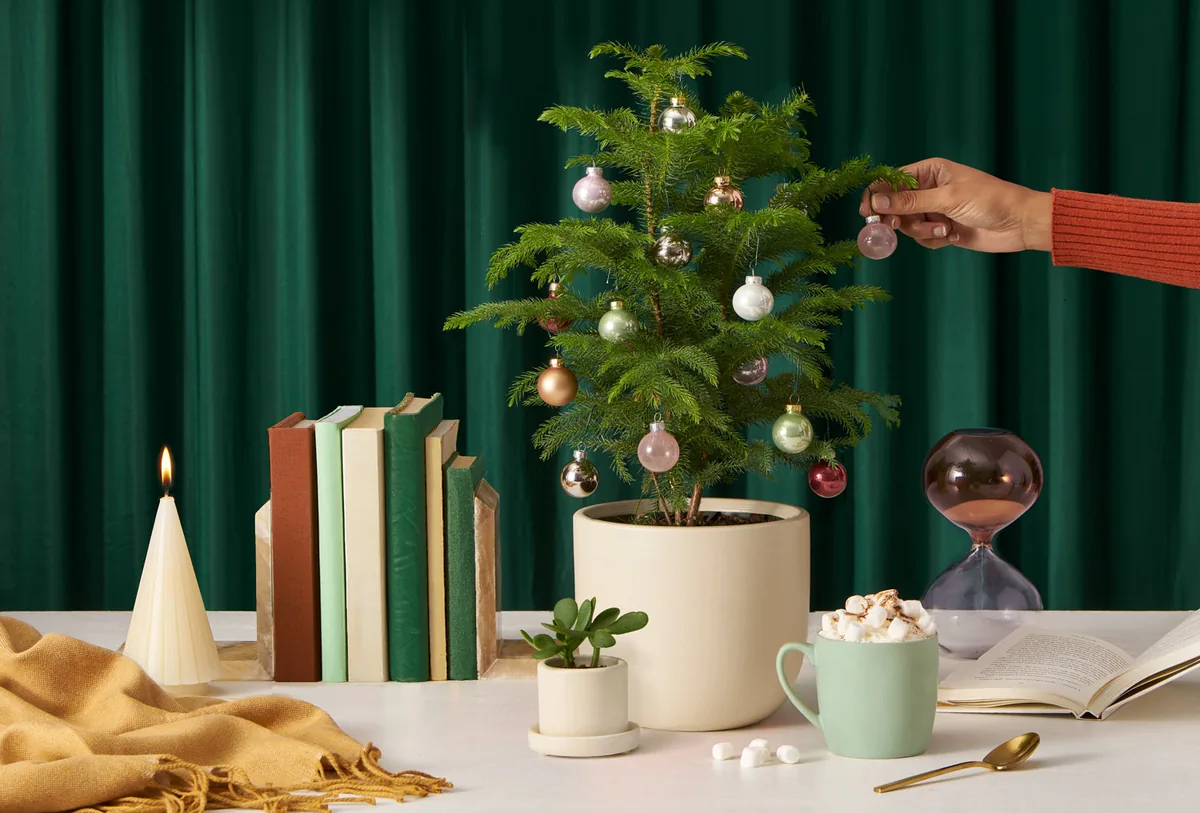

Those little tabletop “Christmas trees” at the garden center are not miniature firs waiting for a backyard planting hole. Most are Norfolk Island pines—tropical houseplants you can dress lightly for the holidays and keep growing indoors afterward.
This guide is about decorating and caring for Araucaria heterophylla as a small living Christmas tree indoors. It is not a care sheet for outdoor landscape pines, firs, or spruces, and it does not promise frost-hardy winter survival outdoors in cold climates.
Know what you bought
The ID check: Despite the name, a Norfolk Island pine is not a true pine. University of Illinois Extension notes it belongs to the ancient Araucariaceae family and is native to Norfolk Island in the South Pacific—not a cold-hardy Christmas-tree plantation species. Retail tags often say “Norfolk Island pine,” but closely related Araucaria species (including Cook pine) are sometimes mixed in the trade. Treat the label as a retail name, not a lab voucher: if your plant’s exact species is uncertain, follow the same indoor bright-light, humidity-aware care without inventing outdoor hardiness.
Give bright light—not a dim corner promise
The light rule: Iowa State University Extension recommends a brightly lit spot near an east, west, or south window and weekly rotation so the plant does not lean. Colorado State University PlantTalk calls for at least a couple of hours of bright, indirect light daily. Illinois Extension notes plants can tolerate lower light after acclimation, but low light tends to make growth lanky and droopy—so do not treat “low light OK” as a long-term health guarantee.
Keep ornaments light and lights cool
The decorating rule: Branches are graceful, not load-bearing like a cut fir. University of Missouri Extension advises avoiding heat-producing lights (cool LED strands are preferred) and skipping heavy ornaments that permanently bend limbs. Do not top the central leader for a “flatter” silhouette—broken or cut leaders spoil the natural tiered form, and damaged branches typically will not regrow the same way.
Pet note without overstating risk
The safety line: The ASPCA lists Australian Pine (Araucaria heterophylla) with additional common names Norfolk Pine, House Pine, and Norfolk Island Pine as non-toxic to dogs, cats, and horses. That is a chemical toxicity listing—not permission for pets to shred the plant. Keep curious chewers from stripping needles, and keep light strands and small ornaments out of reach.
Start with a Labeled, Healthy Tabletop Plant
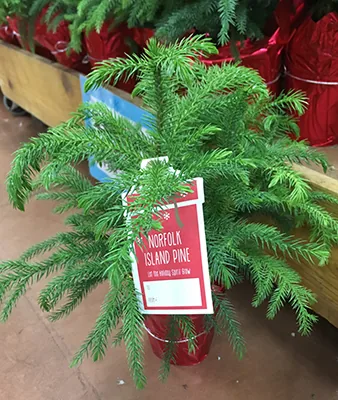
Choose a plant with firm, green branch tips and an intact central leader. Many holiday specimens arrive in decorative foil. Foil looks festive, but it can trap drainage water—remove or poke the wrap when you water so the pot can drain, then empty the saucer.
Growing note: Illinois Extension says indoor plants usually grow slowly (often a few inches a year) and may eventually reach several feet indoors. Plan for a bright floor corner later, not a forever-tiny desk plant.
Budget note: A small labeled tabletop plant is enough for holiday decorating; you do not need a floor-sized specimen to start.
Place It Where Light Hits Evenly
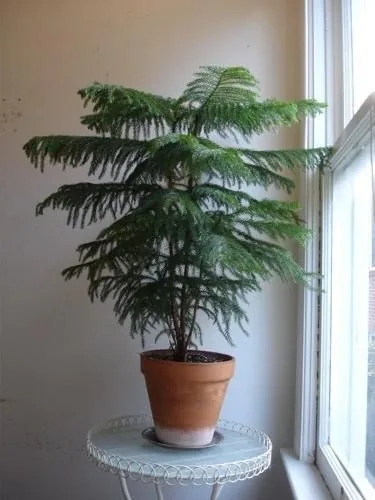
Park the pot near a bright window and rotate it weekly so tiers stay balanced. Iowa State’s east/west/south guidance is a practical starting map. Keep the plant away from blasting heat vents and icy draft doors—Colorado PlantTalk links tip browning to low humidity, watering extremes, and drafts.
Care tip: If you move a plant from a brightly lit store into a dim room overnight, expect some needle drop while it acclimates. Missouri Extension notes a short adjustment drop can be normal; chronic low light is a different problem.
Small-space tip: A tabletop pot on a stand near the brightest window often outperforms a dark hallway “statement” corner.
Water for Drainage—Then Raise Winter Humidity
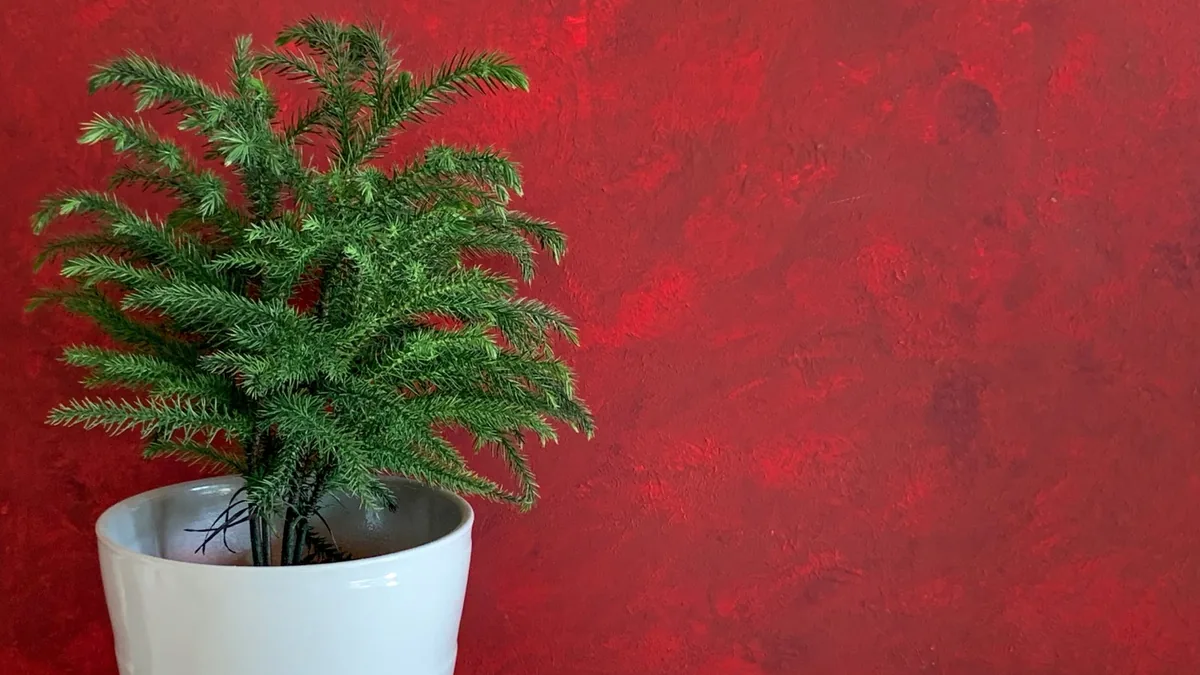
Iowa State: water thoroughly when the soil surface feels dry, then discard water that drains out. Colorado PlantTalk: when the top inch is dry, water thoroughly, let excess drain, and never leave the pot sitting in water. Illinois Extension warns that wet feet can cost you branches. In heated winter rooms, raise humidity with a humidifier or a pebble tray (pot above the water line)—Colorado aims near about 50% relative humidity when possible.
Growing note: Fertilizer is a growing-season tool. Iowa State suggests a dilute feed every 2 to 4 weeks from spring to early fall; ease off in winter rather than pushing holiday “bloom” chemistry this plant is not sold for.
Tools you need: a pot with drainage holes, a saucer you empty, and optional pebble tray or room humidifier—not pruning shears for topping.
Dress Branches Lightly with Cool Lights
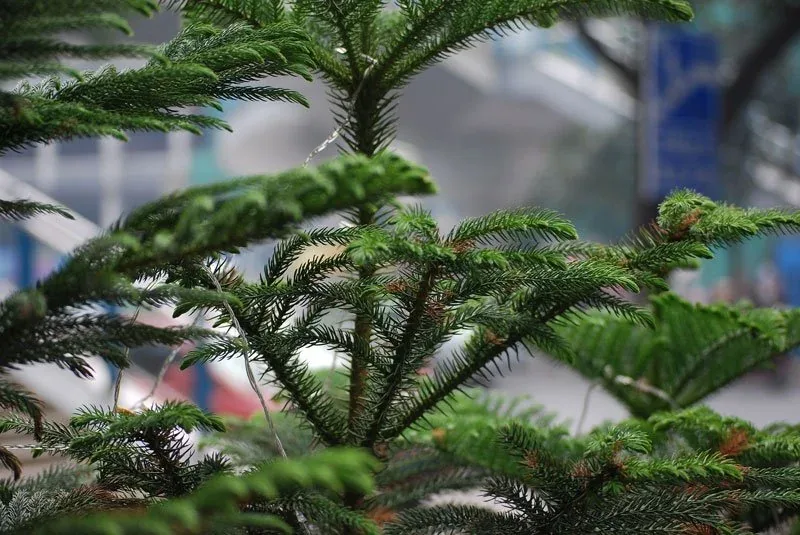
Drape a lightweight mini LED strand made for indoor plant or décor use. Choose products rated for indoor use, keep connections dry, and feel the bulbs—if a strand runs hot, it does not belong on living foliage. Missouri Extension prefers LEDs specifically because they stay cooler and weigh less. Do not invent heat-lamp “grow light Christmas” setups on the tree itself.
Care tip: Remove lights and ornaments after the holiday stretch so wires do not dig into growing tips all winter.
Renter-friendly tip: Battery micro-LED strands avoid hunting for outlets behind furniture—still follow the light’s own safety instructions.
Hang Only Lightweight Ornaments
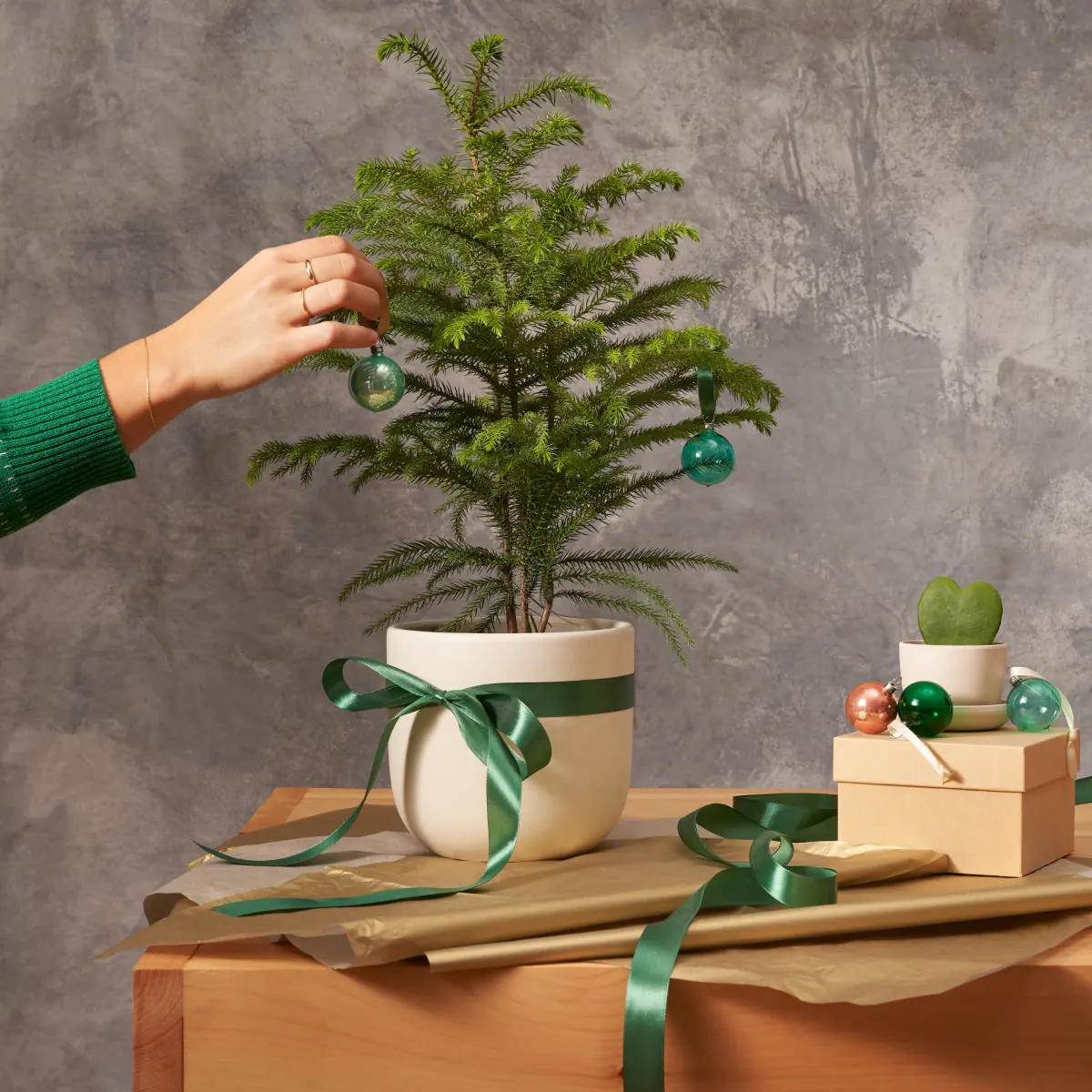
Think mini glass or plastic baubles, thin ribbon, and tiny clip-ons—not heavy heirloom balls. If a branch tips hard under an ornament, that ornament is too heavy. Skip artificial snow sprays and flocking products as a “default” finish; residue and tip stress are not worth a temporary look on a plant you plan to keep.
Budget note: A short strand of lights plus a few mini ornaments usually reads more festive than overloading every tier.
Care tip: Preserve the central leader. Topping for a flatter silhouette is not a recommended styling trick for this species’ long-term shape.
Keep It as a Year-Round Houseplant Afterward
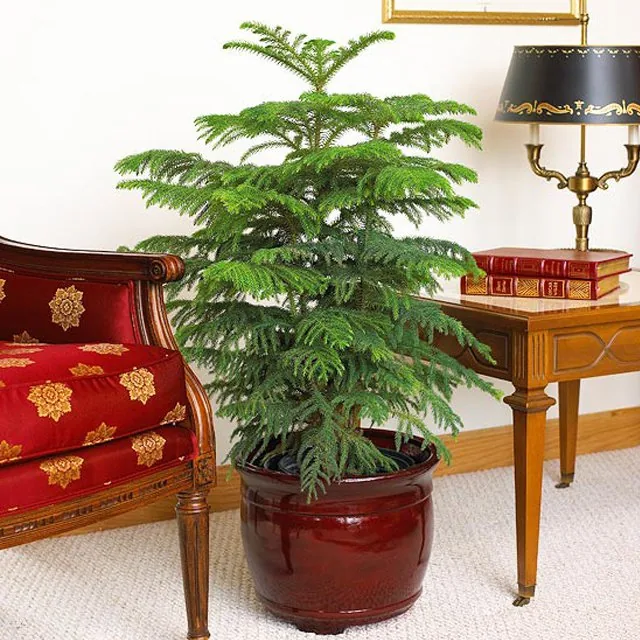
After decorations come off, return to bright light, careful watering, and humidity support. Iowa State lists about 55–70°F as a suitable indoor range; Colorado PlantTalk likes roughly 60–72°F days with slightly cooler nights. This is an indoor tropical conifer in most U.S. homes—not a tree to harden off for frost. In frost-free climates some gardeners grow related araucarias outdoors, but that is a climate-specific landscape question, not the default aftercare for a northern living-room Christmas plant.
Growing note: Lower branches that brown and drop from chronic dry air or underwatering usually do not regenerate from old wood. Preventing stress beats hoping for a prune-and-reset.
Give the plant bright light, water that drains, winter humidity help, and decorations that stay light and cool—and it can move from holiday tabletop to ordinary houseplant without pretending to be an outdoor fir.