
A poinsettia looks simple on the checkout counter and surprisingly fragile once it is home. The colorful parts drop, the soil stays soggy in foil, or the plant sits over a heat vent and collapses in a week. Most of that is fixable with a few steady habits.
This guide covers how to choose a healthier plant, keep the color through the holidays, water without drowning the roots, and decide whether to keep it afterward. Care details follow university extension guidance; pet notes follow the ASPCA listing for Euphorbia pulcherrima.
Start with a fresher plant
The selection: Look for deep green leaves down toward the soil line, fully colored bracts, and a plant that is not wilted. University of Illinois Extension also suggests checking the tiny true flowers in the center: fresher green or red-tipped cyathia usually hold longer than centers already covered in pollen.
Keep light bright and temperatures steady
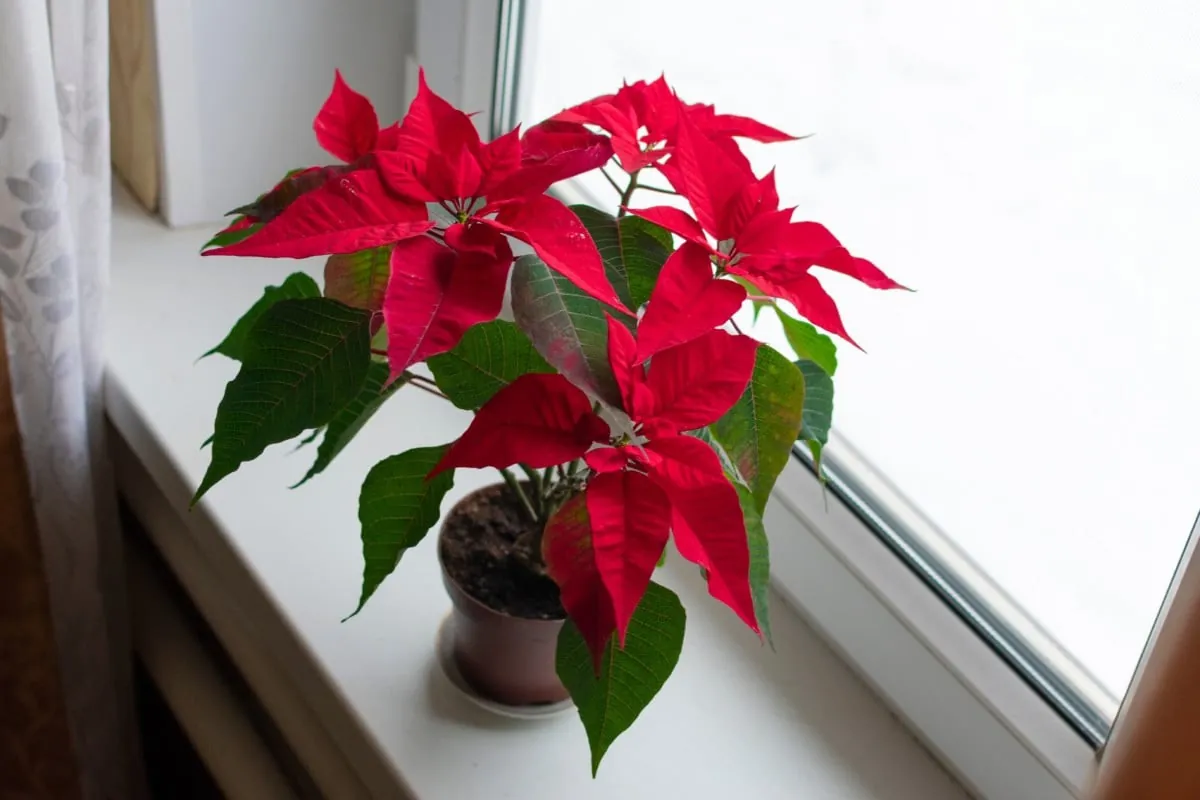
The placement: Give bright daylight from an east, south, or west window and keep the plant away from cold drafts, hot vents, fireplaces, and cold window glass. University of Minnesota Extension recommends about 65–70°F indoors and warns that temperatures below 50°F can damage the plant. Sleeve or cover it on the trip home if outdoor air is that cold.
Water thoroughly, then empty the saucer
The moisture: Water when the surface feels dry or the pot feels light, then let excess water drain completely. Punch drainage holes in decorative foil or remove the wrap while watering so the roots are not sitting in a puddle. Extension sources consistently flag overwatering and trapped water as a common reason poinsettias decline after the holidays.
Choose a Healthy Poinsettia Before You Leave the Store
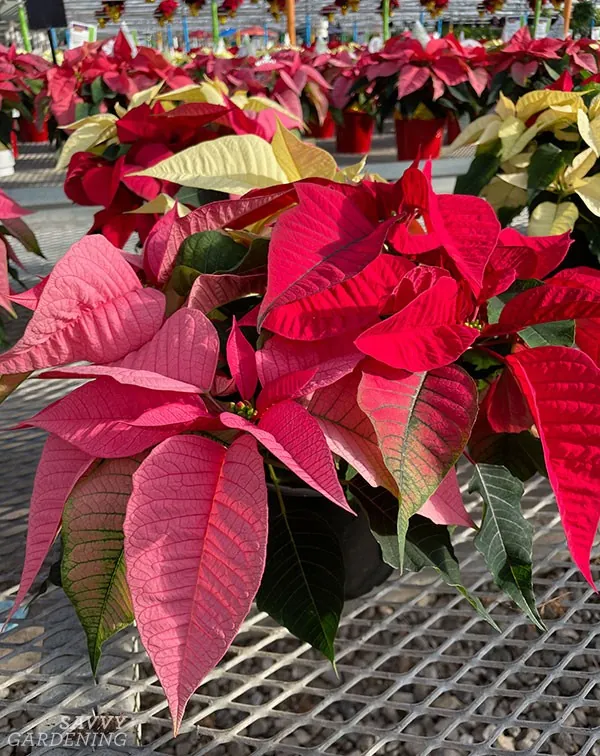
Garden-center tables make every plant look festive. Slow down and inspect one plant the way you would inspect cut flowers: full foliage, undamaged stems, and colored bracts that look finished rather than patchy.
Growing note: Illinois Extension advises against buying plants still sleeved in paper or plastic for display and against plants packed tightly together, which can stress bracts. If the soil is wet and the plant is wilted, skip it—that combination can signal root trouble rather than simple thirst.
Trip-home tip: Ask for a sleeve if outdoor temperatures are below about 50°F. A short walk across a cold parking lot can chill an unprotected plant.
Know the Bracts From the True Flowers
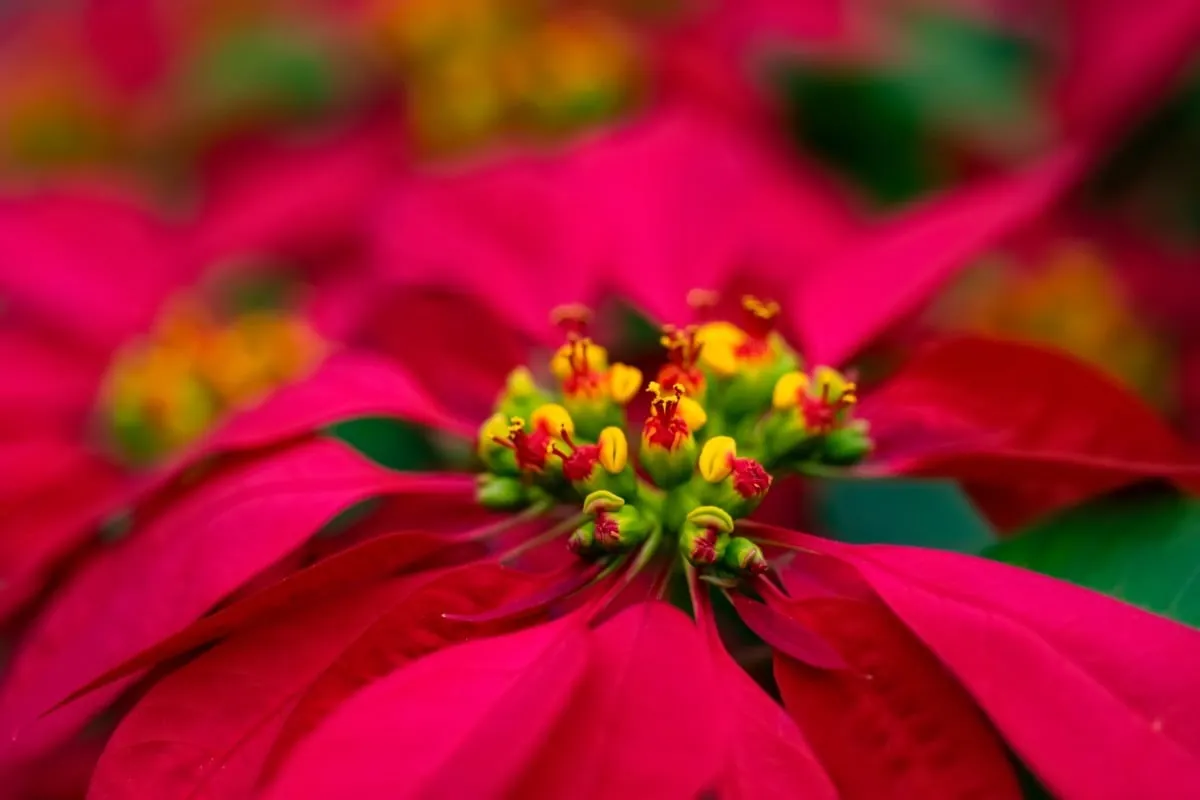
The big red, pink, or cream “petals” are modified leaves called bracts. The true flowers are the small yellow-green cyathia clustered in the center. When those centers look fresh, you usually have more display time ahead.
Care tip: Minnesota Extension notes that bracts change color in response to shorter days. You do not need to fertilize during the holiday display period; focus on light, temperature, and watering first.
Style swap: Painted or glittered novelty plants are often cream cultivars with coating on the bracts. Treat them as décor for the season; the coating is not a care method and can make leaf inspection harder.
Give Bright Light Without Drafts or Heat Blasts
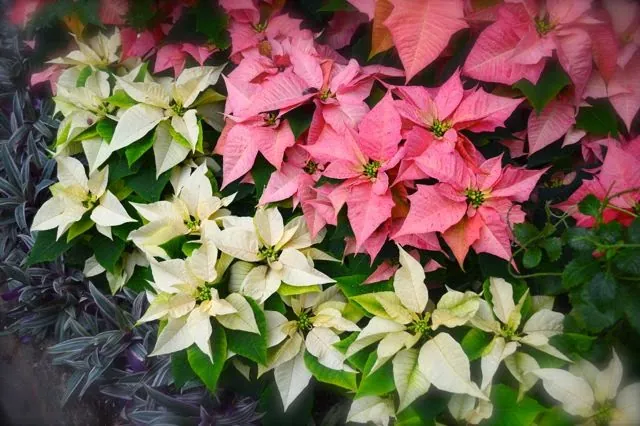
Once home, the goal is steady conditions more than a dramatic vignette. A bright room display can still work if the plant is not brushed by a door draft or parked over a register.
Growing note: Aim for a bright window and a stable room temperature in the mid-60s to about 70°F. Keep leaves and bracts from pressing against cold glass. Oklahoma State University Extension also recommends several hours of good light daily to help the plant hold leaves.
Small-space tip: On a crowded sideboard, raise airflow under the pot with a saucer and leave space around the foliage. A beautiful cluster of plants still needs each pot to drain.
Water Deeply—Then Make Sure Extra Water Can Escape
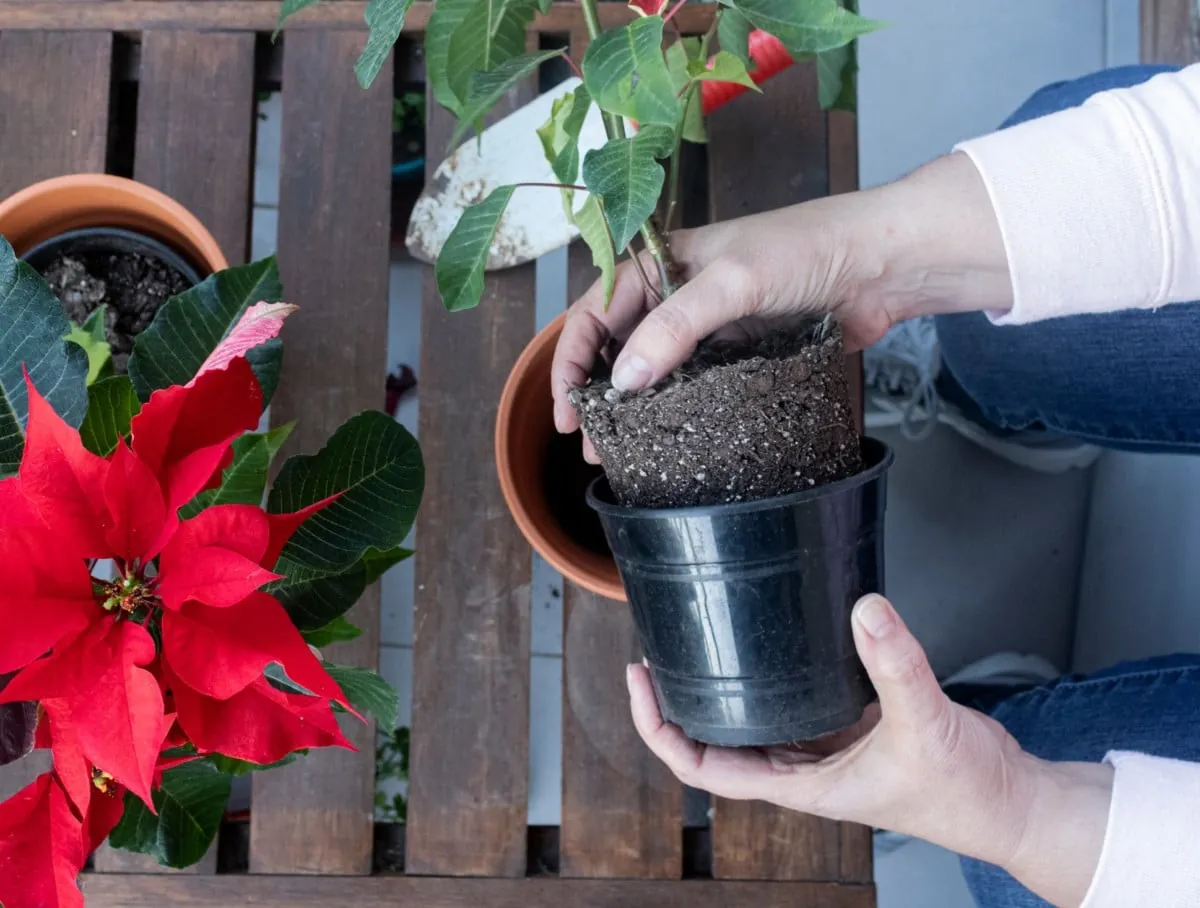
Poinsettias are often sold in lightweight soilless mixes inside foil wraps. That packaging looks finished and makes overwatering easy. Lift the nursery pot free of the wrap when you water, soak until water runs out, and return it only after it has drained.
Care tip: Minnesota Extension says to water when the surface feels dry to a light touch or the pot feels light, and never to leave the pot standing in excess water. A plant that wilts while the mix is still wet needs drainage and possibly a different pot later—not another drink on top of soggy media.
Display tip: If you group several plants, keep each nursery pot able to drain on its own. A tray of water under a whole cluster recreates the foil problem at a larger scale.
Renter-friendly note: You can leave the plant in its grower’s pot for the whole holiday season. Slip it into a cachepot only if you can still lift it out to water and drain, or if the cachepot itself has a drainage hole and saucer.
Budget note: You do not need a decorative outer pot on day one. A plain saucer and a hole punched in the foil already solve most holiday watering problems.
After the Holidays: Keep It Green or Let It Go
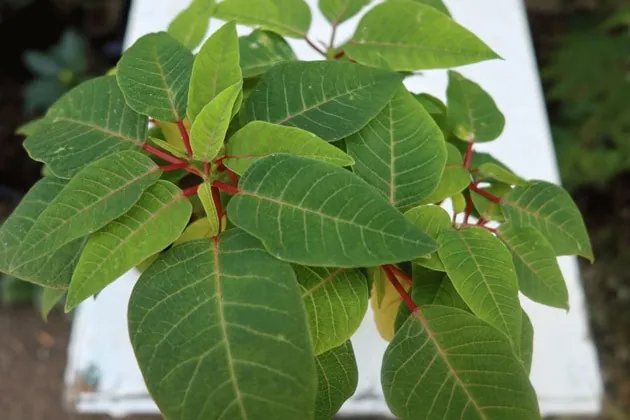
When bracts fade, many plants simply look like leafy green houseplants. That is normal. You can compost the plant after Christmas, or keep it as a foliage plant and decide later whether rebloom is worth the effort.
Growing note: Minnesota Extension says fertilizing is unnecessary during the holiday color display; start a diluted all-purpose houseplant fertilizer only after you see new growth. Illinois Extension’s after-holiday guidance includes reducing water as leaves drop, then cutting stems back in spring and growing the plant on with bright light.
Safety note: Wear gloves if you prune. The milky sap can irritate skin; Minnesota Extension also advises keeping sap away from eyes and mouth and washing tools afterward.
Want Color Next Christmas? Plan for Long, Dark Nights
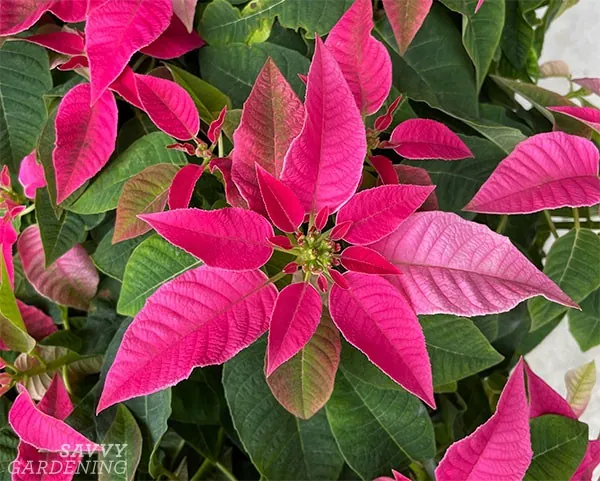
Reblooming is optional. If you keep the plant through summer, you will need a stretch of uninterrupted long nights in fall so new bracts can color. Even a brief light leak can delay the process.
Growing note: Minnesota Extension describes a common schedule beginning around the fall equinox: about 16 hours of complete darkness and 8 hours of bright light each day until good color returns. Oklahoma State University Extension describes a similar dark period from about 5 p.m. to 8 a.m. starting in late September. Use a light-proof closet, box, or cover—not a dim corner.
Best for: Gardeners who already enjoy houseplant routines. If you mainly want easy holiday color, buying a fresh, well-chosen plant next November is a perfectly practical choice.
Pets, Sap, and What “Toxic” Means Here
Poinsettia has a long reputation as a deadly holiday plant. Current pet guidance is more measured, but it is not a snack. The ASPCA lists poinsettia as toxic to dogs, cats, and horses because of irritant sap, with possible mouth and stomach irritation and sometimes vomiting; the same listing notes that toxicity is generally over-rated. Keep plants out of reach, and call a veterinarian or poison-control resource if a pet chews the plant.
For people, Minnesota Extension reports that the sap may cause dermatitis and should not be eaten. Ornamental use only is the practical rule.
Holiday Care Checklist
What you need: a bright window, a saucer, scissors or a pencil to open foil drainage, and room-temperature water. Fertilizer can wait until after you see new growth.
Daily/every few days: Feel the mix or lift the pot. Water only when it is drying. Empty any saucer water. Keep the plant away from opening doors and heat vents.
Skip for now: Hard pruning while the bracts are at peak color, outdoor overnight stays in cold climates, and guessing a cultivar name from a photo alone.
Common Holiday Problems
Yellowing lower leaves: Often linked to overwatering, poor drainage, or drafts. Check whether the pot can drain and whether the plant sits over heat.
Sudden leaf or bract drop: Temperature swings, cold exposure on the ride home, or a long stretch in a display sleeve are common triggers.
Wilting in wet soil: Do not add more water. Improve drainage and remove standing water first.
Choose the plant carefully, give it bright steady conditions, and let the pot drain. That is enough for most holiday displays. Keeping one for next year is a separate project—worth trying if you enjoy the process, not required for a beautiful December.