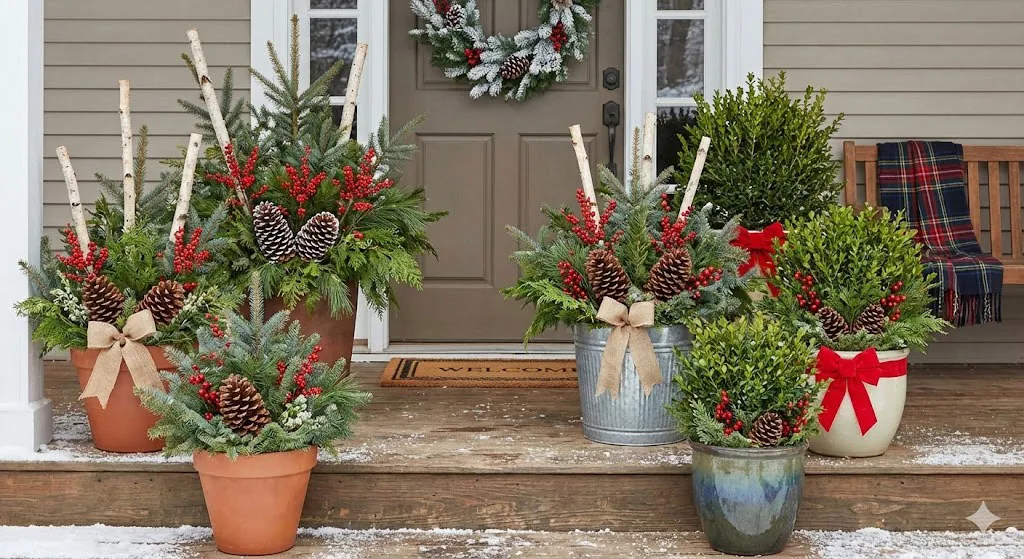

Window boxes get most of the holiday attention, but the pots flanking your steps and the urns on the patio do different work. They have to stand on their own, hold weight on a landing, drain through freeze–thaw weather, and still read as Christmas from the sidewalk.
This post contains affiliate links. As an Amazon Associate I earn from qualifying purchases.
These twelve ideas focus on freestanding winter holiday containers—not window boxes—using cut evergreen arrangements, a few live evergreens, and lighted urns. Photos come from garden writers and Extension educators; the styling notes below are ours. Plant hardiness in a pot is not the same as an in-ground zone, so treat climate advice as conditional, not a universal guarantee.
Build height before you add berries
The structure: Tall birch poles, a live evergreen, or an obelisk give a freestanding pot a vertical spine that a shallow window box never needs. Once height is set, add cut fillers and spillers so the pot reads from the street.
Choose a pot that survives freeze–thaw
The vessel: Thick plastic, fiberglass, metal, or frost-rated ceramic usually handles winter better than thin terracotta, which can crack when wet soil freezes. Drainage holes matter either way—standing meltwater is hard on roots and on the pot. A double-wall outdoor planter such as a Mayne Cape Cod–style square planter is one freestanding option sized for porch landings rather than a sill.
Separate cut greens, live roots, and outdoor lights
The materials: Cut boughs are décor stuck into soil or foam; live trees need root protection; string lights need outdoor-rated, UL-listed gear and dry cord management. Mixing those categories in one vignette is fine—just do not treat them as the same care problem.
Keep berry stems out of pet mouths
The safety line: When an arrangement uses holly or winterberry, assume berries are not pet snacks. The ASPCA lists holly as toxic to dogs, cats, and horses, and winterberry (Ilex verticillata) as toxic as well. Place berry-heavy pots out of reach, or swap in pinecones and ribbon if pets patrol the porch.
Shop the Key Pieces
- Mayne Cape Cod 20-inch square outdoor planter
- Corona ClassicCUT bypass hand pruner
- UL-listed warm-white outdoor mini lights
Links are similar tools and vessels for freestanding porch pots—not claims that any photo shows that exact SKU. Skip a link if your climate, weight limit, or outlet setup does not match.
1. Birch Poles + Winterberry Beside the Door
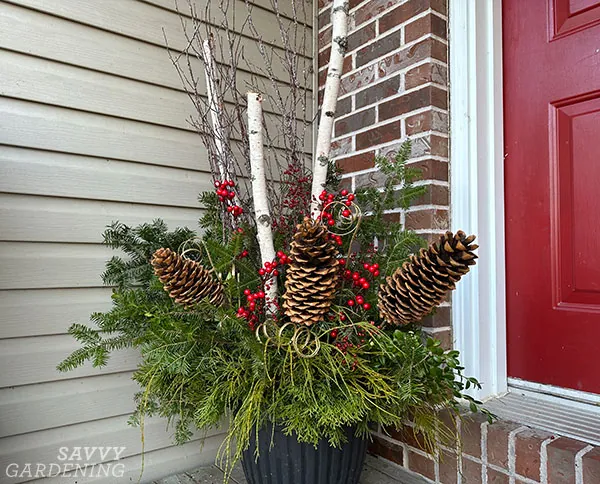
A black fluted pot by a red door stacks white birch poles, mixed cut evergreen boughs, oversized pinecones, red berry stems, and thin gold wire. It is a classic thriller–filler–spiller porch pot, not a sill box.
Container formula: birch poles + cut evergreens + red berry stems + pinecones.
Growing note: This is a cut arrangement. Penn State Extension describes packing stems into moist soil or sand so freeze weather can lock them in place—useful when overnight lows stay below freezing. Berries in the source photos are labeled winterberry; keep them away from pets per the ASPCA listing above.
Best for: A front door that needs height readable from the driveway.
Tools you need: bypass pruners for clean evergreen cuts, plus a frost-tolerant freestanding planter if your current pot is thin terracotta.
2. Stone Pedestal Urn with Cascading Cedar
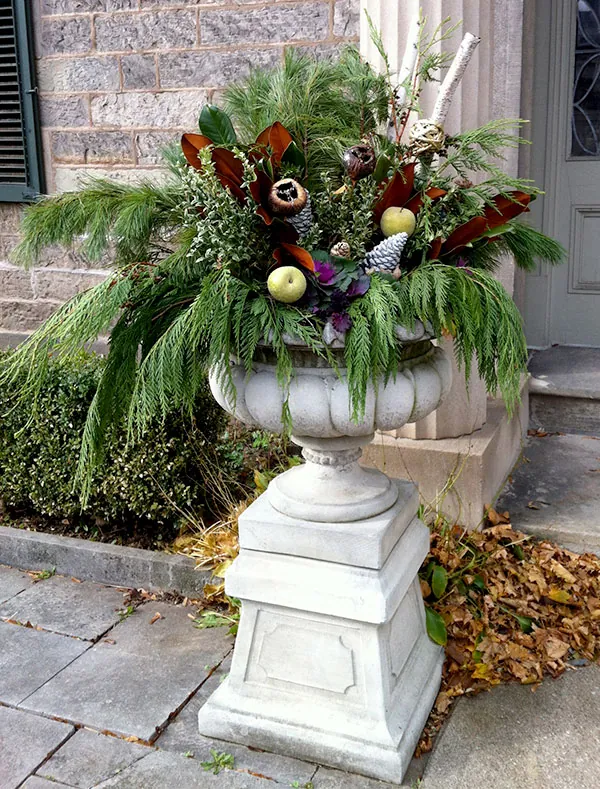
A light stone urn on a pedestal overflows with cedar spillers, pine, magnolia leaves, birch poles, and pale fruit accents along a stone walk. The pedestal lifts the arrangement so spillers can drip without blocking the path.
Style note: Magnolia leaves add a broad, glossy contrast to needle greens—visible in the photo as flat leaves among the cedar.
Care tip: Cut greens dry out in wind. Mist on mild days or tuck stems deeper into moist media. Do not assume fruit accents in a photo are edible or pet-safe; treat them as décor.
Small-space tip: One pedestal urn often reads stronger than three tiny pots fighting for the same landing.
Shop the look: similar large outdoor planter, hand pruner.
3. Live Spruce in a Weathered Crate
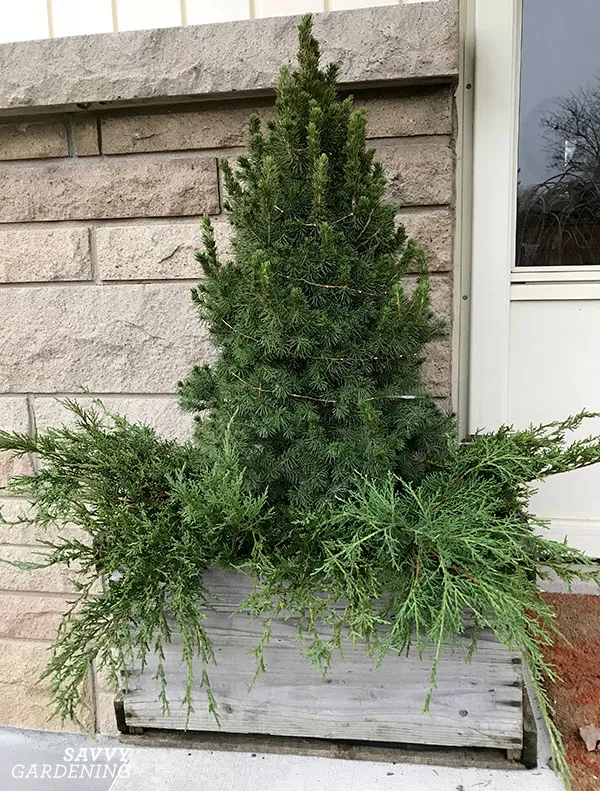
A conical live evergreen sits in a weathered wooden crate, with cascading cedar clippings softening the rim against a stone wall. Unlike cut-only pots, this one has living roots that feel every cold night.
Growing note: Roots in aboveground containers experience colder temperatures than the same plant in the ground. University Extension guidance on overwintering containers generally recommends insulating pots, grouping them, or heel-in methods in cold climates—and warns that a plant’s in-ground zone is not a pot hardiness guarantee. Match the evergreen to conditions you can verify locally, then plan root protection.
Care tip: Water when the root ball is not frozen and the mix is dry; dormant evergreens still need occasional moisture on mild days. The cedar skirt is cut décor and can be refreshed if it browns.
Budget note: A nursery spruce in a plain crate often costs less than a custom cut arrangement of the same height.
Tools you need: pruners for the cedar skirt only—do not shear the live leader for “shape” unless you intend that cut.
4. Holly Berries + a Long Red Bow
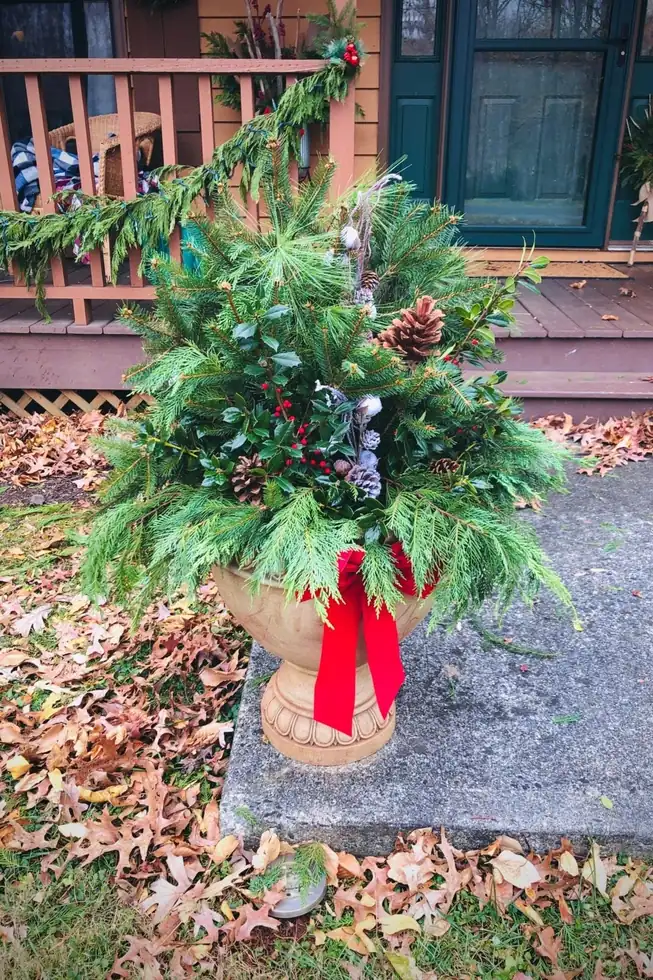
A beige pedestal urn on a leaf-strewn step is packed with fir, pine, holly berries, pinecones, and a long red ribbon bow. The bow does as much visual work as another stem bundle would.
Container formula: mixed cut evergreens + holly berries + pinecones + wired ribbon.
Safety note: Holly berries are part of the look and are listed by the ASPCA as toxic if chewed. Use faux berry picks if pets or toddlers use the same steps, or keep the urn elevated and out of reach.
DIY tip: Wire the bow to a stake so wind does not pull the whole arrangement sideways.
Shop the look: bypass pruner for gathering cuttings; a sturdy freestanding urn or square planter if you are starting from scratch.
5. A Staggered Trio of Hex Planters
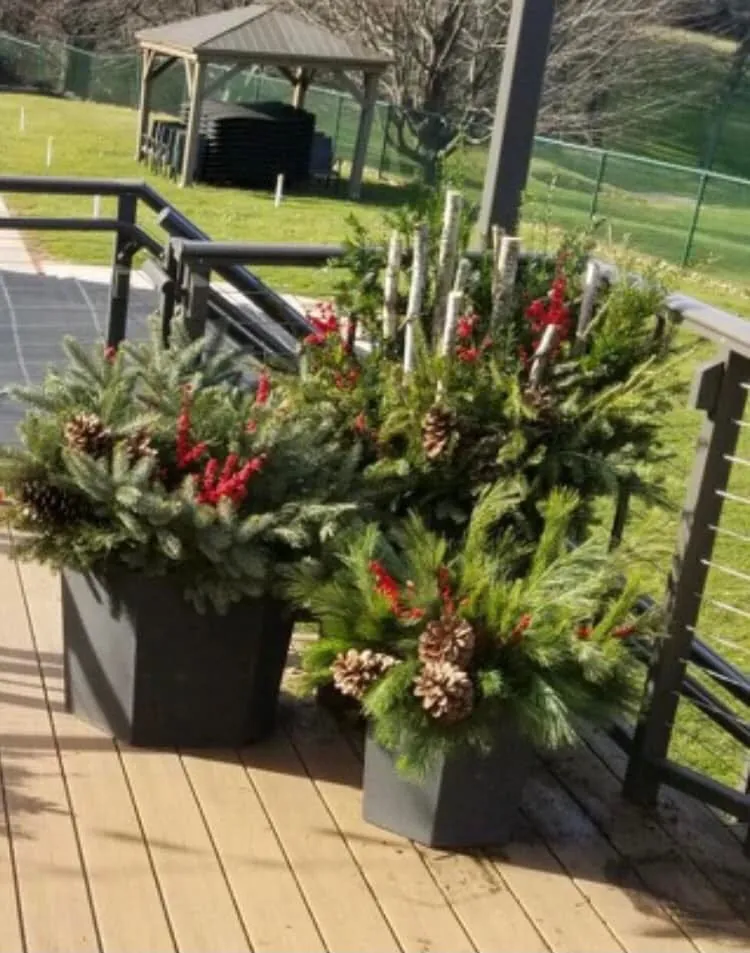
Three dark hexagonal planters of different heights stand on a wooden deck, each filled with birch poles, spruce, pine, red berries, and pinecones. The grouping creates a mini skyline without a window ledge.
Layout tip: Stagger heights so the tallest pot sits farthest from the walking line. Penn State Extension’s winter outdoor arrangement guidance is a useful companion when you are packing cut stems for outdoor display.
Care tip: Grouped pots create a slightly milder microclimate than a single exposed urn—still not equal to in-ground planting for live roots.
Renter-friendly: Freestanding pots move when the lease ends; nothing attaches to the house.
Shop the look: matching or mixed outdoor planters, pruners.
6. Tall Black Planter Loaded with Winterberry
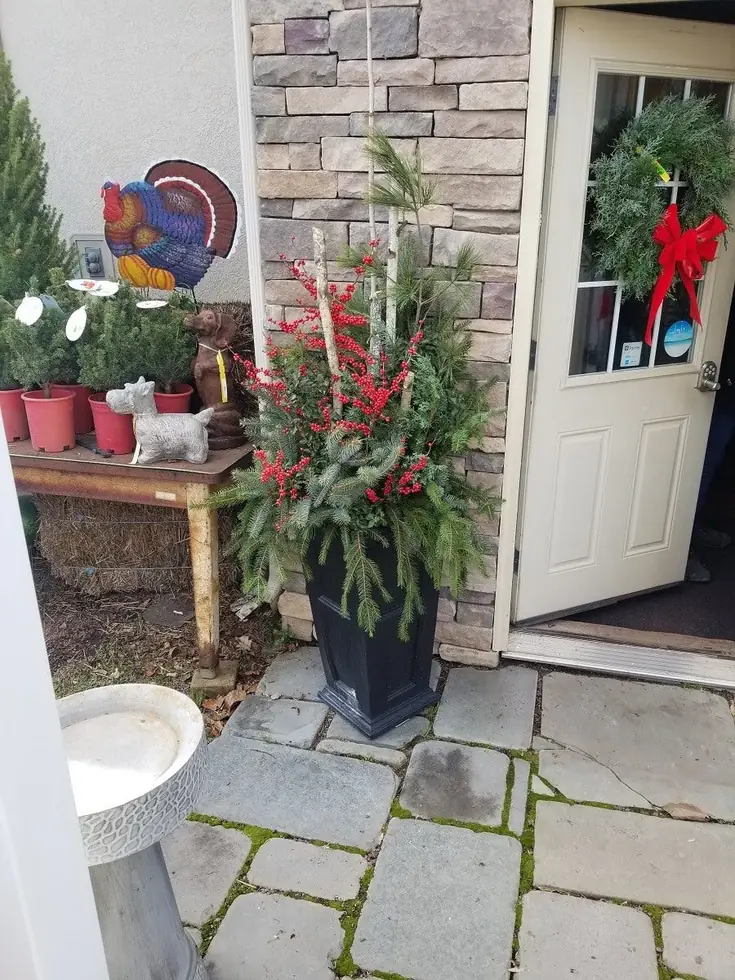
A tall black square planter beside a white door stacks birch poles, pine, and dense red berry stems against a wreath. The berries carry the Christmas color so you need less ribbon.
Plant note: The Extension source names winterberry among winter outdoor materials. Winterberry is Ilex verticillata; treat berry stems as toxic décor around pets, same as other holly-family berries on the ASPCA lists.
Structure tip: Dense berry stems still need an evergreen backbone so the pot does not look spindly after a windy week.
Best for: Doors that already have a wreath and need a vertical companion, not another wall hanging.
Tools you need: hand pruner, frost-tolerant freestanding planter.
7. Snow-Ready Obelisk in Terracotta
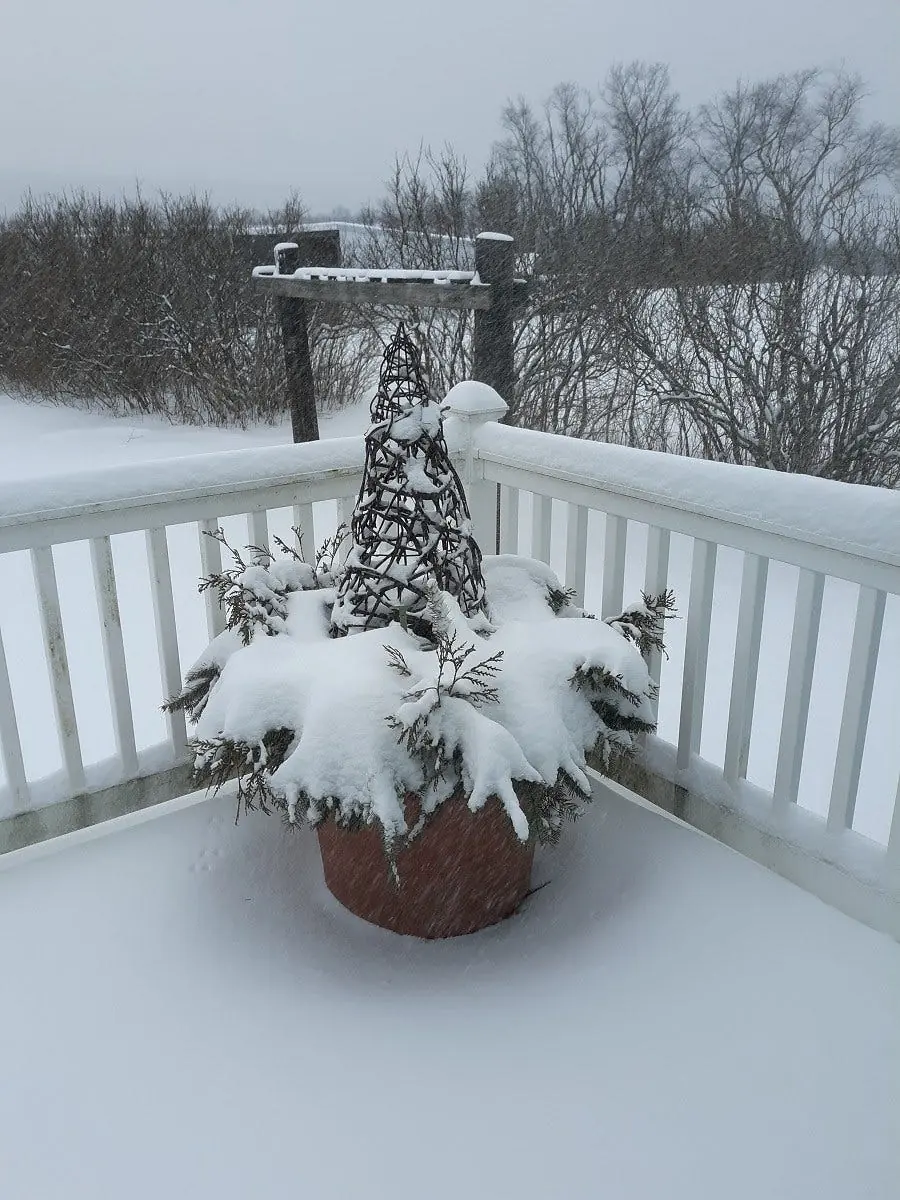
Snow dusts a terracotta pot on a white deck railing, where a grapevine obelisk rises through evergreen spillers. The structure keeps the design readable even when needles disappear under powder.
Container note: Terracotta looks right in snow photos and is also the material most likely to crack when wet soil freezes. Use a frost-rated pot, empty clay in deep freezes, or switch to plastic/resin if your winters routinely saturate and freeze containers.
DIY tip: Seat the obelisk deep before packing greens so ice expansion does not tip it.
Season swap: After Christmas, leave the obelisk and swap in bare branches for a quieter January look.
Shop the look: similar weather-resistant planter if you are retiring cracked clay.
8. Red Dogwood Twigs + Silver Wire Stars
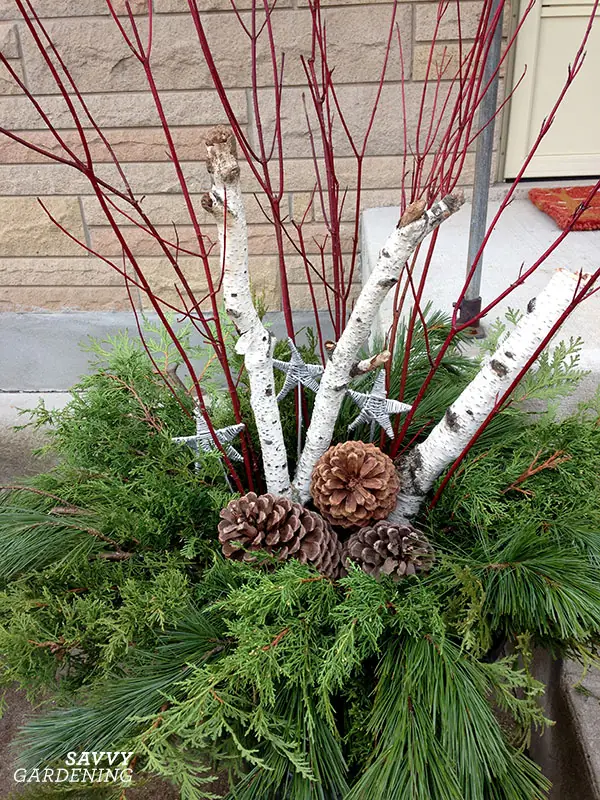
White birch poles share the pot with bright red dogwood twigs, cedar and white pine spillers, pinecones, and silver wire stars. The red twigs replace berry stems for color without adding fruit.
Container formula: birch + red dogwood twigs + cedar/pine spillers + cone fillers + wire ornaments.
Growing note: Twigs are cut stems here, not a live shrub in the pot. Source labeling supports calling them dogwood; do not invent other species from an unlabeled close-up.
Budget note: Colored twigs and cones often cost less than long berry stems and last through more freeze–thaw cycles.
Tools you need: bypass pruners.
9. Buffalo-Check Bow on a Cut Evergreen Pot
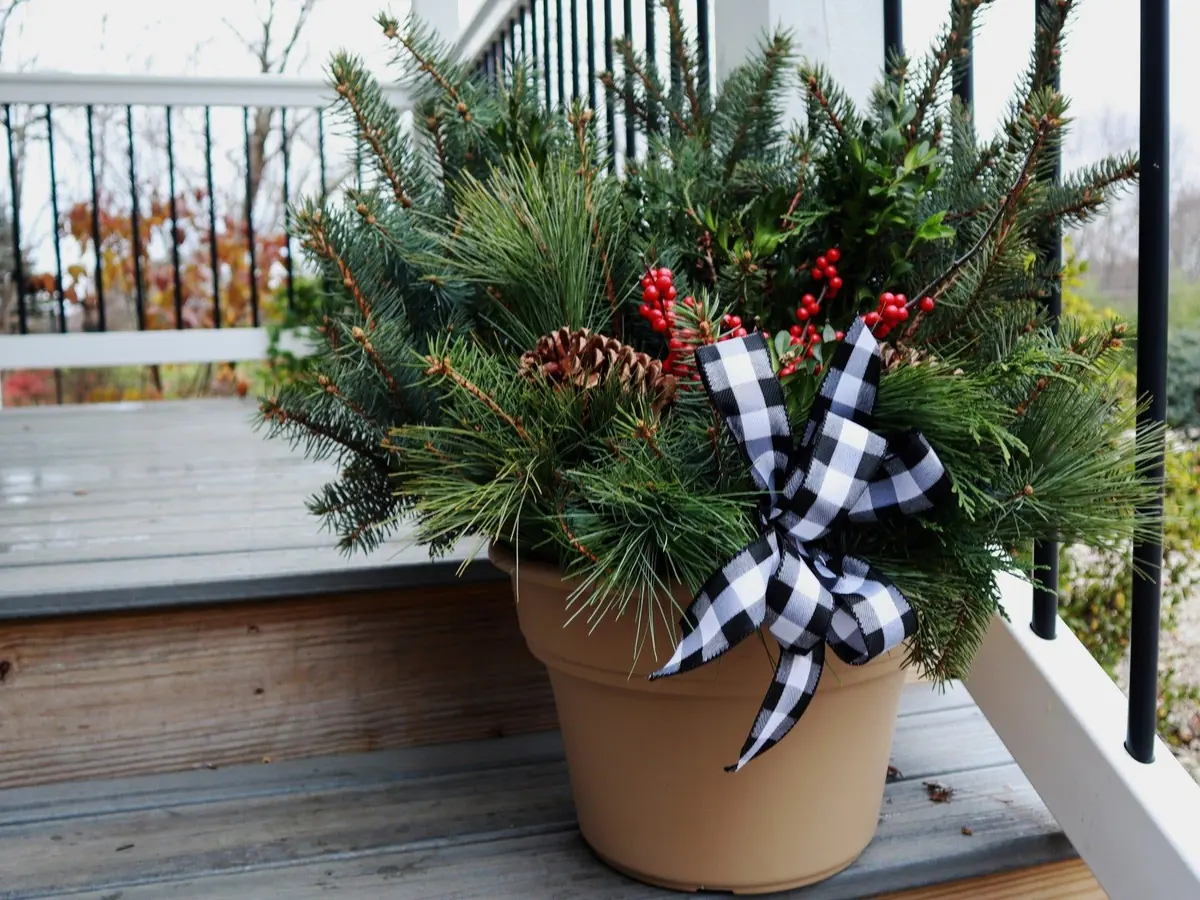
A tan porch pot on a gray deck radiates pine, cedar, and spruce cuttings, with red berry stems, a pinecone, and a large black-and-white buffalo-check bow. The ribbon is the holiday signal; the greens do the winter work.
Container formula: mixed cut evergreens + berry stems + pinecone + wired check bow.
Care tip: Water the media until it freezes so cut stems stay seated, then refresh browned tips on mild days. Treat berry stems as pet-toxic décor if you cannot identify them as a safe faux pick.
Style swap: Swap buffalo check for plaid or velvet if your porch already uses another pattern—keep the bow large enough to read from the sidewalk.
Shop the look: hand pruner, frost-tolerant outdoor planter.
10. Lantern Thriller with Fairy Lights
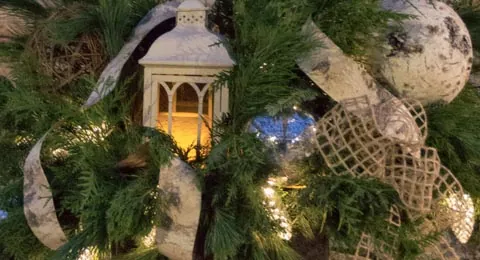
A close urn vignette centers a glowing white lantern, birch-pattern ribbon, cedar, a glass bauble, and warm fairy lights. The lantern is the thriller; greens and ribbon are the supporting cast.
Style note: Battery lanterns avoid running a cord across wet steps; plug-in strands still need outdoor-rated gear if they leave the lantern.
Safety note: Use outdoor-rated, UL-listed lights and keep plugs and connections off standing water. Do not bury lighted wire in soaking wet soil.
Display tip: Keep the lantern chimney clear of loose needles so heat and light stay unobstructed.
Shop the look: outdoor mini lights for the glow layer.
11. Spruce Tips + Hammered Ornaments
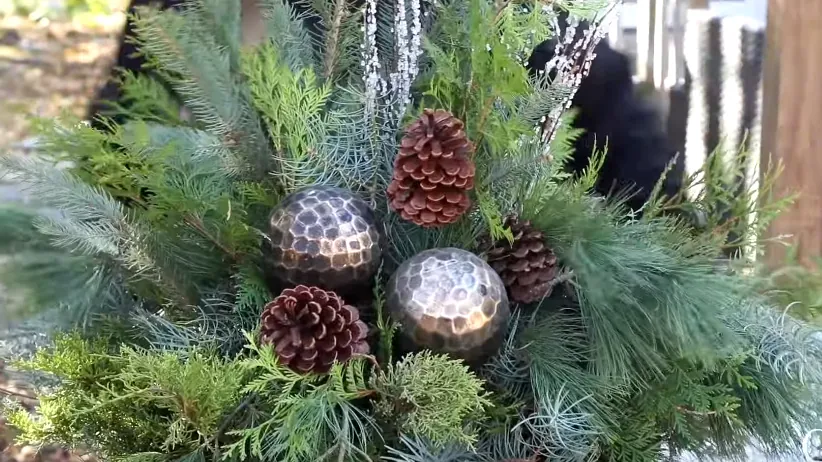
A dense freestanding porch pot mixes blue spruce, cedar, and pine with hammered bronze ornaments, pinecones, and glittery vertical twigs. Texture does the decorating instead of a single tall birch thriller.
Container formula: spruce tips + soft cedar fillers + pinecones + weatherproof ornaments.
DIY tip: Garden Gate’s spruce-tip porch-pot method starts with all-weather containers and damp potting mix so stiff spruce stems anchor firmly—useful when you want height without birch poles.
Best for: Steps where you already have a medium pot and want a fuller, rounded silhouette.
Tools you need: bypass pruners.
12. Cedar Spillers + Faux Fruit Accents
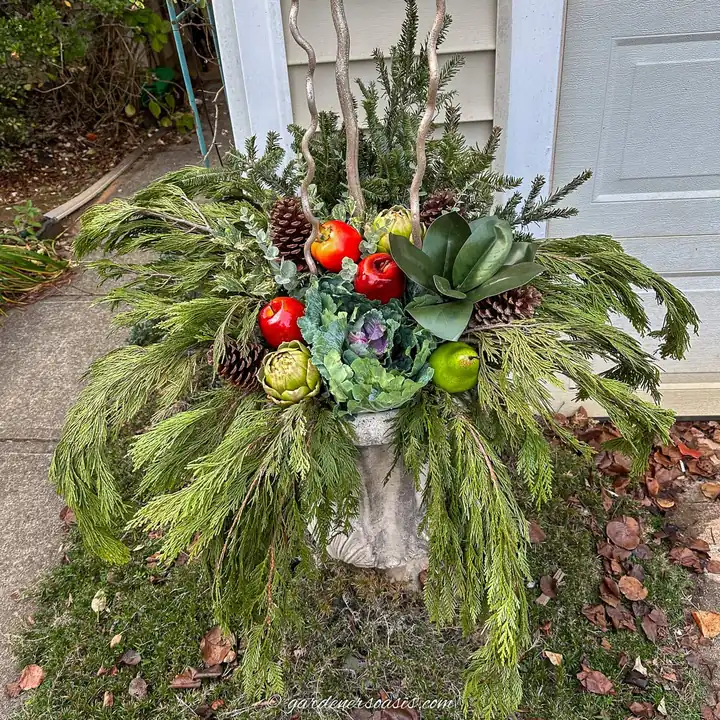
A weathered stone urn beside a garage door drapes cedar spillers, upright evergreens, curly silver branches, ornamental kale, magnolia leaves, pinecones, and shiny fruit accents. The source pairs real cut greens with weather-tough artificial fruit so color holds through freeze–thaw.
Container formula: cedar spillers + upright fir/spruce + curly branches + pinecones + faux fruit/kale accents.
Safety note: Treat fruit and kale accents as décor props—not snacks—especially around pets and kids. Holly stems, if you add them, stay on the ASPCA toxic list.
Best for: Garage aprons or wide landings that can take a heavy urn without blocking the door swing.
Shop the look: similar frost-tolerant planter, pruners; add outdoor mini lights only if you weave a night layer like the source tutorial suggests.
Freestanding winter pots reward a little engineering: a frost-sensible vessel, drainage, clear separation of cut greens versus live roots, and outdoor-rated lights. Use the photos as real-world inspiration, verify plant and safety details against Extension and product labels for your own climate, and keep berry stems away from curious pets.