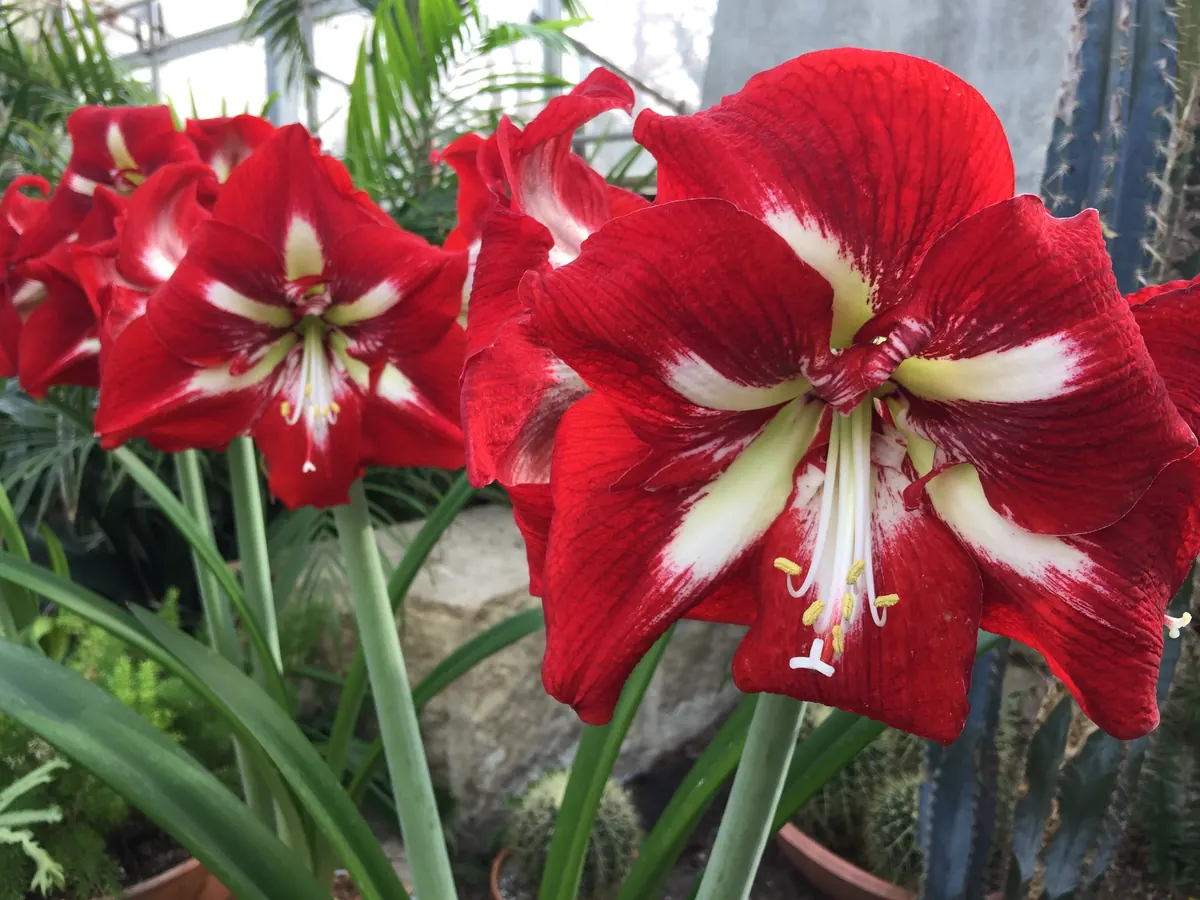

It is early November, which is exactly when garden centers stack boxes labeled “amaryllis.” You want those trumpet blooms for the holidays—and you do not want a calendar promise that a living bulb cannot keep.
This post contains affiliate links. As an Amazon Associate I earn from qualifying purchases.
Holiday “amaryllis” sold for indoor forcing are usually Hippeastrum, not the South African true amaryllis (Amaryllis / belladonna lily) and not paperwhite narcissus. Timing, pot size, and watering below follow university Extension guidance. Bloom windows are ranges, not a guarantee for December 25.
Know which bulb you bought
The ID check: Paperwhites are Narcissus—often grown in water or pebbles with clusters of small fragrant flowers. Hippeastrum bulbs are large and onion-like, send up thick hollow stalks, and need a draining pot of soil with the shoulders exposed. Do not use paperwhite timing charts on a Hippeastrum kit.
Treat Christmas Day as a hope, not a contract
The calendar: Iowa State University Extension says an amaryllis usually blooms about 6 to 8 weeks after planting and suggests early to mid-November potting for Christmas-season color—plus staggering a second bulb a few days later to improve your odds. The same Extension notes South African-grown bulbs often bloom in about 3 to 5 weeks, while Dutch-grown bulbs often take about 6 to 8. Variety, prior cooling, storage, and your room temperature all move the date.
Leave the shoulders out of the soil
The planting rule: Choose a pot only about 1–2 inches wider than the bulb, with drainage holes. Plant in well-drained potting mix so the upper half of the bulb stays above the soil and about an inch of rim remains for watering, per Iowa State and University of Wisconsin–Madison Extension.
Keep pets and kids from chewing the plant
The safety line: Iowa State notes the bulb and plant are poisonous. The ASPCA lists Amaryllis as toxic to dogs, cats, and horses (lycorine and related compounds; clinical signs can include vomiting, diarrhea, drooling, and more). That listing uses Amaryllis spp. scientific naming; retail holiday bulbs are usually Hippeastrum. Either way, keep bulbs, leaves, and flowers out of reach and call a veterinarian or poison-control resource if a pet chews the plant. Do not invent DIY chemical soaks for “faster bloom” without a verified label.
Start with a Firm, Large Bulb
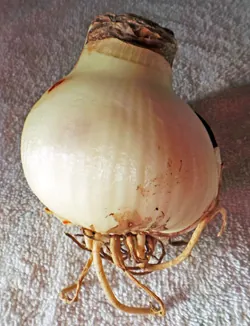
A good forcing bulb looks solid, with dry papery tunic and a healthy basal plate—not soft, moldy, or collapsed. Larger bulbs are more likely to send more than one stalk, which Iowa State also notes when you are shopping.
Growing note: Skip bulbs that already look spent in the box. If a kit’s plastic pot has no drainage holes, Iowa State advises drilling holes or moving the bulb into a draining container before you water.
Budget note: One large bare bulb in a pot you already own often outperforms a tiny novelty kit for display size.
Pot So the Shoulders Stay Above the Mix
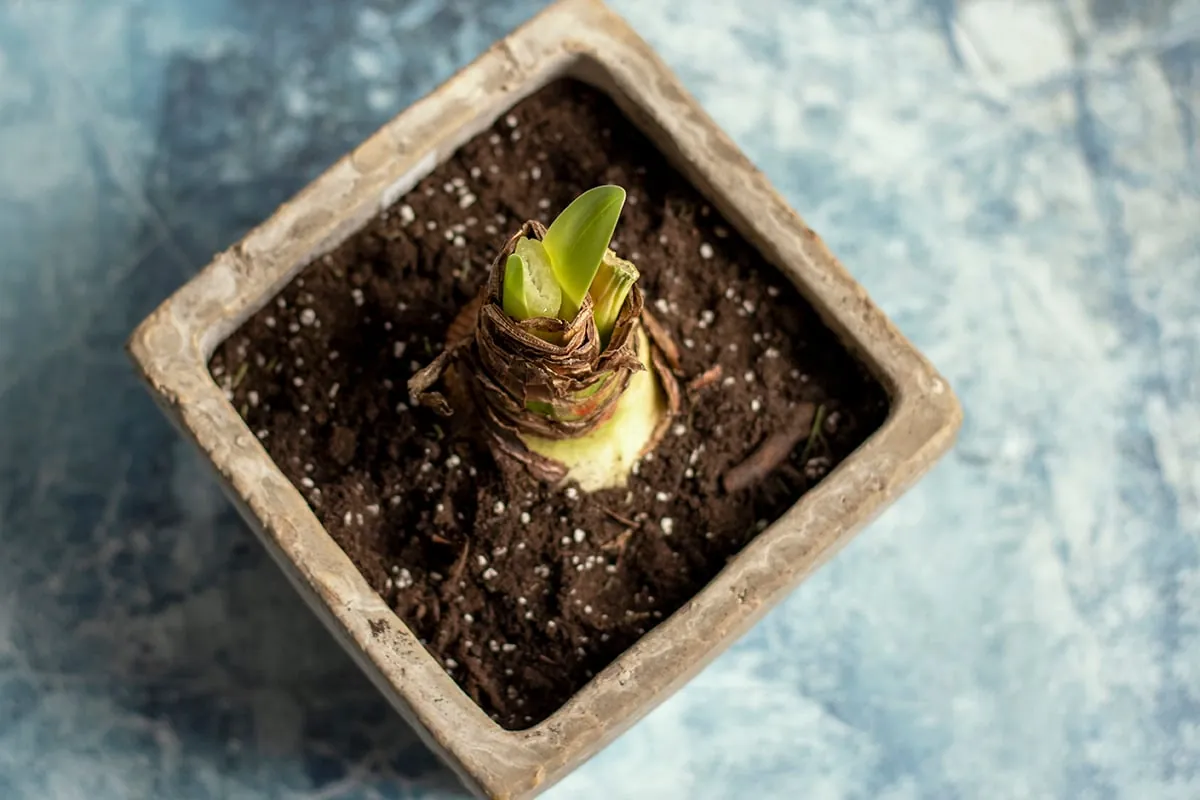
Center the bulb, firm mix around the roots, and leave the neck and upper half exposed. The photo shows how much of the bulb should remain visible—burying it to the tip is a common watering-and-rot risk.
Care tip: Water thoroughly once after potting, then keep the mix only barely moist until growth appears. Wisconsin Extension warns that constantly wet soil can rot the bulb.
Tools you need: a draining pot and all-purpose well-drained potting mix; forget undersized compressed coir disks if they do not fill the pot (Iowa State’s kit note).
Warm Light, Sparse Water Until Growth Shows
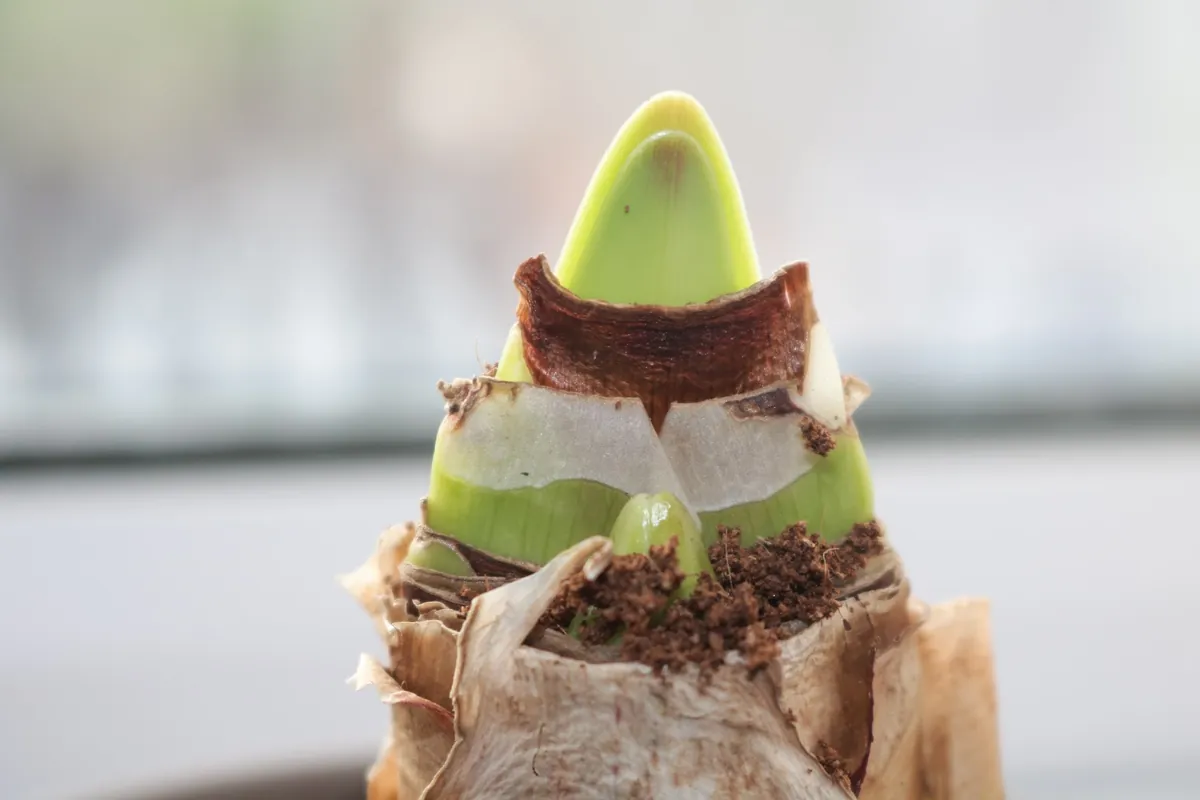
Place the pot in a warm indoor spot—Iowa State suggests about 70–75°F after potting; Wisconsin describes roughly 65–70°F sunny placement with barely moist soil. When shoots appear, give brighter light and water a little more often.
Growing note: High heat can push weak stalks. Cooler bloom-display temperatures (about 60–65°F in Wisconsin’s guidance; Iowa State suggests moving blooming plants to about 65–70°F without harsh direct sun) help flowers last longer.
Small-space tip: Turn the pot regularly as the stalk elongates so it does not lean permanently toward the window.
Support a Tall Stalk Before It Tips
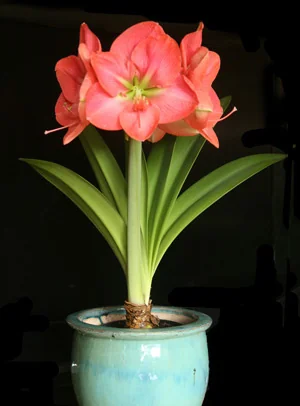
Once buds swell, a single Hippeastrum can become top-heavy. Stake leaning stalks early, keep rotating the pot, and enjoy the show when flowers open.
Care tip: Iowa State recommends staking stalks that lean badly. A heavy ceramic pot helps counterbalance better than a featherweight nursery cup.
Style note: Move the plant slightly cooler and out of harsh midday sun when blooms open to prolong color—still not a promise of how many days each flower will last.
Enjoy the Blooms—Then Cut Only the Spent Stalk
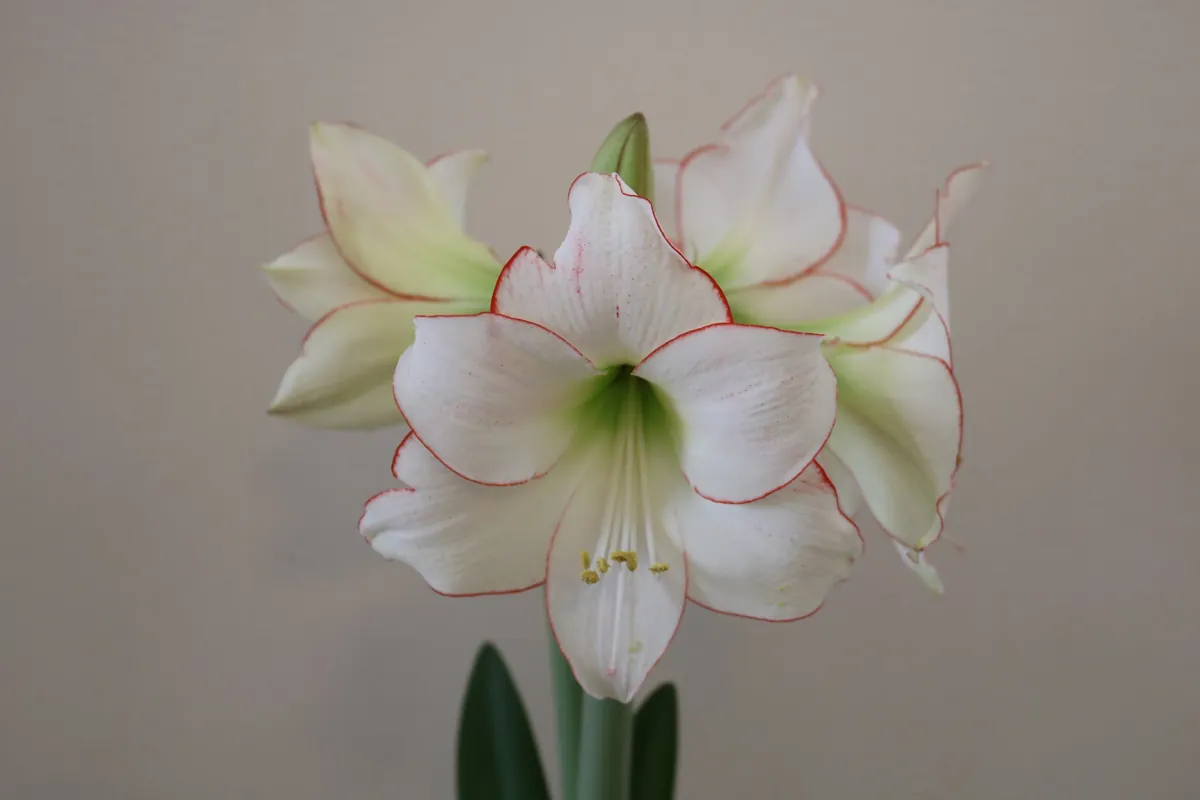
Trumpet flowers are the reward. After they fade, cut the flower stalk about 1–2 inches above the bulb and leave the strap leaves alone so the bulb can recharge.
Growing note: Iowa State and Wisconsin both emphasize keeping leaves growing in bright light with regular water and dilute fertilizer after bloom if you want a chance at rebloom next year.
Tools you need: clean bypass pruners or a sharp knife for the stalk only—never strip healthy leaves for “tidiness.”
Plan Optional Rebloom With a Real Cool Rest
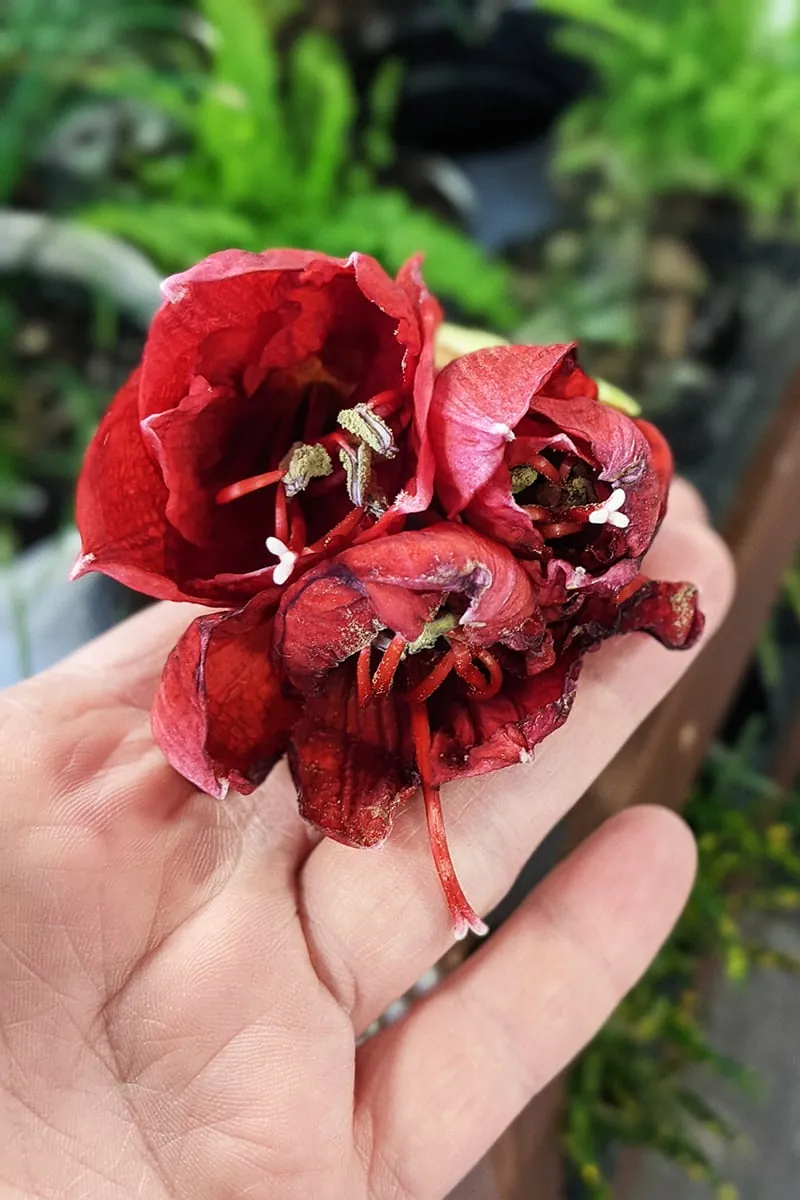
If you keep the plant, grow it through spring and summer, then give an 8–10 week cool period around 50–55°F before restarting water and warmth—Iowa State’s rebloom guidance. Wax-coated novelty bulbs are often single-season; treat them as décor first.
Growing note: Failure to bloom next year usually means the bulb did not store enough food or did not get an adequate cool period—not a reason to soak it in unproven kitchen chemicals.
Best for: Gardeners who enjoy a year-long houseplant routine. If you only want easy December color, buying a fresh, well-chosen bulb each fall is still a practical choice.
Paperwhites Are a Different Project
Paperwhite narcissus are forced on a different schedule and often in water or pebbles. Their clusters of small, strongly scented blooms are not Hippeastrum trumpets. Use a paperwhite guide when that is what you bought; do not mix the two timing charts.
Force Hippeastrum with a draining pot, exposed shoulders, restrained water until growth starts, and Extension-based timing ranges. From early November you can still aim at holiday color—especially with faster South African stock—but treat December 25 as a target window, not a warranty.