Garden centers put out boxes of paperwhite bulbs right when the house starts feeling dark and quiet. You want that cluster of starry white blooms on the kitchen counter—and you do not want a calendar promise a living bulb cannot keep.
Paperwhites sold for indoor forcing are Narcissus in the paperwhite / tazetta group (often labeled paperwhite narcissus), not holiday “amaryllis” (Hippeastrum) and not the yellow trumpet daffodils that need a long winter chill. Timing, water level, and cool rooting below follow university Extension guidance. Bloom windows are ranges, not a guarantee for December 25.
Know which Narcissus you bought
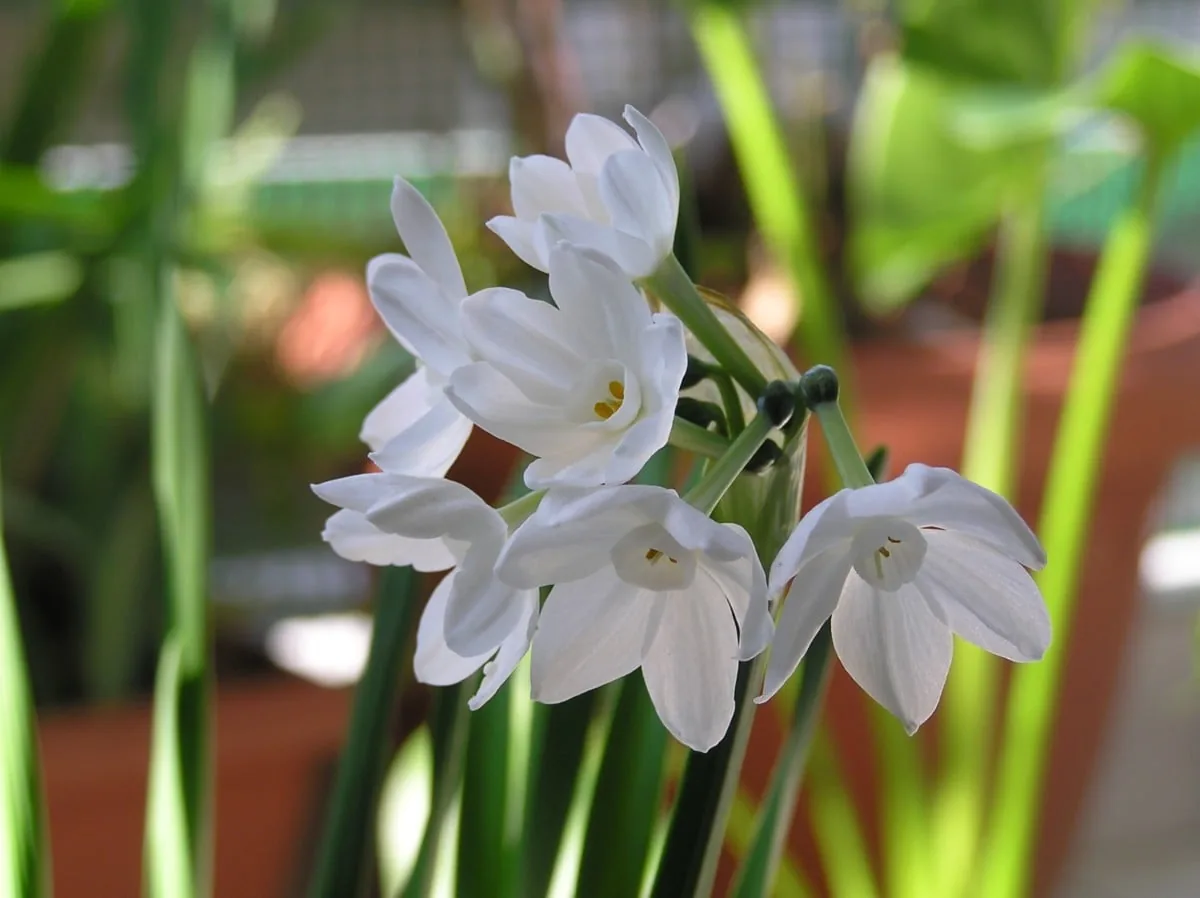
The ID check: Paperwhites are the tender types sold for indoor bowls—usually with clusters of small white, fragrant flowers. University of Wisconsin–Madison Extension lists paperwhite narcissus with no required cold period, while ordinary daffodils (Narcissus) need about 15 to 17 weeks of chilling before forcing. Do not apply a daffodil pre-chill chart—or an amaryllis potting chart—to a paperwhite kit.
Treat Christmas Day as a hope, not a contract
The calendar: Wisconsin Extension notes paperwhites often bloom in about 3 to 5 weeks when forced indoors. Iowa State University Extension describes cool rooting for 2 to 3 weeks, then warmer bright light—and cultivar differences (for example, some types take longer or smell different). Variety, room temperature, and how soon roots form all move the date. Start early enough for your schedule, and stagger a second bowl a week later if holiday color matters more than a single date.
Keep water at the basal plate—not over the bulb
The water rule: In a pebble or gravel bowl, Iowa State says add water until it touches the bottom of the bulbs and keep it there. Wisconsin’s paperwhite steps say add water until it just reaches the bottoms of the bulbs and keep the level just at the base. Either way, the basal plate needs moisture for roots; the bulb body should not sit submerged. Refresh water as needed so it does not go stale.
Keep pets from chewing bulbs or foliage
The safety line: The ASPCA lists Narcissus spp. (including Paper White) as toxic to dogs, cats, and horses. Toxic principles include lycorine and other alkaloids; clinical signs can include vomiting, salivation, and diarrhea, with larger ingestions linked to more severe effects. Bulbs are the most poisonous part. Keep bowls, loose bulbs, and cut stems out of reach. Paperwhites are ornamental—not food. Call a veterinarian or ASPCA Animal Poison Control if a pet chews the plant.
Gather Firm Bulbs and a Stable Container
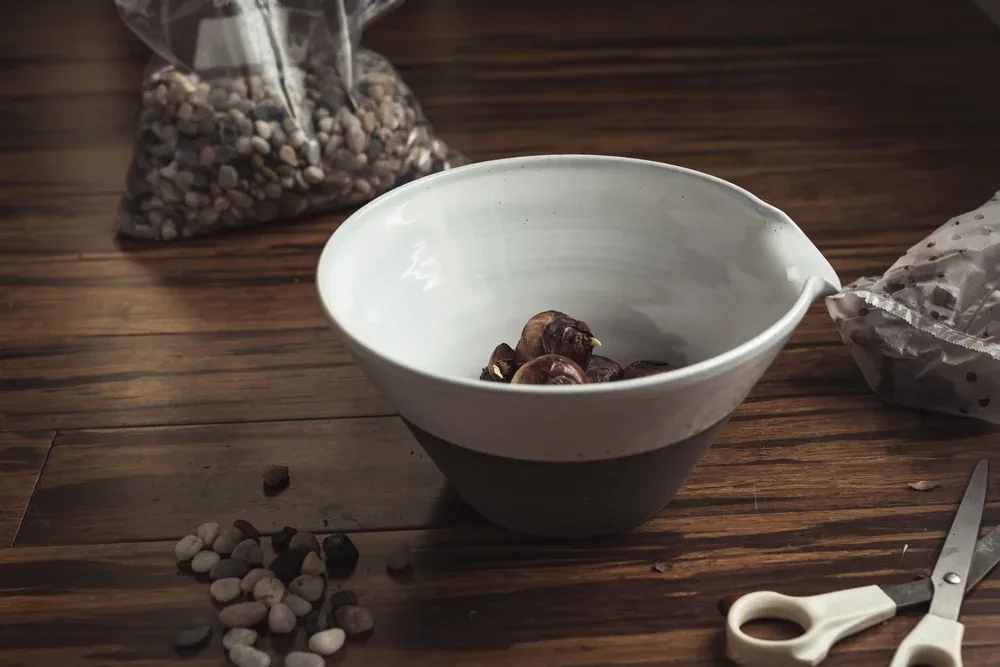
Choose firm paperwhite bulbs with dry papery tunics—not soft, moldy, or collapsed. A shallow ceramic bowl, a glass cylinder, or another watertight container works if pebbles or gravel can brace the bulbs upright. Pack several bulbs close together for a fuller display and mutual support as stems elongate.
Growing note: Iowa State lists popular forcing cultivars such as ‘Ziva’ (pure white, musky fragrance). Fragrance intensity is a cultivar trait—place strongly scented bowls where you enjoy them, not where the scent overwhelms a small bedroom.
Budget note: Decorative river pebbles or clean gravel you already own are enough; skip novelty gadgets that do not hold the bulbs steady.
Set Bulbs on Pebbles and Water Only the Base
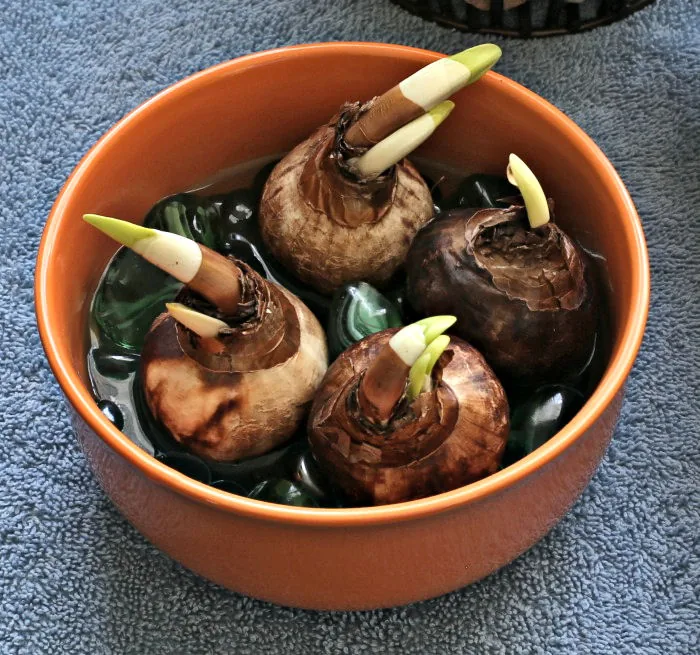
Pour a layer of pebbles or gravel into the bowl. Nestle bulbs pointed end up so the basal plate sits on the stones, then tuck more stones around the sides for support—leaving the noses exposed, as Iowa State describes. Add water until it reaches the bottom of the bulbs; keep that line. Do not flood the bulb shoulders.
Care tip: In a clear bowl you can see the water line. In an opaque bowl, check with a finger or by tipping gently. Cloudy water should be refreshed.
Tools you need: a watertight bowl or vase, clean pebbles or gravel, and room-temperature water—nothing more for the pebble method.
Root Cool and Dark Before You Chase Blooms
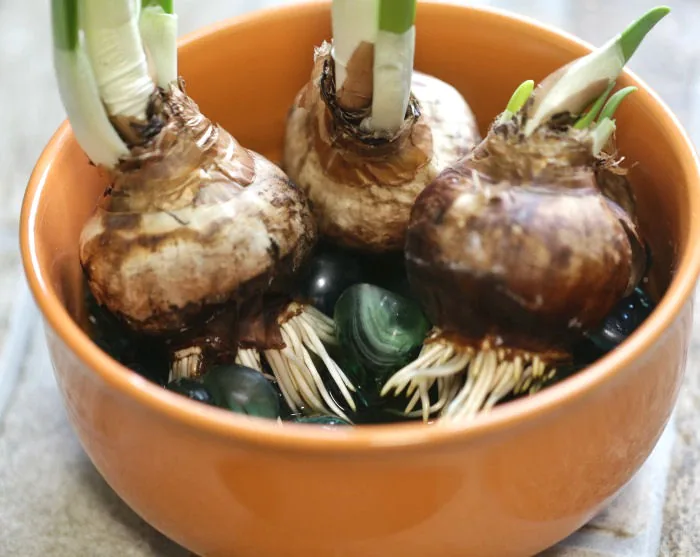
Iowa State and Wisconsin both send newly set paperwhites to a cool, dark spot around 45° to 50°F for roughly 2 to 3 weeks so roots can develop. White roots should push into the pebbles and water before you rush the bowl into a hot, bright room. When shoots reach about 3 inches (Iowa State), move the container to a sunny window at about 60° to 70°F.
Growing note: This cool rooting step is about root establishment for paperwhites—not the multi-month refrigerator chill required for many other spring bulbs. Do not invent chemical soaks or homemade “forcing solutions.”
Small-space tip: An unheated spare room, cool basement corner, or similar spot often works better than a steamy kitchen for the rooting weeks.
Or Plant in Potting Soil with Drainage
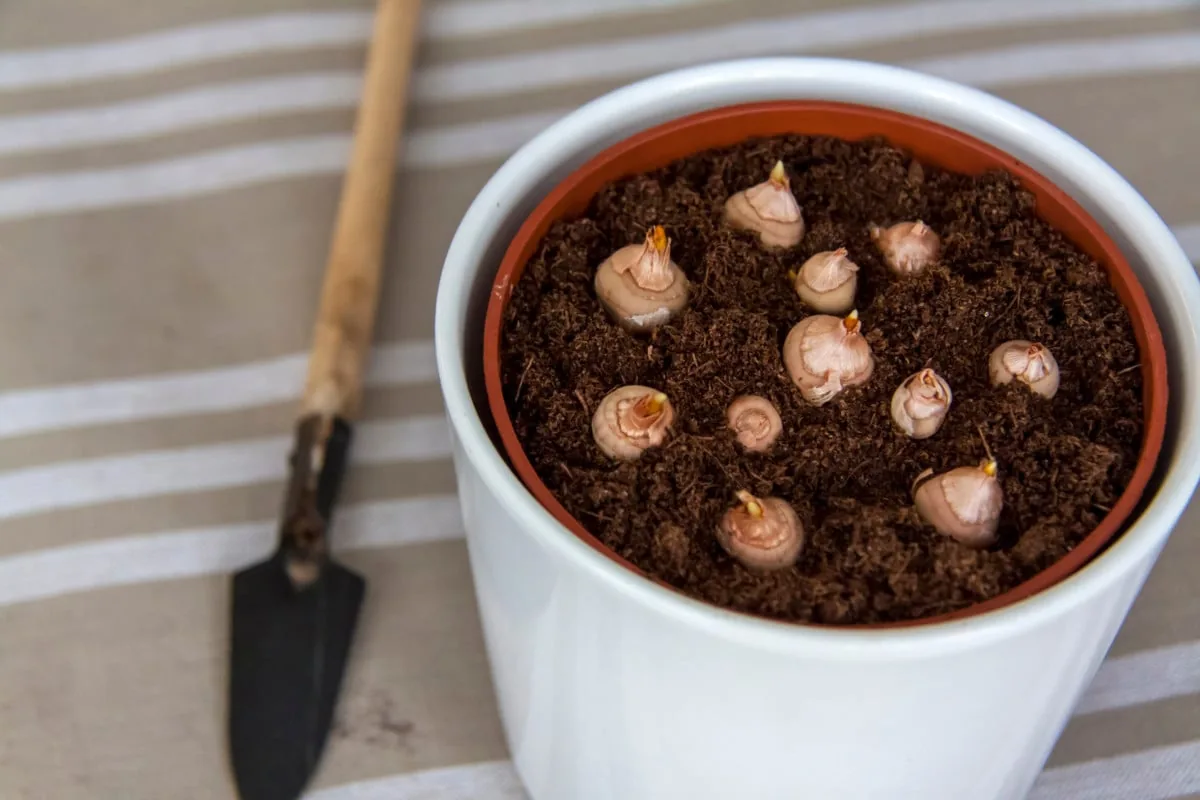
Soil forcing is equally valid. Iowa State: partially fill a draining pot with potting soil, set bulbs on the mix, then fill around them so the tips remain exposed. Water until excess drains, keep the mix moist (not soggy), and use the same cool-dark rooting period before a sunny 60° to 70°F window. Soil gives stems a little more anchorage than a skim of pebbles alone.
Care tip: Crowding bulbs for a full show is fine; leave a little space so water can move through the mix. Empty saucers after watering so roots do not sit in a puddle.
Renter-friendly tip: Use a cachepot or tray under the draining pot to protect shelves and rental counters.
Brace Tall Stems Before They Flop
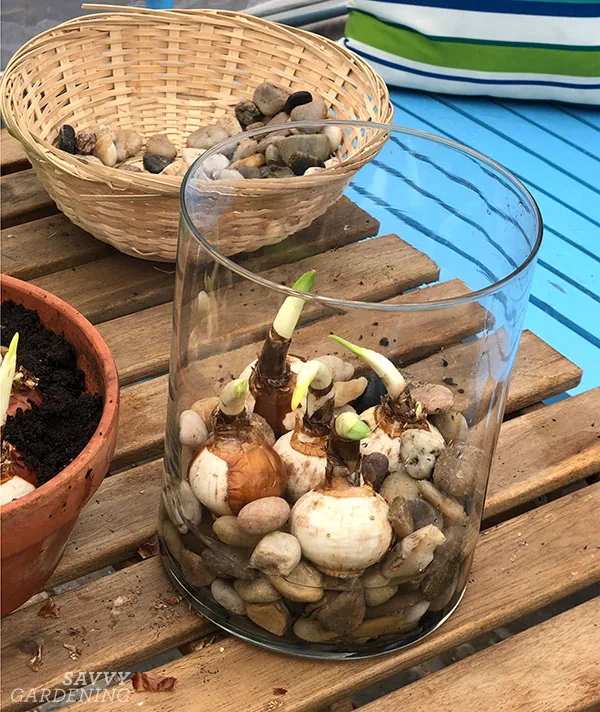
A deep cylinder of pebbles can cradle bulbs and give emerging roots somewhere to grip. Even so, paperwhite foliage and flower stems can stretch and lean in warm rooms. Wisconsin Extension notes stems can be staked if they start to flop. Give bright light after rooting, turn the container regularly, and keep display temperatures on the cooler side of that 60° to 70°F band when you can—heat often makes soft, lanky growth.
Care tip: Wisconsin also notes you can slow plants that race ahead by moving them cooler and watering a little less, or nudge slow plants warmer—useful adjustments, not a Christmas-Day guarantee.
Fragrance note: Expect a musky perfume from many white paperwhite cultivars. If scent is sensitive for someone in the house, choose a cooler room placement or a less intense cultivar rather than “airing out” with unverified sprays on the bulbs.
Enjoy the Flowers—Then Compost the Bulbs
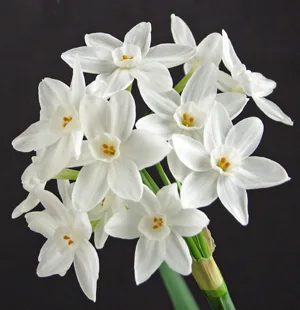
Once clusters open, enjoy them in bright, cool conditions. Wisconsin notes the fragrant flowers can last about 10 days to several weeks when kept cool (shorter in warm rooms). Iowa State is clear on aftercare: discard paperwhite bulbs after flowering—they cannot be forced again successfully and are not winter-hardy outdoors in cold climates the way many garden daffodils are. Compost spent bulbs if your local guidance allows ornamental bulb waste; do not save them as outdoor “sure bets” for next spring without understanding hardiness limits.
Growing note: Paperwhites and Hippeastrum both make wonderful holiday indoor blooms, but they are different plants with different pots, chill rules, and timelines. Use this guide for paperwhites; use a Hippeastrum guide for large trumpet “amaryllis” bulbs.
Start a bowl when you have a cool rooting spot ready, keep water at the basal plate, and let the cultivar and your room set the bloom week—not the calendar alone.