
Most of the garden is asleep in December, which is exactly when a Christmas rose decides to open. The flowers are white, cupped, and tough enough to push through fallen leaves and the odd dusting of frost. Its later-blooming cousins, the Lenten roses, follow with plum, pink, and speckled flowers as winter winds down.
This guide covers where hellebores grow best, how to keep them flowering, when to cut back the old leaves, and how to enjoy the blooms indoors. Growing details come from NC State Extension, Clemson Cooperative Extension, and University of Wisconsin–Madison Extension. Pet notes follow the ASPCA.
Know which hellebore you have
The names: “Christmas rose” refers to Helleborus niger, the white-flowered species. Wisconsin Extension notes that the more widely sold garden hybrids are usually called Lenten roses (Helleborus ×hybridus). Check the plant tag rather than guessing from the flower color.
Give them shade and drainage first
The site: NC State Extension lists Christmas rose for partial to full shade in organically rich, well-drained soil in USDA zones 3–8. Clemson calls the ground under deciduous trees ideal, since it gets winter sun and summer shade.
Leave them in place
The patience: Hellebores are long-lived, slow-building perennials. Wisconsin Extension notes that seedlings can take four to five years to bloom, so an established clump is worth protecting.
This post contains affiliate links. As an Amazon Associate I earn from qualifying purchases.
Start With a Potted Christmas Rose
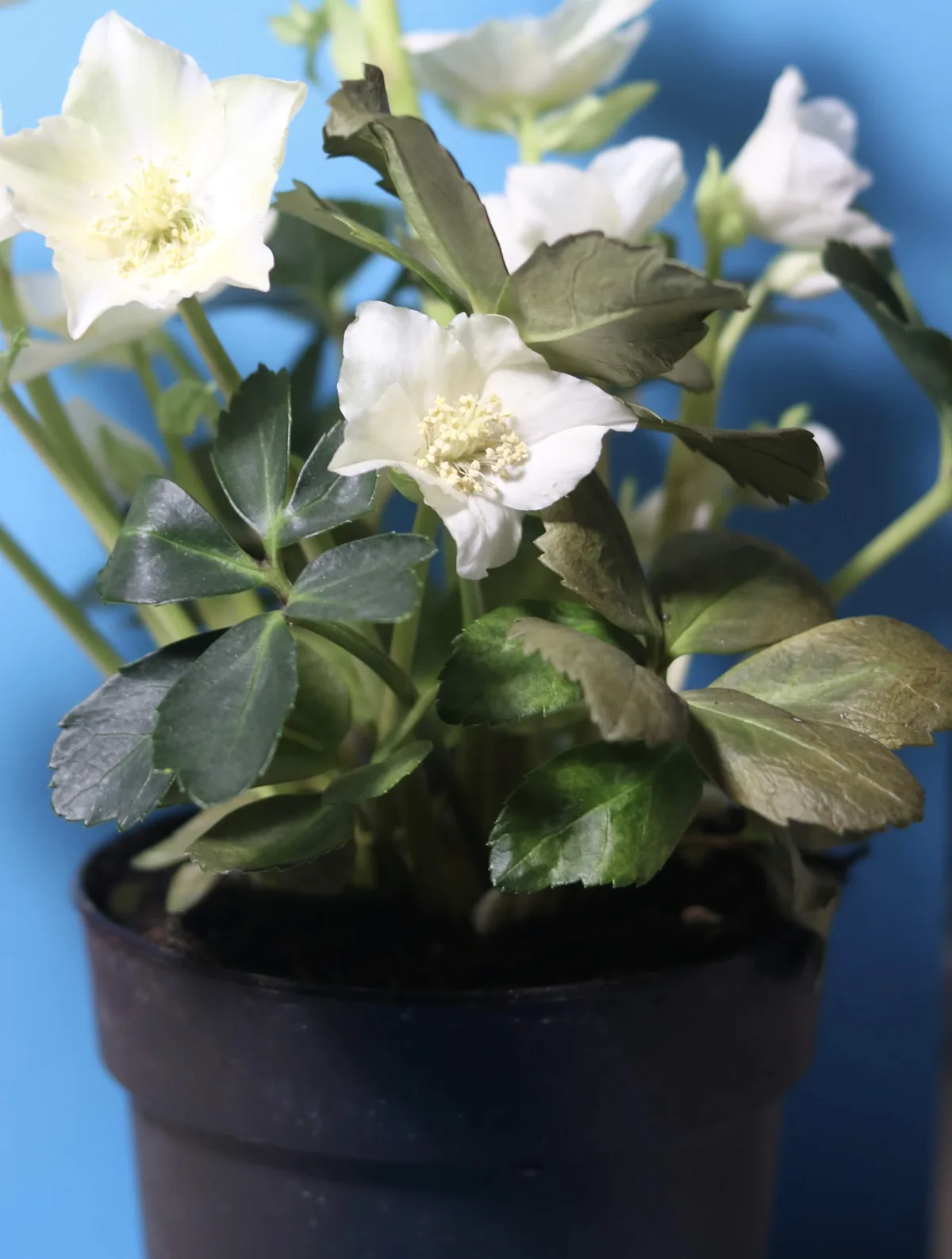
Nursery pots of Helleborus niger often show up in garden centers right before Christmas, usually in bud or just opening. A pot like this works as a cold porch display for the holidays and then goes into the ground.
Growing note: Clemson suggests pairing hellebores with pansies and violas in winter containers and moving them into the garden later in spring. Keep a potted plant in a bright, cool spot. Warm rooms shorten the display.
Buying tip: Choose a plant with several fat buds coming up from the crown and firm, dark leaves. Skip any pot that is sitting in water.
Expect Bloom Time to Shift With Your Climate
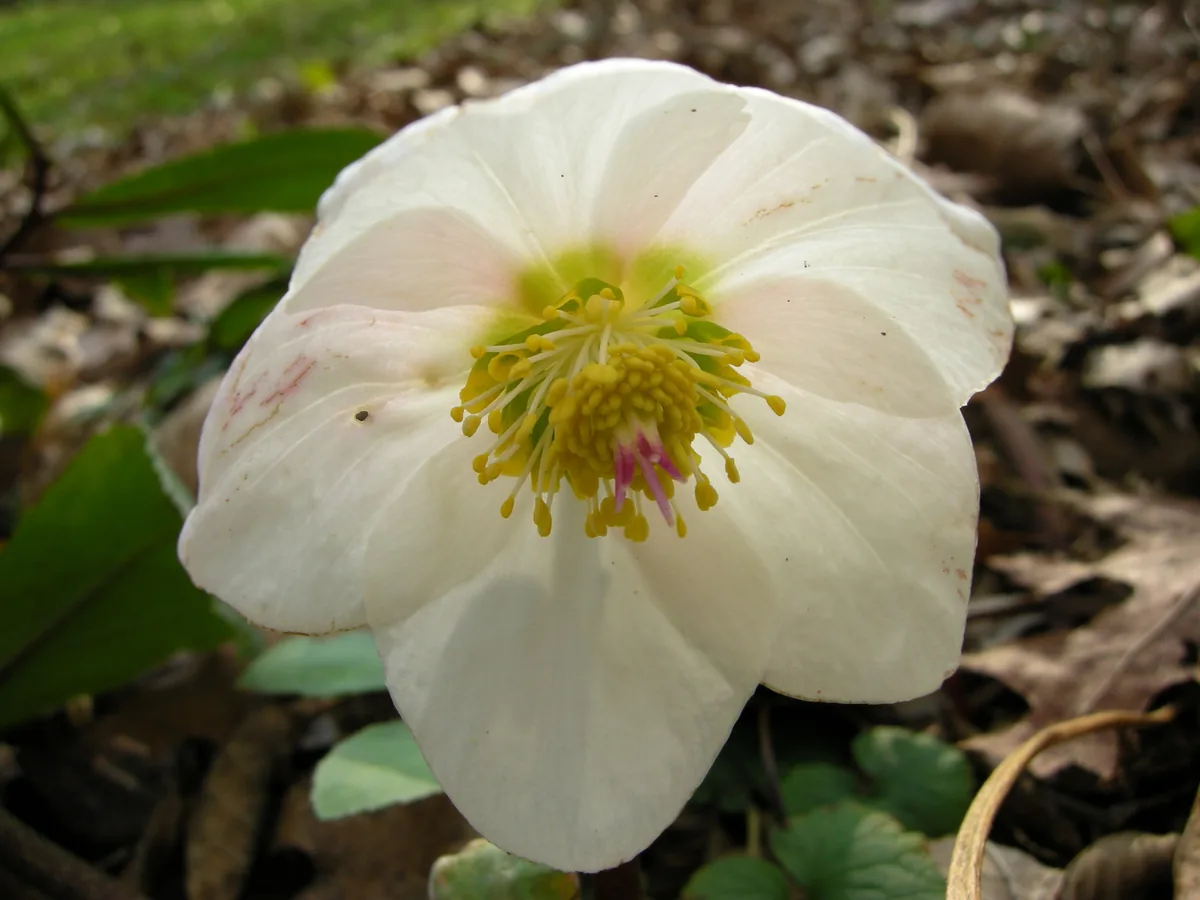
The “Christmas” in the name is a bit optimistic in cold regions. In milder gardens the white flowers can open in December, while colder gardens often wait until late winter or early spring.
Growing note: NC State says Christmas rose blooms around Christmas in warmer regions and in early spring farther north. Clemson gives a December-to-February bloom window for H. niger in its region.
Gardener tip: Plant one where you can see it from a window. Winter flowers are easy to miss when nobody walks the garden.
Plant Lenten Rose Hybrids for a Longer Show
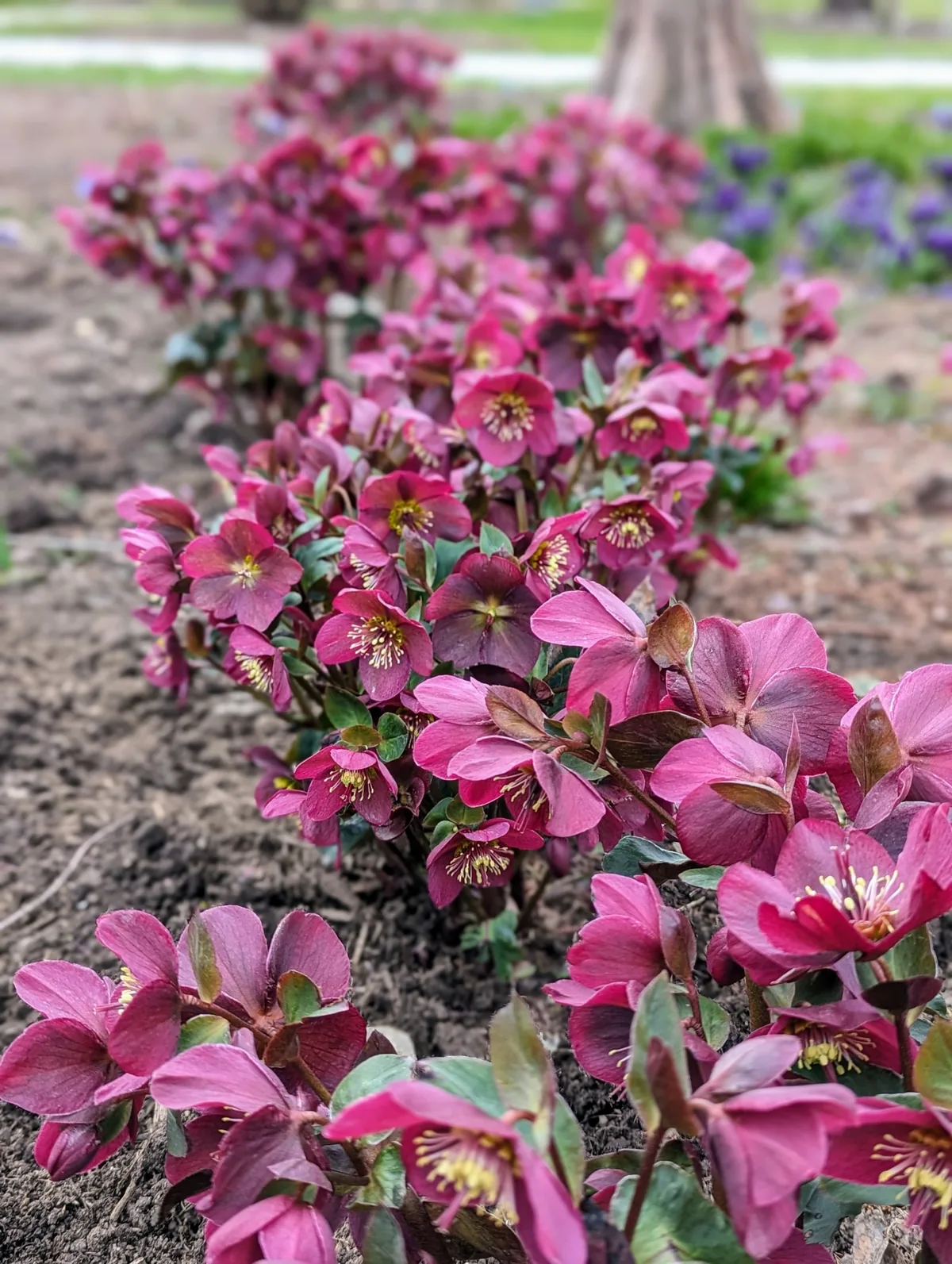
If you want more color, add Lenten rose hybrids. Planted in a row or drift, they fill a shady border with pink, plum, cream, and speckled flowers after the Christmas rose finishes.
Growing note: Clemson lists Lenten rose for zones 4–9. That makes the hybrids the easier choice in many southern gardens, while H. niger handles colder winters, down to zone 3.
Design tip: Plant in groups of three or more so they read as one planting from the house rather than as single plants.
Plant Under Deciduous Trees in Rich, Well-Drained Soil
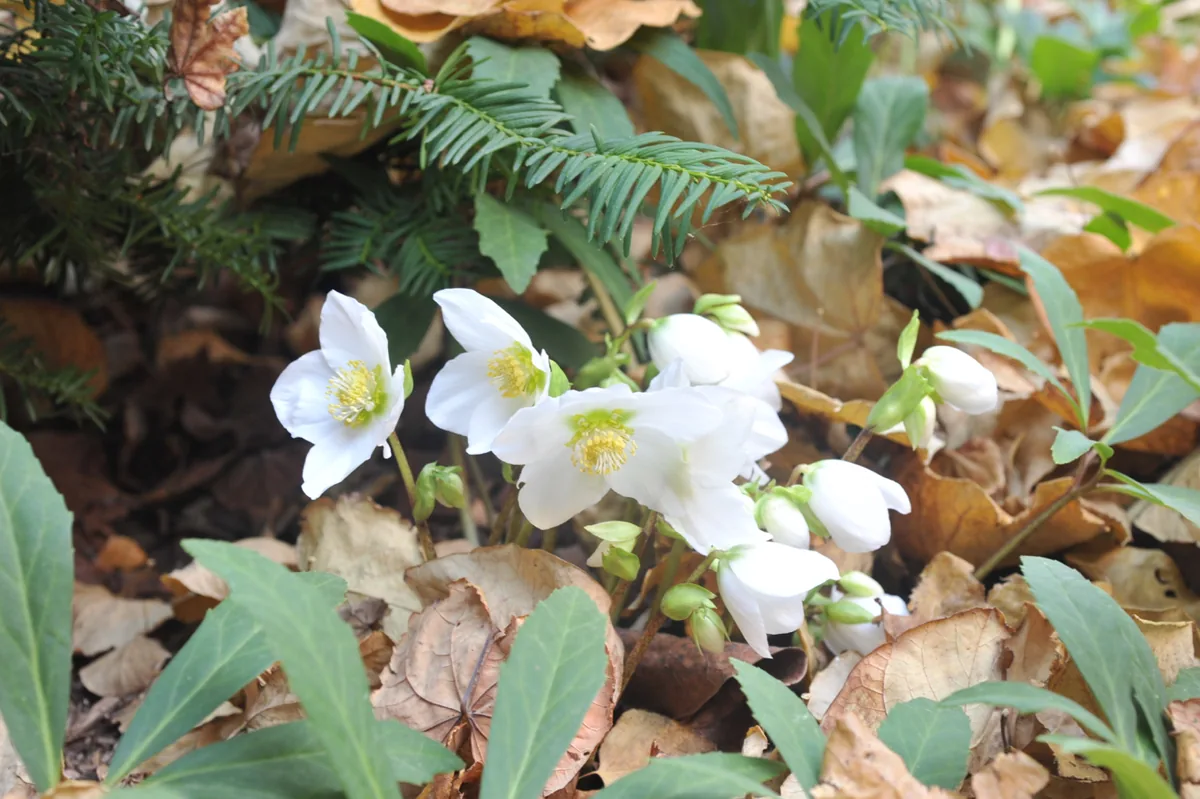
A woodland edge suits hellebores well. Fallen leaves, filtered light, and soil full of organic matter are close to how they grow naturally.
Soil note: Clemson warns that hellebores do not tolerate wet soils and recommends about 2 inches of mulch. Wisconsin Extension says they are very sensitive to soggy soil. On heavy clay, plant on a gentle slope or in a raised bed.
pH note: Clemson notes that H. niger prefers neutral to slightly alkaline soil. A soil test is better than guessing before you add lime.
Grow Them in Containers With Good Drainage
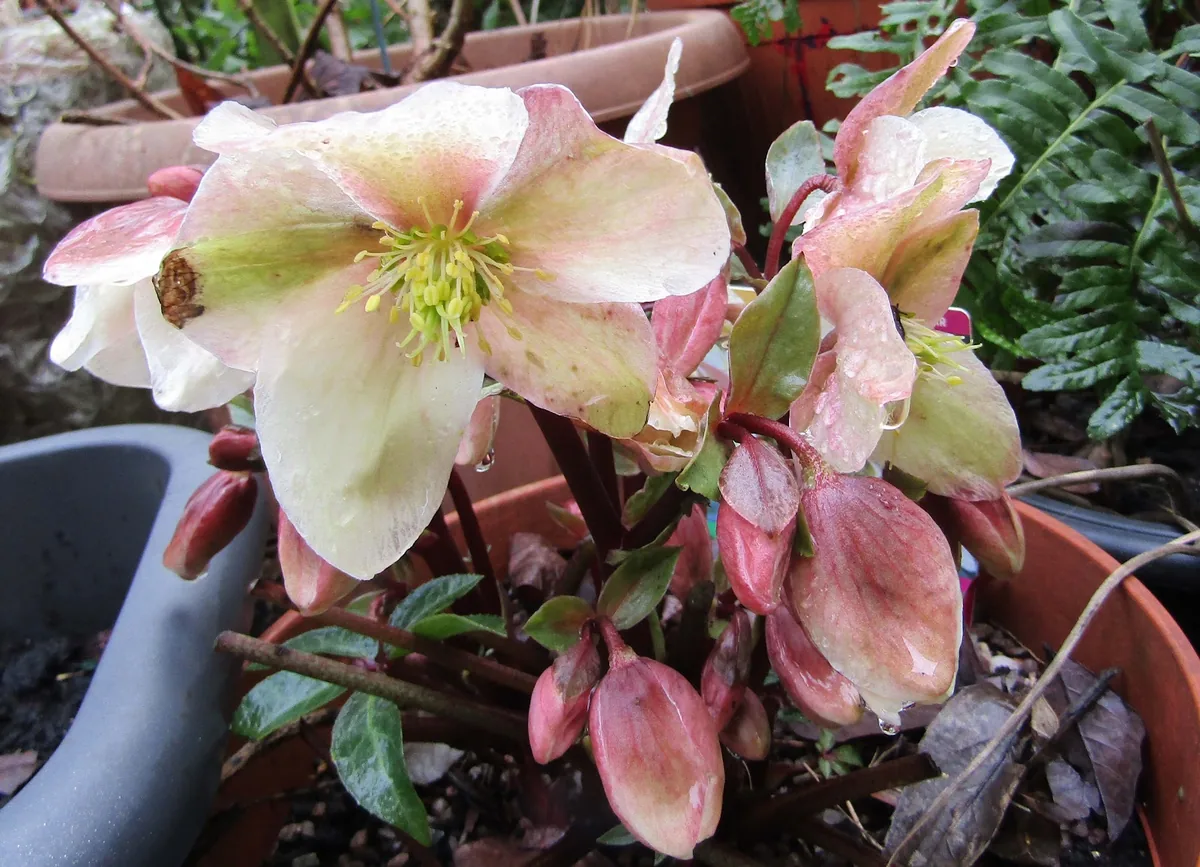
Hellebores can live in pots, which is handy if you only have a patio or want flowers near the front door. Terracotta looks good with the foliage and dries out faster than plastic, which helps if you tend to overwater.
Container tip: Use a pot with a drainage hole and a free-draining potting mix. Water when the top inch or so feels dry. Never leave the pot sitting in a saucer of water through a cold, wet week.
Placement: Choose a bright, sheltered spot out of hot afternoon sun. In very cold areas, move the pot against the house or into an unheated garage during hard freezes, because roots in pots get colder than roots in the ground.
Watch for New Flower Stems Among Last Year’s Leaves
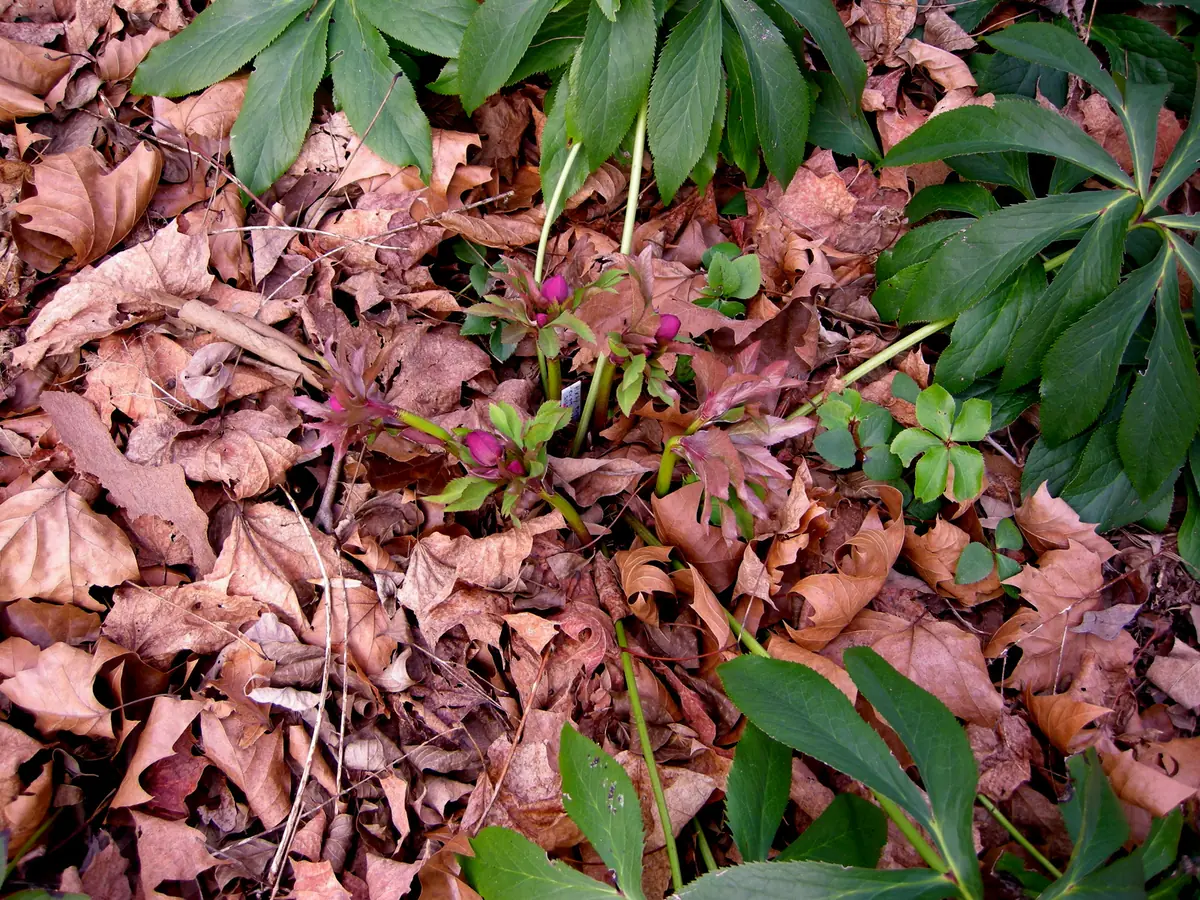
In winter you will see new flower stems pushing up from the crown while last year’s leaves, often tattered and spotted, still sprawl around them. That is the cue for a tidy-up.
Care tip: Clemson and Wisconsin Extension both advise removing old foliage as the new leaves and flowers emerge, cutting the old leaves off at the base. With the old leaves gone, the flowers are easier to see, and you also get rid of foliage that may carry leaf spot.
Timing note: Clemson says to remove old foliage only after flowering for the stemmed species, stinking hellebore (H. foetidus) and Corsican hellebore (H. argutifolius). Hybrid and Christmas rose clumps can be cleaned up earlier.
Cut Back Old Leaves Carefully
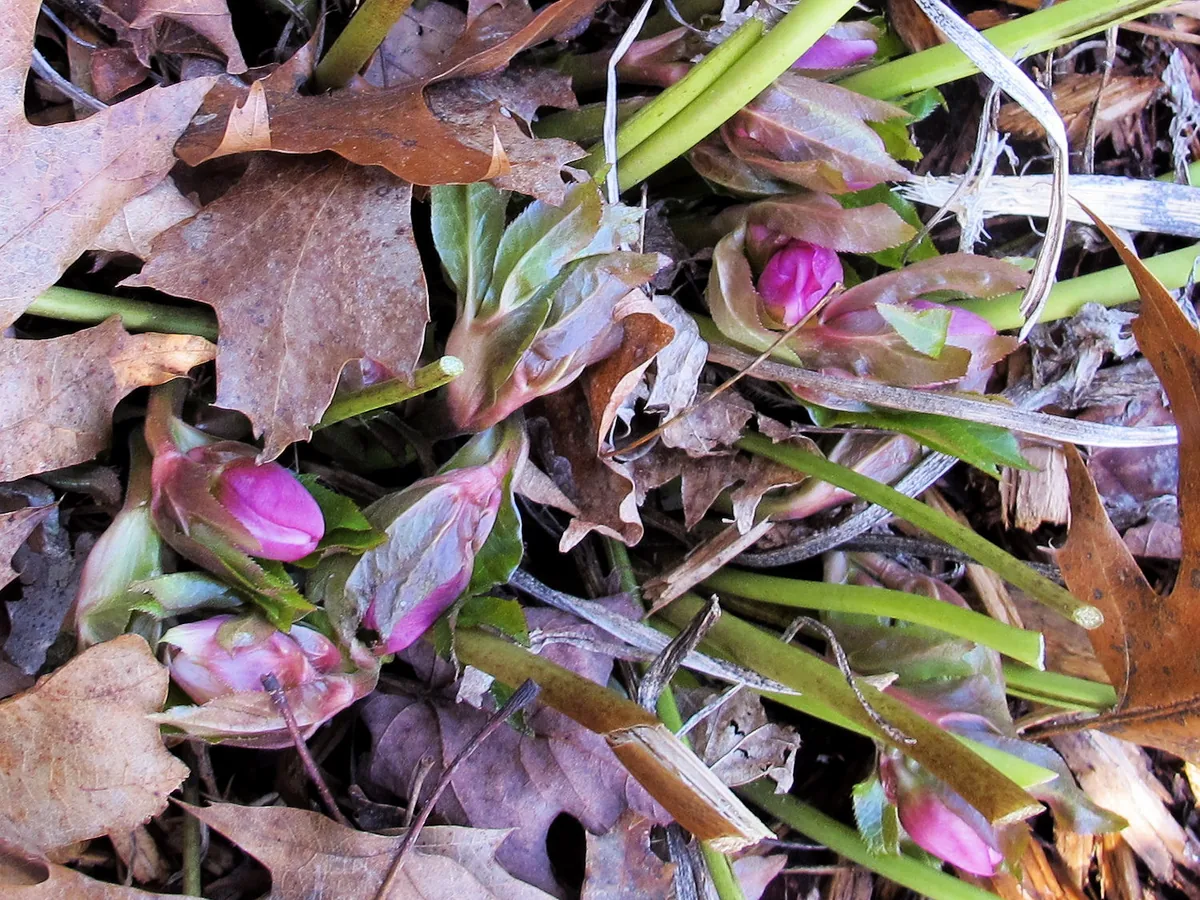
Once the old leaves are cleared, the buds show up much better. Snip each leaf stem low, at the base, and leave the emerging flower stems and new leaves alone.
Tool tip: A sharp bypass pruner makes cleaner cuts than scissors on the leathery stems. The Corona ClassicCUT forged bypass hand pruner is a solid everyday choice. Wipe the blades between plants if you see leaf spot.
Safety note: NC State and Wisconsin Extension both warn that hellebores can cause contact dermatitis. Wear gloves when cutting. Coated garden gloves such as Showa Atlas 370 garden gloves are thin enough to handle stems easily.
Enjoy the Sepals That Last for Weeks
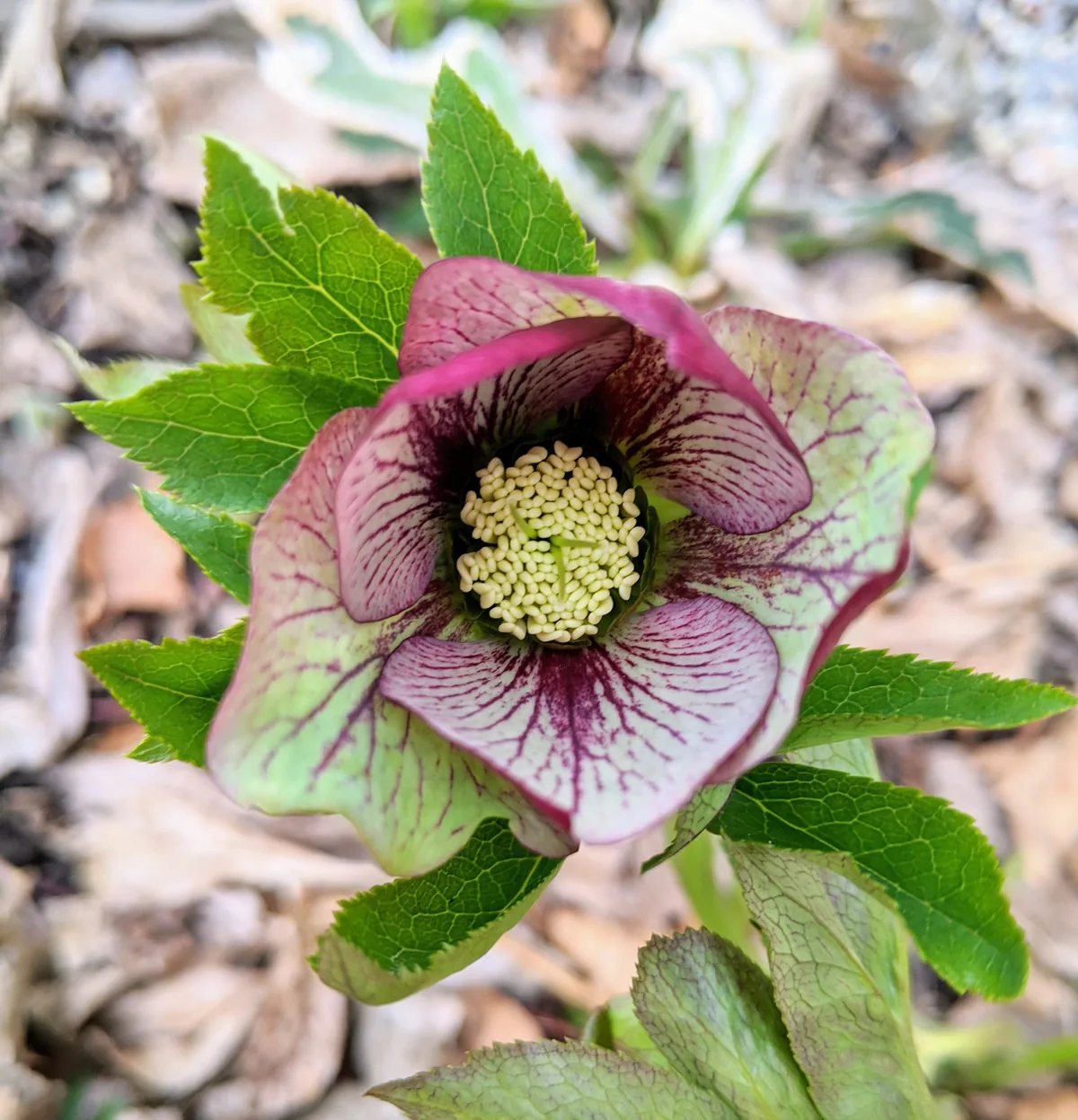
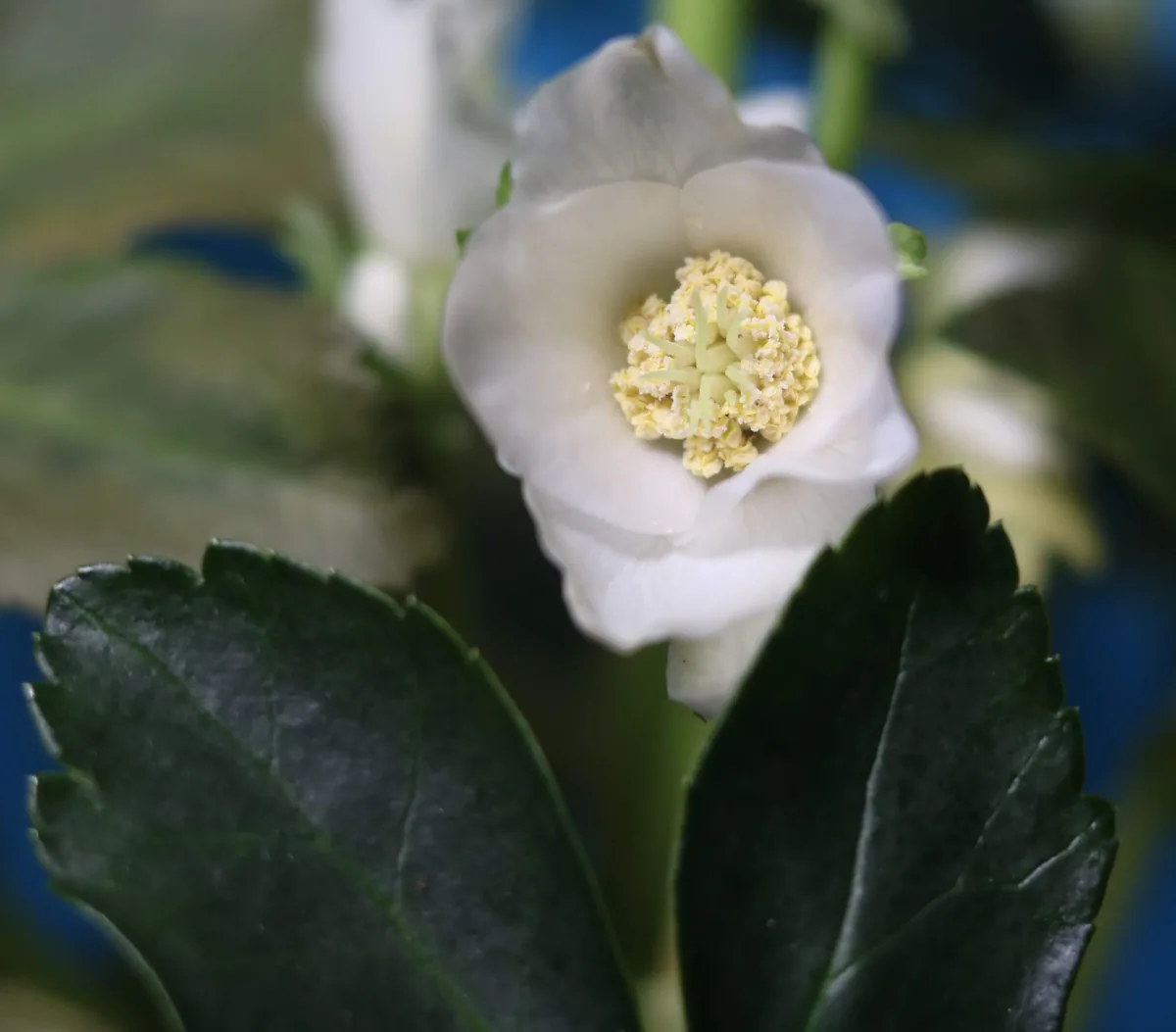
The showy “petals” of a hellebore are actually sepals, which is why they last so long. The true flowers are the small tubes and stamens in the center.
Plant note: Wisconsin Extension says hellebore sepals can persist for one to two months. That is why one clump stays in bloom from late winter into spring.
Style idea: Look for veined, spotted, or picotee hybrids at nurseries while they are in flower. Buying in bloom is the only way to know exactly what color you are getting.
Let Older Flowers Fade to Green
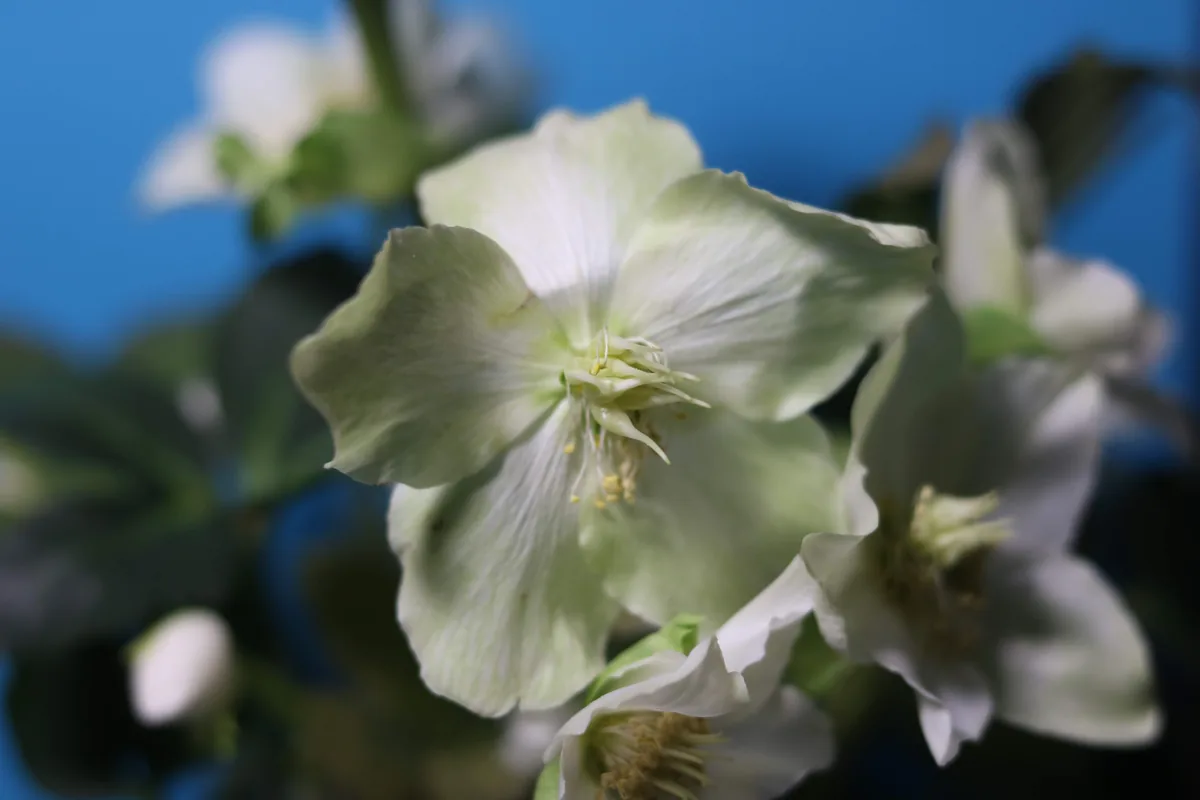
As the weeks go on, white Christmas rose flowers often blush pink or turn pale green. That is a normal part of aging, not a sign of trouble.
Growing note: Wisconsin Extension notes that hellebore flowers become greener as they age. Leave them on the plant if you enjoy the softer color, or cut them for arrangements.
Seed note: Spent flowers set seed, and seedlings may pop up around the parent plant. They take years to flower and may not look like the parent, so keep or weed them as you like.
Float Cut Blooms in a Bowl Indoors
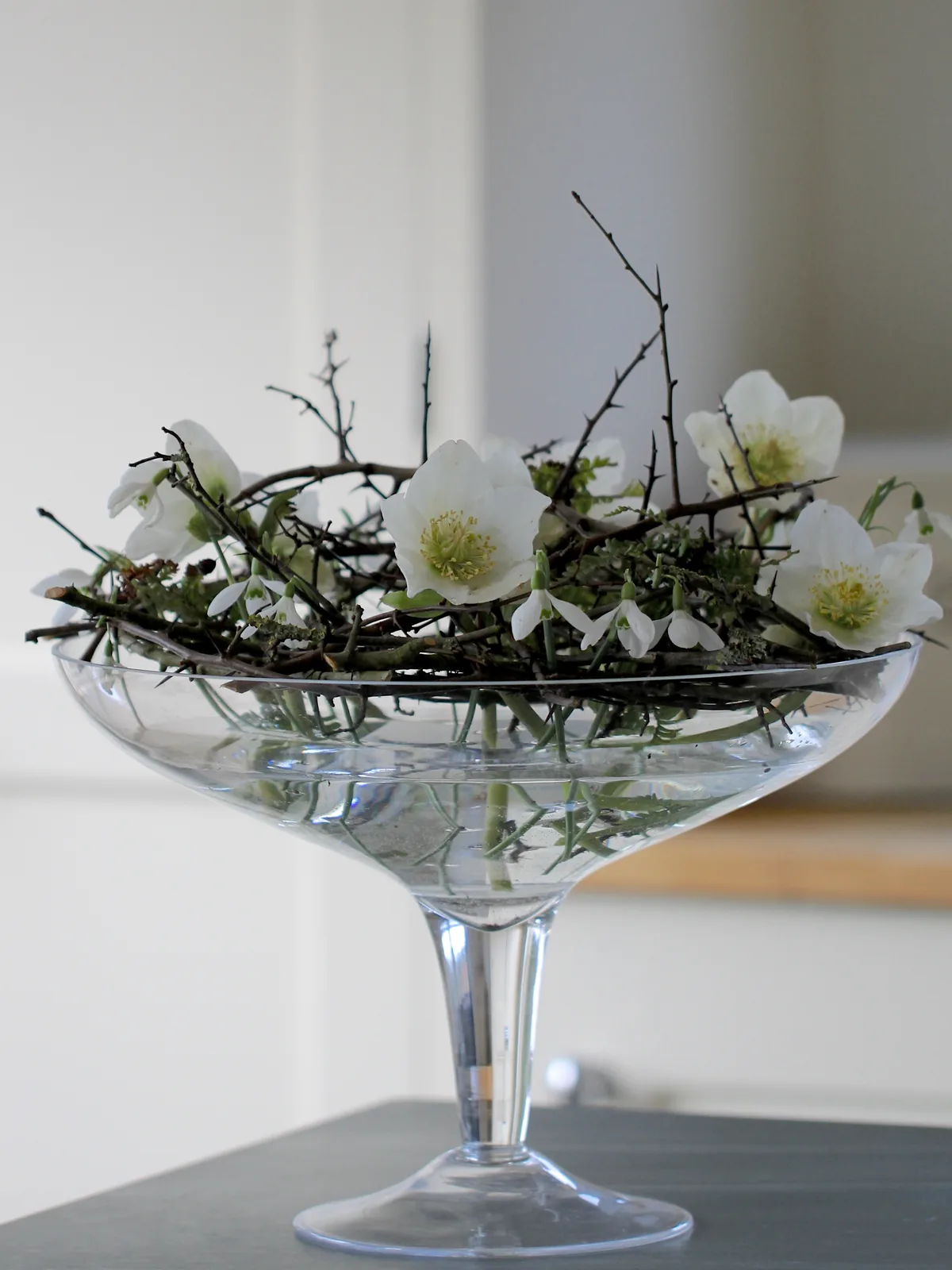
Cut hellebores often droop when they stand in a vase, but they look lovely floating face-up in a shallow bowl. Here, white hellebores and snowdrops sit in a twiggy ring on a footed glass bowl.
Arranging tip: NC State lists Christmas rose as a good cut flower that can be floated in a bowl. Older flowers that have already firmed up usually last better than freshly opened ones.
Supply idea: Any shallow glass dish works. Change the water every day or two and keep the bowl away from heaters.
Are Hellebores Safe Around Pets?
No. The ASPCA lists Christmas rose (Helleborus niger) as toxic to dogs, cats, and horses, with clinical signs that include drooling, abdominal pain, diarrhea, colic, and depression. Plant them where pets do not graze, keep cut flowers out of reach, and call your veterinarian or a pet poison hotline if an animal chews on the plant.
People should not eat hellebores either. NC State Extension lists the plant as poisonous and notes that the sap can irritate skin, so gloves are a sensible habit when dividing, cutting, or arranging.
Quick Hellebore Care Checklist
- Light: part to full shade, ideally under deciduous trees
- Soil: rich, well-drained, never soggy; about 2 inches of mulch
- Winter cleanup: cut old leaves at the base as new flowers emerge
- Containers: drainage hole, free-draining mix, sheltered spot in hard freezes
- Handling: wear gloves; keep away from pets
Give a hellebore shade, good drainage, and a little patience, and it will come back every winter. Start with one potted Christmas rose this December and add Lenten rose hybrids as you find colors you like.