
A holly bush with no berries is one of the most common holiday garden letdowns. The plant looks healthy and the leaves are glossy, but there is not one red berry to cut for the mantel in December. Usually the problem is pollination, not care.
This guide explains how to get a holly to berry: male and female plants, sun and soil, which types suit which gardens, and when to prune. Growing details come from University of Illinois Extension, University of Maryland Extension, and NC State Extension. Pet notes follow the ASPCA.
Most hollies need a partner
The pollination: Hollies are dioecious, meaning each plant is either male or female. Only females make berries, and only when a male of a compatible type blooms nearby. Illinois Extension suggests one male for every three to ten females.
Sun drives berry count
The light: Illinois Extension says hollies grow in sun or part shade, but plants with at least six hours of sun produce more berries. They like moist, well-drained, acidic soil and shelter from drying winter wind.
Berries hang on for months
The payoff: Once set, Illinois Extension notes the fruit can stay on for three to six months, carrying color from fall through winter, unless birds find it first.
This post contains affiliate links. As an Amazon Associate I earn from qualifying purchases.
Plant Female Hollies and Add a Male Nearby
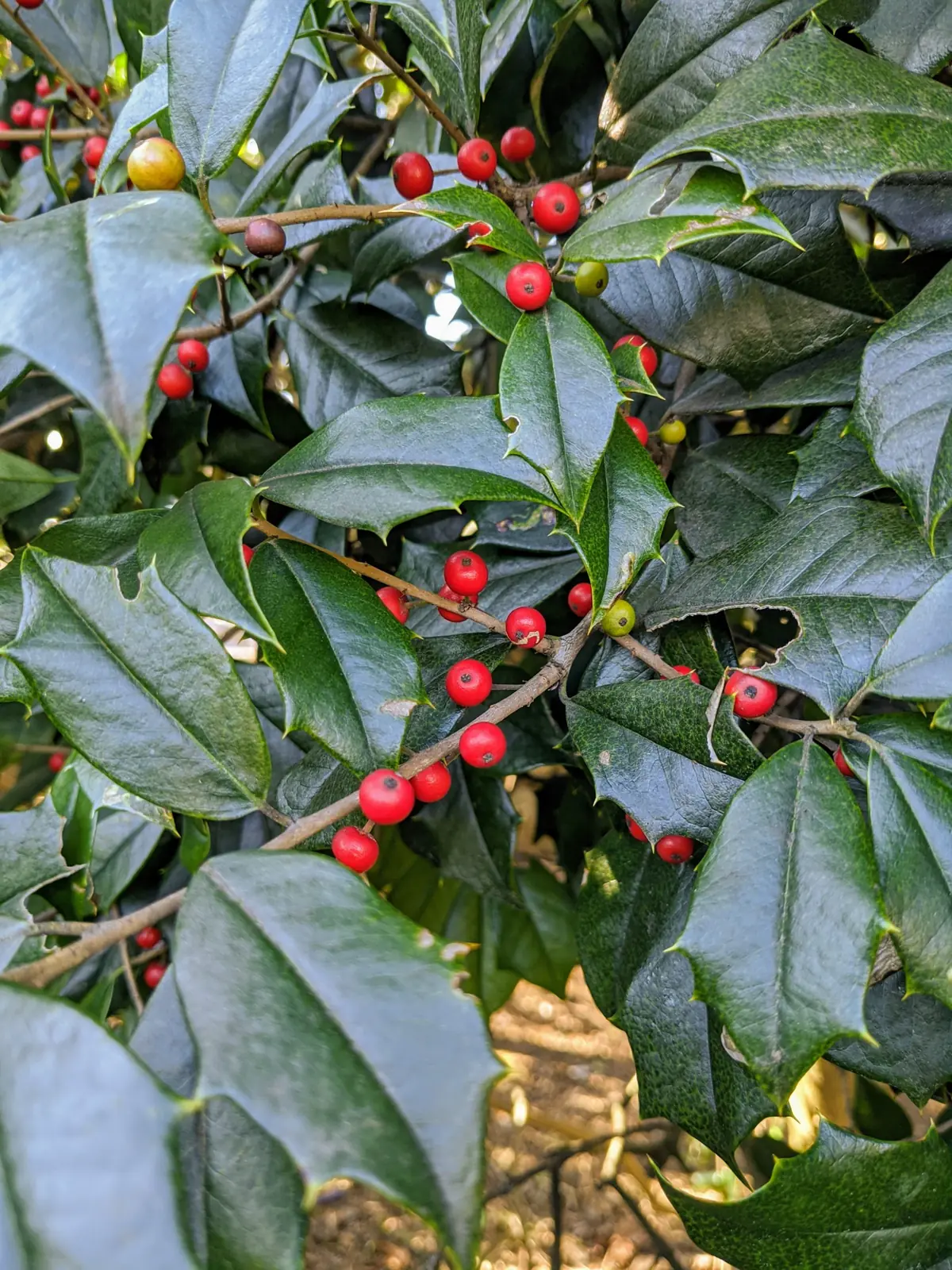
If you want branches like these, you need female plants. Nurseries usually label hollies by sex or by cultivar name, so check the tag before you buy. Plants grown from seed or dug from the wild can turn out to be either.
Pollination note: Martha Stewart writes that her female hollies berry heavily with one mature male per acre of females. Illinois Extension’s more conservative rule is one male for three to ten females. One male planted within sight of the females is usually enough for a home garden.
Buying tip: Buy the male and female at the same time and from the same group, such as American with American or winterberry with winterberry, so their bloom times overlap.
Choose American Holly for a Classic Native Tree
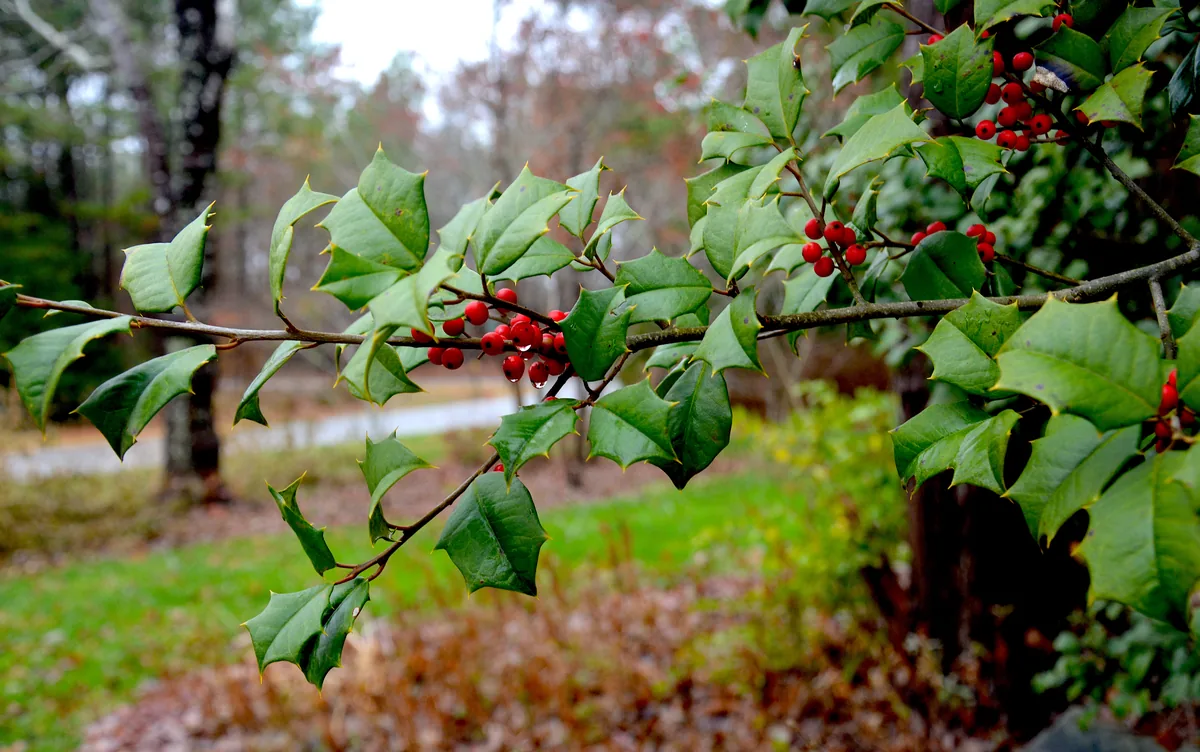
American holly (Ilex opaca) is the classic evergreen holly of the eastern United States, with spiny leaves and red berries. It grows slowly into a tall, pyramid-shaped tree, so give it room.
Hardiness note: Illinois Extension lists American holly for USDA zones 5–9. It wants acidic, well-drained soil and some protection from harsh winter wind in colder zones.
Placement tip: Plant it where you can reach the lower branches. That is where most of your Christmas cutting will come from.
Try Variegated Hollies for Leaves That Shine in Winter
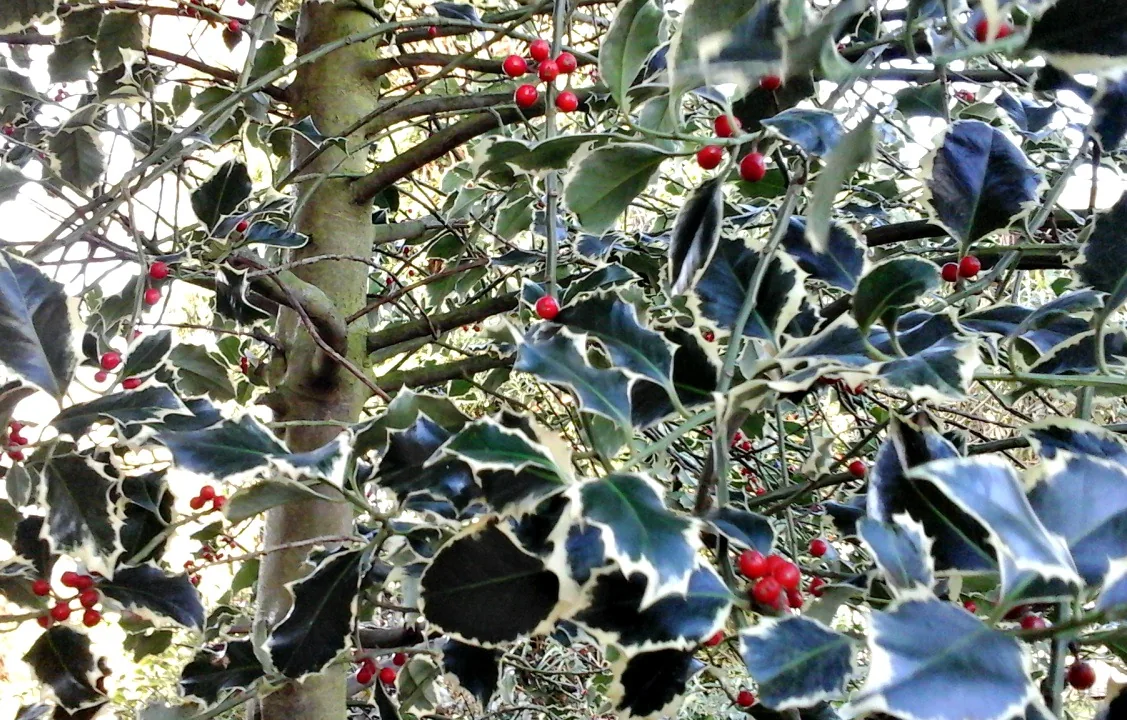
Variegated hollies, with cream or gold leaf edges, brighten a dark corner even before the berries color. Many are cultivars of English holly (Ilex aquifolium) and its hybrids.
Hardiness note: Illinois Extension notes that English holly is hardy only to about zone 7. In colder gardens, look at blue hollies (Ilex ×meserveae), which it lists as hardy to zone 5.
Check the label: Some popular variegated cultivars are male and will never berry. If you want berries, confirm that your plant is female.
Grow Yaupon Holly for Tiny Berries and Tough Conditions
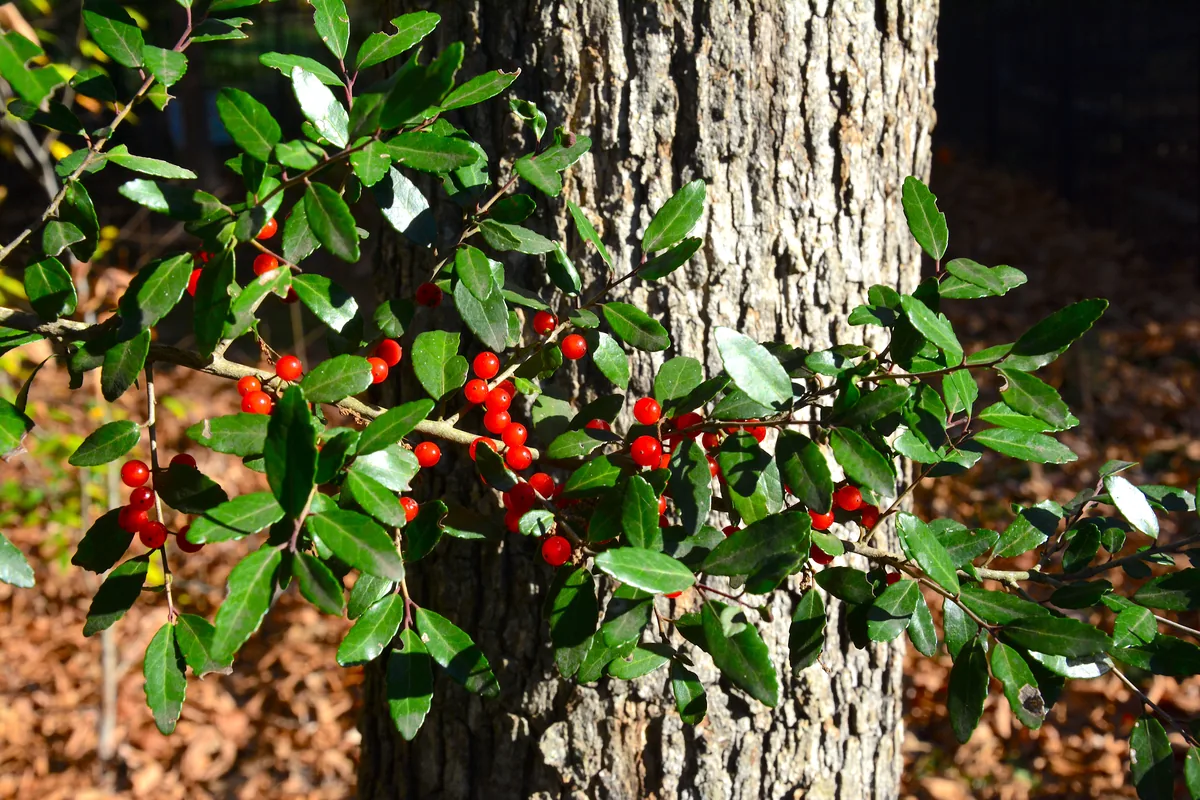
Yaupon (Ilex vomitoria) has small, smooth-edged leaves and masses of little red berries. It suits hedges and coastal gardens.
Growing note: NC State Extension notes that yaupon tolerates salt spray and sandy soils. That makes it a good pick for southern and coastal gardens where other hollies struggle.
Style idea: The fine texture of yaupon looks good in arrangements as greenery. You get plenty of small berries without the prickly leaves of English or American holly.
Look for Yellow- and Orange-Berried Forms
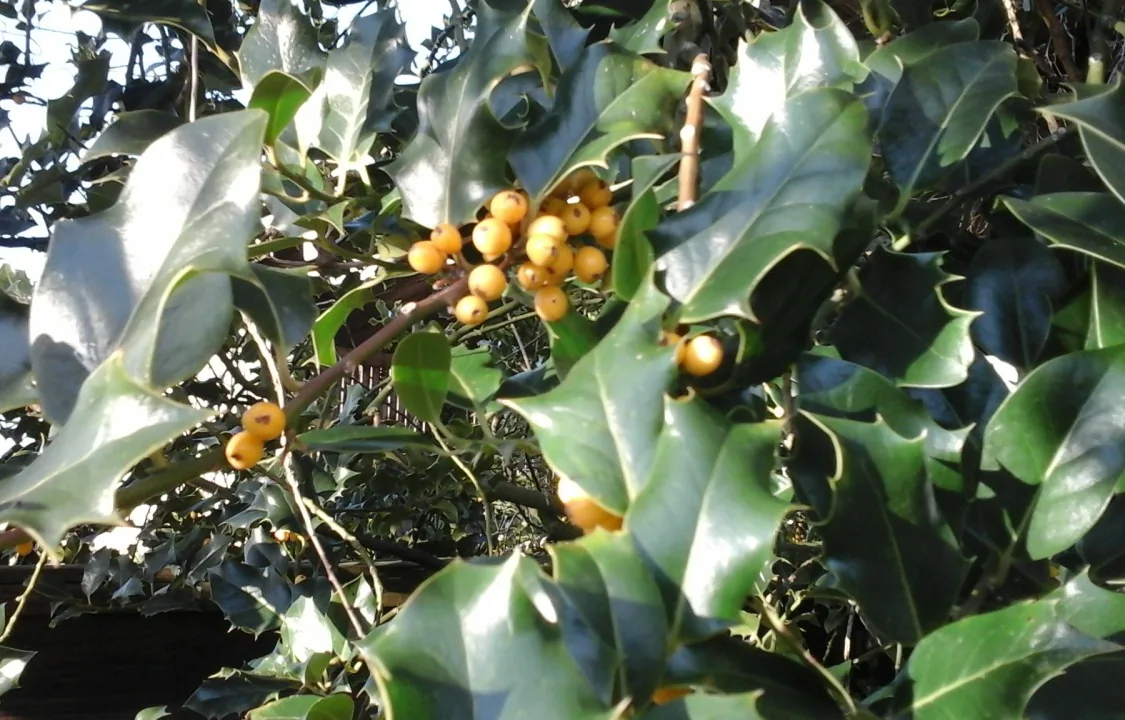
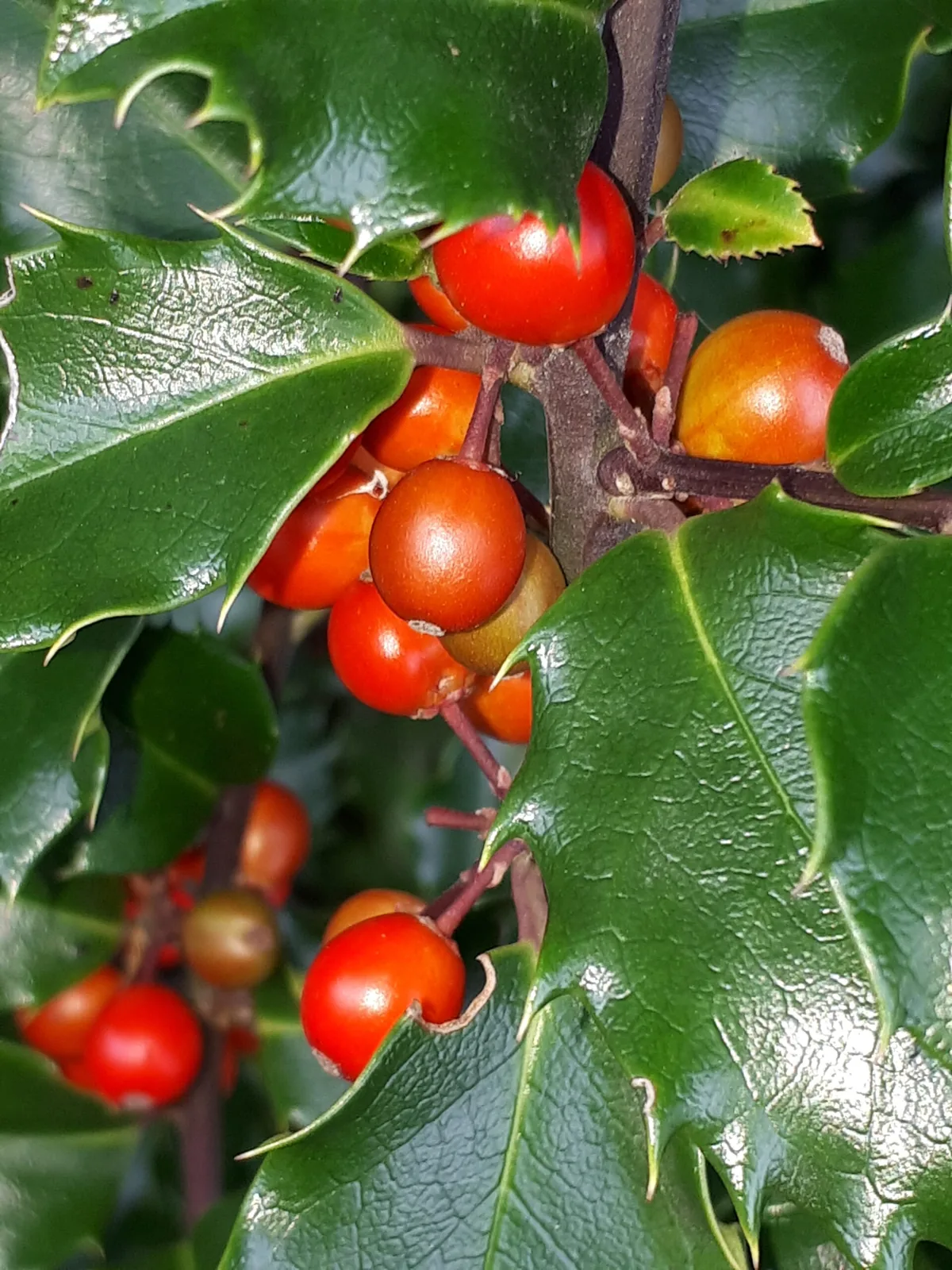
Holly berries are not always red. Some cultivars have yellow or orange fruit, which looks warm in a winter garden and pairs well with brass and cream holiday decor.
Variety note: University of Maryland Extension lists red, orange, and yellow-fruited winterberry cultivars. Yellow-berried forms are also available in other holly species. The same male-and-female rule applies.
Design tip: Plant a yellow-berried holly next to a red one. Cut stems from both for a mixed arrangement that looks different from the usual holiday red.
Plant Winterberry for Bare Branches Covered in Red
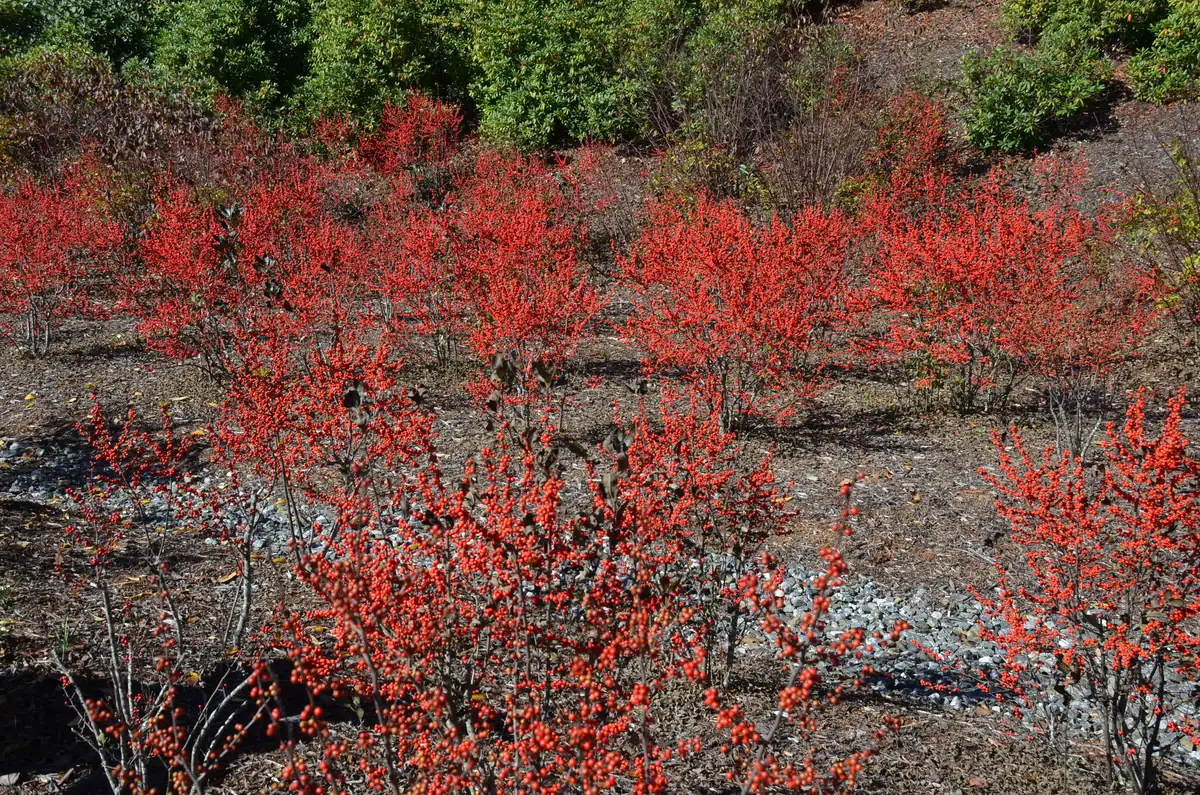
Winterberry (Ilex verticillata) is a deciduous holly. It drops its leaves in fall, leaving bare stems covered in red berries. A mass planting like this one is visible from the road.
Hardiness note: Illinois Extension lists winterberry for zones 3–9 and says one male can pollinate about 20 females within 40 feet. Maryland Extension suggests one male for up to ten females within 50 feet, in soil with a pH of about 4.5 to 6.5.
Pairing tip: Maryland Extension recommends matching bloom times, for example ‘Red Sprite’ with ‘Jim Dandy’, and ‘Winter Red’ or ‘Sparkleberry’ with ‘Southern Gentleman’.
Let Some Berries Stay for Winter Color and Birds
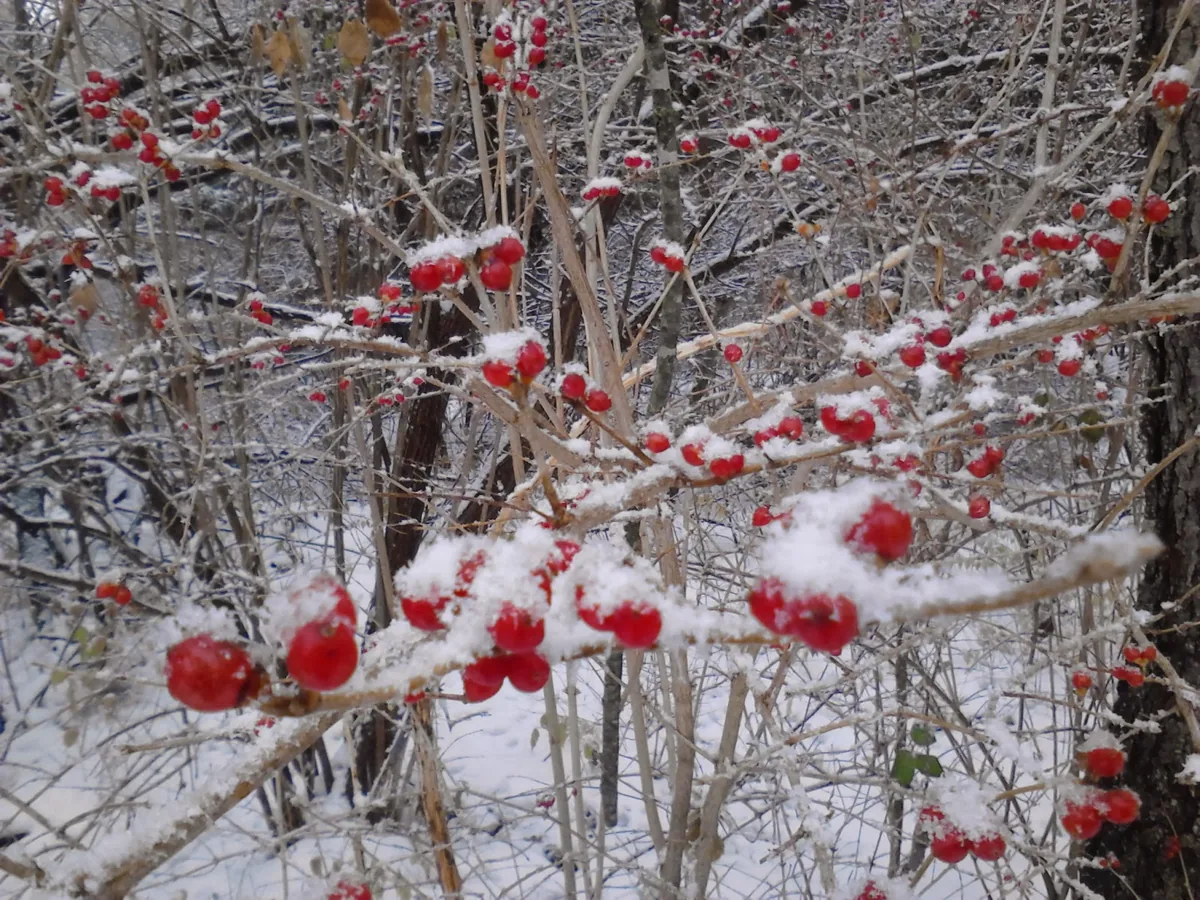
After the first frost or snow, winterberry branches look their best. Leave some stems on the shrub so you can enjoy them from the window and the birds can feed.
Wildlife note: NC State Extension encourages leaving berries for wildlife. Birds rely on holly fruit in winter, so cut only what you need for decorating.
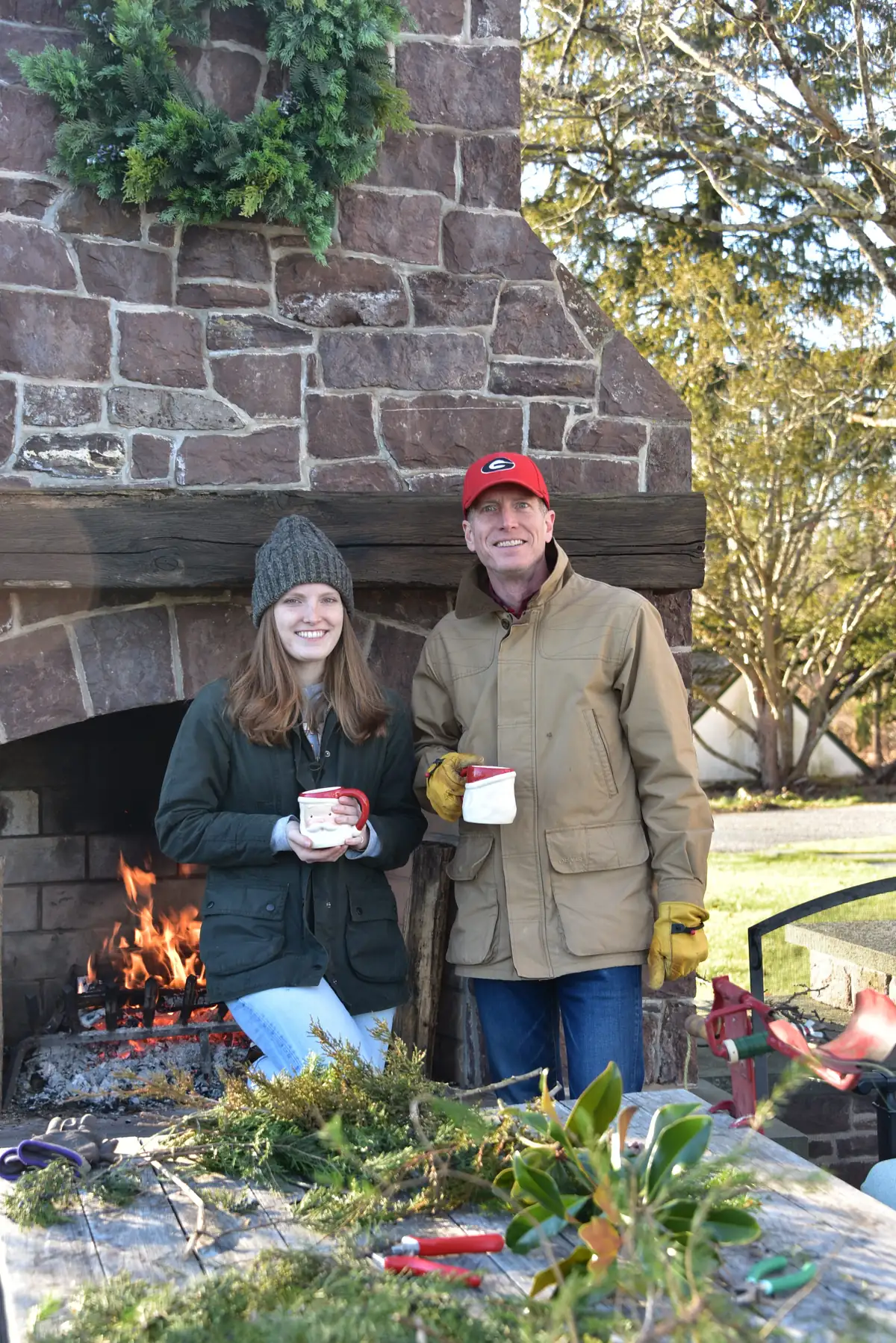
Family note: The blogger here kept her winterberry branches off the mantel because a toddler was in the house. That is sensible, since holly berries are not for eating. See the pet and safety section below.
Prune Lightly at Christmas and Shape in Late Winter
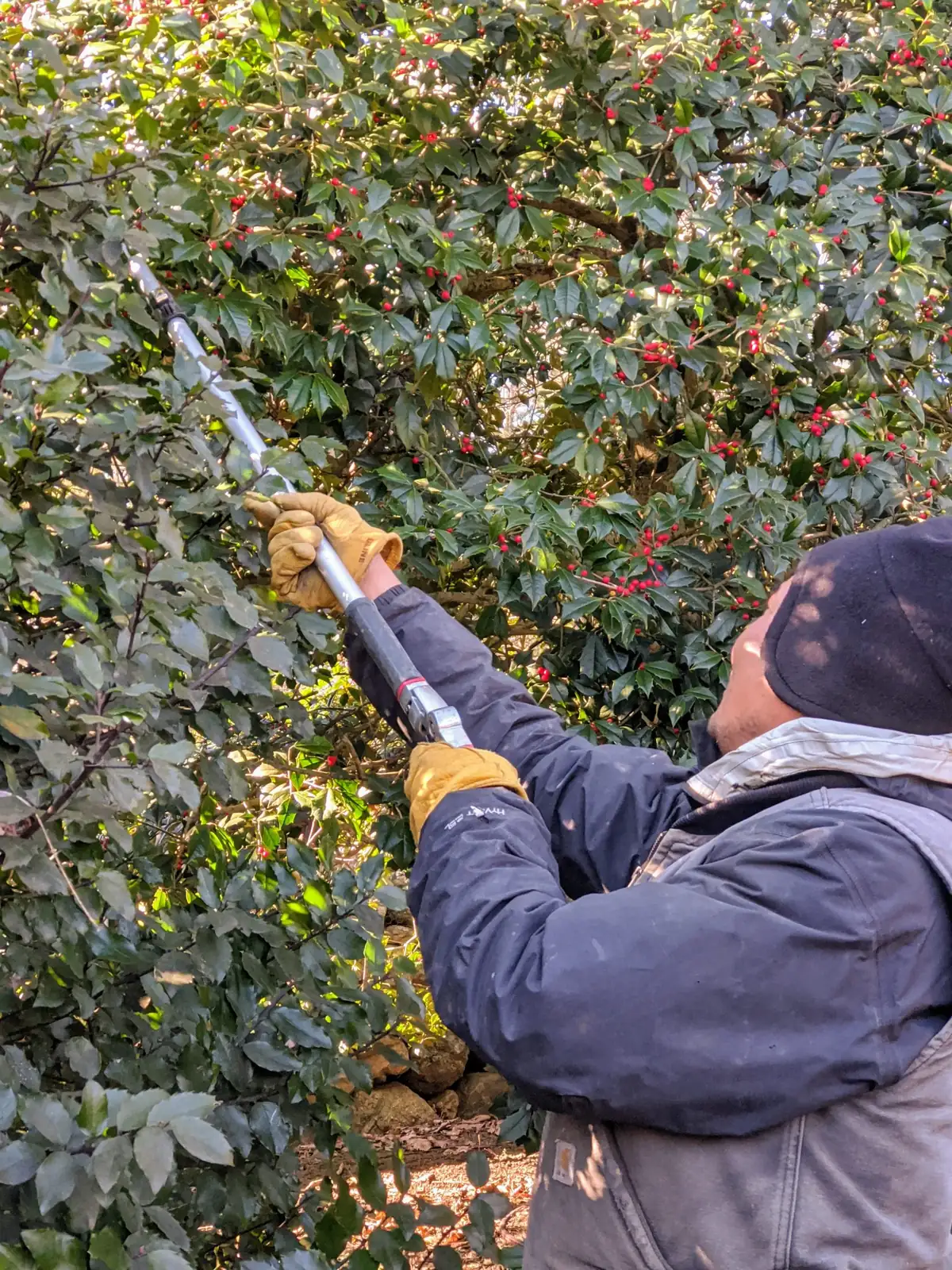
Cutting holly for the holidays is a light prune. Take branches from different parts of the plant so the shape stays natural. Save heavier shaping for later.
Timing note: NC State Extension says late winter is the best time to shape hollies and that December cutting should be minimal and strategic. Martha Stewart’s crew uses a long-handled pruner for tall hedges.
Tool tip: For branches up to about pencil thickness, a hand pruner such as the Corona ClassicCUT bypass pruner makes clean cuts. Holly leaves are spiny, so thick leather gloves like the HANDLANDY thorn-proof gardening gloves make the job more comfortable.
Bring Cut Holly Indoors the Simple Way
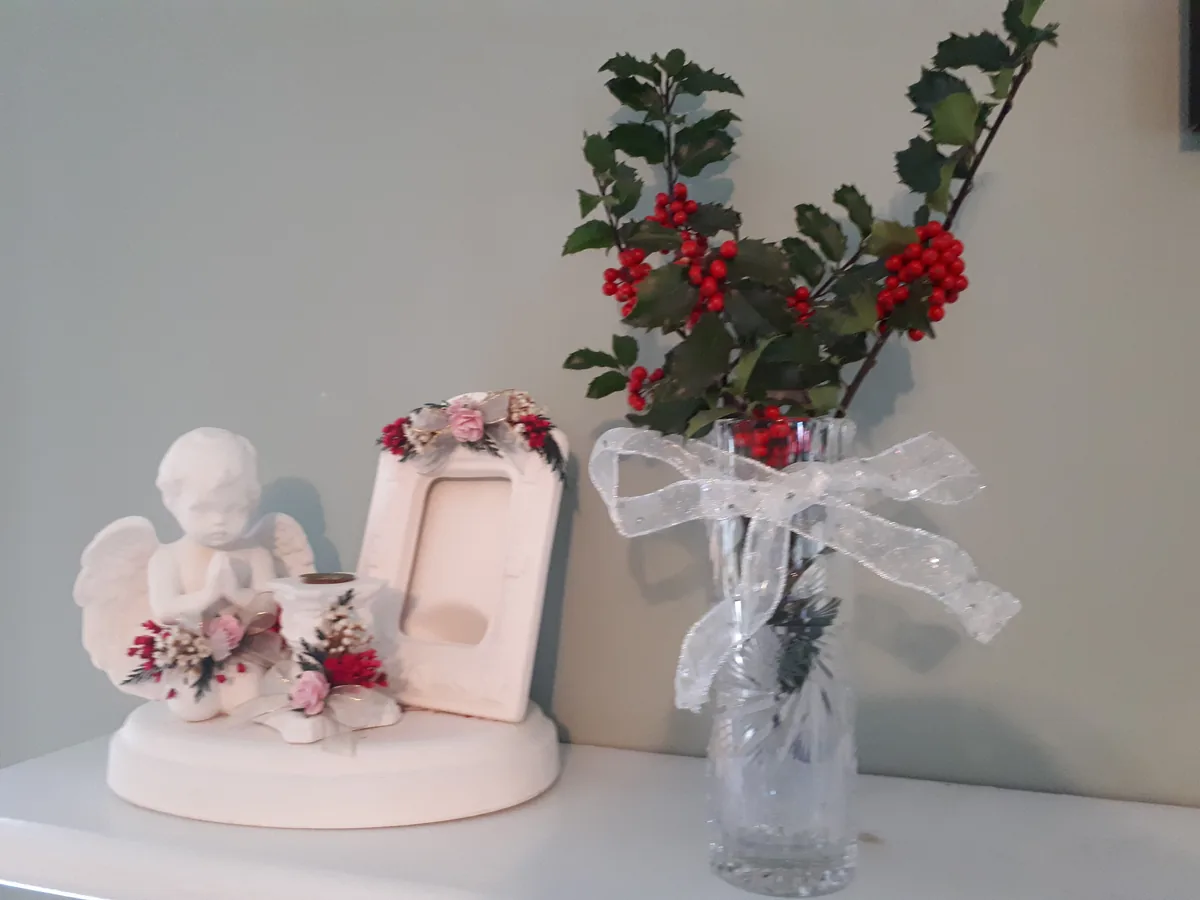
A few sprigs in a glass vase with a ribbon makes an easy Christmas arrangement. Cut stems with good berry clusters and strip any leaves that would sit under water.
Longevity note: The blogger who arranged this vase says holly can last for months indoors even as it dries. Expect some berries to drop over time, so set the vase where they will not roll into reach of pets or small children.
Ethics tip: NC State Extension reminds readers not to cut holly from public land or a neighbor’s yard without permission. Grow your own and you can cut as much as you like.
Why Is My Holly Not Making Berries?
- No male nearby: the most common reason. Add a compatible male nearby; for winterberry, Extension guidance is within 40–50 feet.
- Your plant is male: males flower but never berry. Check the cultivar name.
- Too much shade: Illinois Extension links heavier berrying to six or more hours of sun.
- Weather: a late spring frost or drought can reduce the berry set for that year.
- Heavy pruning at the wrong time: a hard cut in spring or summer can remove flowers or developing berries.
Is Holly Safe Around Pets?
No. The ASPCA lists holly as toxic to dogs, cats, and horses because of saponins. Signs include vomiting, diarrhea, and depression. The listing notes that the leaves and berries have low toxicity, but they can still cause stomach upset, and the spiny leaves can hurt mouths. Keep cut sprigs and dropped berries out of reach, and call your veterinarian if a pet eats some.
Grow a female holly in sun with a compatible male nearby and acidic, well-drained soil, and the berries usually take care of themselves. Plant this winter, and in a year or two you can cut your own branches for Christmas.